In a stunning revelation that sheds new light on the complex geopolitical manoeuvres of the Trump era, a former top White House adviser has disclosed a secretive offer from Moscow. Fiona Hill, who served as former President Donald Trump's senior director for European and Russian affairs, has claimed that Russia proposed giving the United States a "free rein" in Venezuela. This offer was allegedly made in exchange for Washington scaling back its support for Ukraine.
The Explosive Claim from a Key Insider
Fiona Hill, a respected foreign policy expert and key witness in Trump's first impeachment trial, made these claims during a recent interview. She detailed that this proposition was part of a broader Russian strategy to create spheres of influence and divide the West. The offer, as described by Hill, was essentially a geopolitical trade: Russia would allow the US to pursue its interests unchallenged in Venezuela, a long-standing point of contention, if America would pull back from its backing of Ukraine against Russian aggression.
Hill's account points to a critical period in US-Russia relations, highlighting how Moscow sought to leverage global flashpoints to its advantage. This revelation underscores the high-stakes bargaining that often occurs behind the scenes in international diplomacy, far from public view. The former adviser did not specify the exact timing or the Russian officials who conveyed this message, but the implication is that it was part of diplomatic channels during Trump's presidency.

Venezuela and Ukraine: Pawns in a Great Power Game?
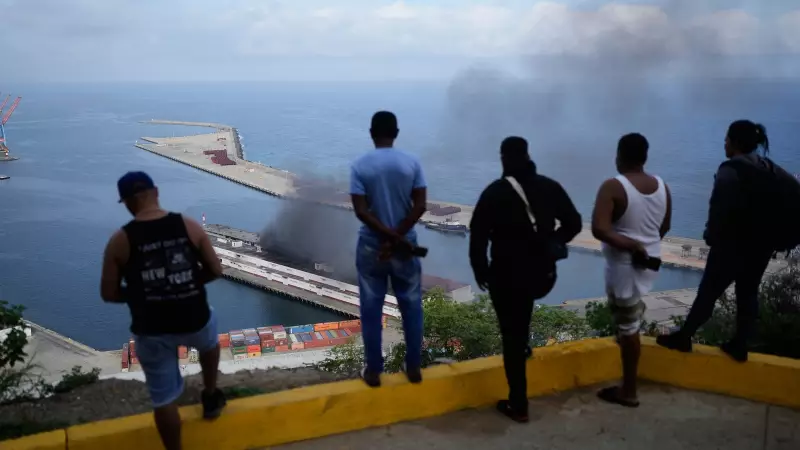
The two nations at the heart of this alleged offer—Venezuela and Ukraine—represent two of the most significant foreign policy challenges for both Washington and Moscow over the past decade. Venezuela has been mired in a political and economic crisis, with the US and its allies recognising opposition leader Juan Guaidó as the legitimate president, while Russia and China have backed the regime of Nicolás Maduro with financial and military support.
Ukraine, on the other hand, has been the central battleground for influence between Russia and the West since the 2014 annexation of Crimea. The US has provided Kyiv with substantial military aid and political support, a policy that has been a major irritant for the Kremlin. The alleged Russian offer suggests an attempt to resolve one point of conflict by sacrificing influence in another region, treating sovereign nations as bargaining chips in a grand strategic game.
Fiona Hill emphasised that the US did not entertain this proposal, viewing it as an attempt to undermine the principled stance of supporting a sovereign Ukraine against external aggression. Accepting such a deal would have fundamentally compromised American and Western values, rewarding aggression and undermining the international rules-based order.
Implications for Global Diplomacy and the Future
This revelation carries profound implications for understanding recent history and current events. First, it provides a clearer lens through which to view Russia's foreign policy objectives, which often involve creating transactional relationships and exploiting divisions. Second, it highlights the persistent tension within the Trump administration between a more traditional, principled foreign policy stance and a more transactional approach favoured by the president himself.
The news also resonates strongly in the current context, where the war in Ukraine continues unabated. It serves as a stark reminder of the Kremlin's long-standing goal to neutralise Western influence in what it considers its "near abroad." Furthermore, it illustrates how conflicts in different parts of the world, like South America and Eastern Europe, can become interconnected in global power politics.
Hill's disclosure is likely to reignite debates about the nature of US foreign policy and the challenges of dealing with an assertive Russia. It underscores the importance of experienced advisers and a coherent strategy in navigating treacherous international waters. As the world grapples with ongoing instability, this account of a secret geopolitical trade offer reminds us that the struggle for influence between major powers remains a defining feature of the 21st century.