

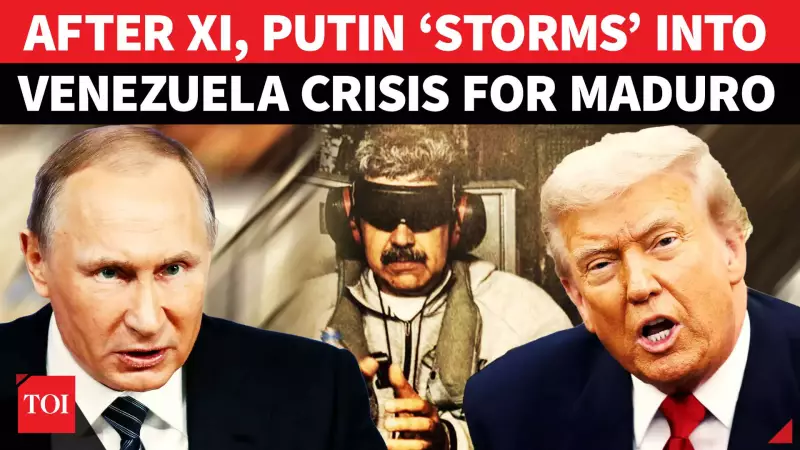
In a dramatic escalation of international tensions, Russia has issued a stern warning to the United States following the capture of Venezuelan President Nicolas Maduro. Moscow has declared the situation a 'global red line,' signaling that the crisis has moved far beyond Latin America and now threatens to ignite a major confrontation between world powers.
Moscow's Swift Response and Direct Contact
Russia moved swiftly after the news of Maduro's apprehension by US forces. On January 5, 2026, Russian Foreign Minister Sergey Lavrov confirmed direct communication with Venezuela's leadership. He spoke with Maduro's deputy, Delcy Rodriguez, pledging Russia's solidarity and condemning what Moscow terms an act of 'armed aggression' by Washington.
This high-level contact underscores Russia's deep-seated interests in Venezuela, a long-time ally. The Kremlin framed the US operation not merely as an intervention in a sovereign nation's affairs, but as a direct challenge to the foundations of international law and state sovereignty.

International Echoes and a Dangerous Precedent
Russia's stance was quickly echoed by Iran, another nation with significant ties to the Maduro government. Tehran joined Moscow in condemning the US action, warning that it sets a dangerous global precedent. The simultaneous condemnation from two major powers opposed to US foreign policy highlights how the Venezuelan episode is rapidly transforming into a broader geopolitical fault line.
This international backlash stands in stark contrast to the position of US President Donald Trump, who has insisted that Washington will play a decisive role in shaping Venezuela's political future post-Maduro.
From Regional Strike to Global Standoff
What began as a rapid, targeted US military operation—codenamed 'Op Absolute Resolve' involving a significant force—has now evolved into a potential flashpoint. The operation, which reportedly saw Maduro extracted and flown to the United States where he was seen handcuffed and in FBI custody, was initially presented as a mission against a specific leader.
However, with Russia's forceful declaration and Iran's backing, the crisis has been elevated. Moscow is explicitly framing it as a test for the international order, effectively drawing a line in the sand and warning the US against further escalation or similar actions elsewhere. The situation has all the hallmarks of a high-stakes geopolitical standoff, pulling major powers into a confrontation with unpredictable consequences for global stability.






