

Russia Expresses Concern Over US-India Trade Deal Impact on Bilateral Relations
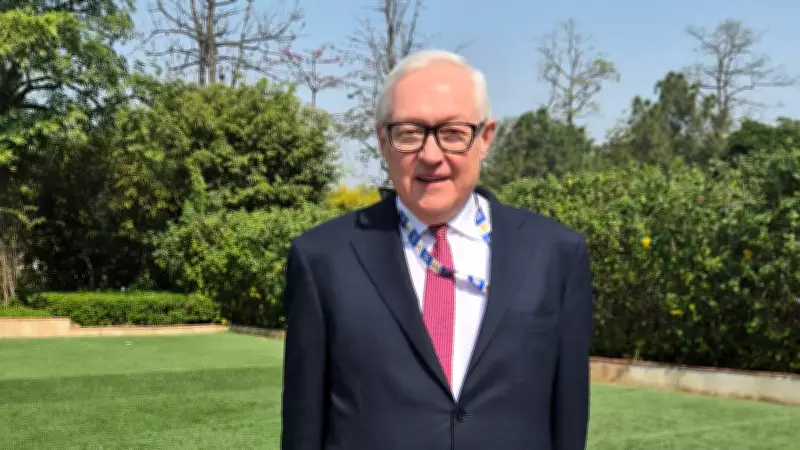
In a significant diplomatic statement, Russia's Deputy Foreign Minister Sergei Ryabkov has voiced apprehension that the newly agreed India-US trade framework could potentially undermine the longstanding and robust ties between India and Russia. Ryabkov, who is currently in New Delhi for the inaugural BRICS Sherpas meeting, emphasized Moscow's hope that the outcome of this deal does not lead to difficulties in the bilateral interactions between the two nations.
Trade Framework and National Interests
Ryabkov's remarks follow closely on the heels of a statement by Indian Foreign Secretary Vikram Misri, who asserted that India's energy sourcing strategies would be strictly guided by its national interests. This context underscores the delicate balance India maintains in its foreign policy, navigating relationships with both the United States and Russia amidst global geopolitical tensions.
"I hope the result of this deal would not mean that we suffer or experience troubles in our bilateral interactions," Ryabkov stated in an interview. He highlighted that while trade volumes between India and Russia have been substantial, the potential for growth is even greater. "For India, there should be place for everyone and capabilities to interact with everyone," he added, subtly criticizing what he termed as a unilateral US approach that seeks to monopolize trade benefits.

BRICS and Multilateralism
During the discussions, Ryabkov addressed the broader implications of US policies, including tariff wars and coercive measures, which he described as unacceptable tools for establishing one-power dominance. He advocated for multilateralism, cooperation, and mutual benefit as the pathways to prosperity, echoing sentiments expressed by Russian President Vladimir Putin on the need for independence from established systems like the US dollar.
"We need to have alternatives to established systems," Ryabkov remarked, referencing Putin's stance on de-dollarization. He clarified that BRICS is not an anti-Western alliance but a non-Western entity focused on dismantling artificial barriers in trade, customs, regulations, and tariffs to ensure the free flow of goods and investments.
Rejection of US Linkages to Ukraine Conflict
Ryabkov firmly rejected US attempts to link trade with the ongoing conflict in Ukraine, labeling such connections as completely unacceptable. He reiterated Russia's position that its actions in Ukraine are part of a special military operation aimed at protecting Russian-speaking populations, distancing this from Western narratives. "I hope reasonable people like those of India will appreciate and understand this equally," he stated, appealing to India's diplomatic sensibilities.
Future of India-Russia Ties and BRICS
Looking ahead, Ryabkov expressed optimism about the trajectory of India-Russia relations, noting that ties depend on mutual efforts and that "the sky is the limit." With several unique projects in the pipeline and the upcoming BRICS Leaders Summit, he anticipates further advancements in trade, investment, and collaborative initiatives.
On the topic of de-dollarization, Ryabkov confirmed that discussions are underway within BRICS to promote the broader use of national currencies in settlements, aiming to create an infrastructure resilient to external constraints. He praised India's BRICS Presidency, highlighting its diplomatic skills and ability to navigate complex global environments, which he believes will enhance the group's practicality and recognition worldwide.
As the BRICS Sherpas meeting progresses in New Delhi, these exchanges underscore the evolving dynamics in international relations, with India positioned at the crossroads of major power interests. The outcomes of such dialogues will likely shape not only bilateral ties but also the future of multilateral frameworks like BRICS in an increasingly polarized world.






