

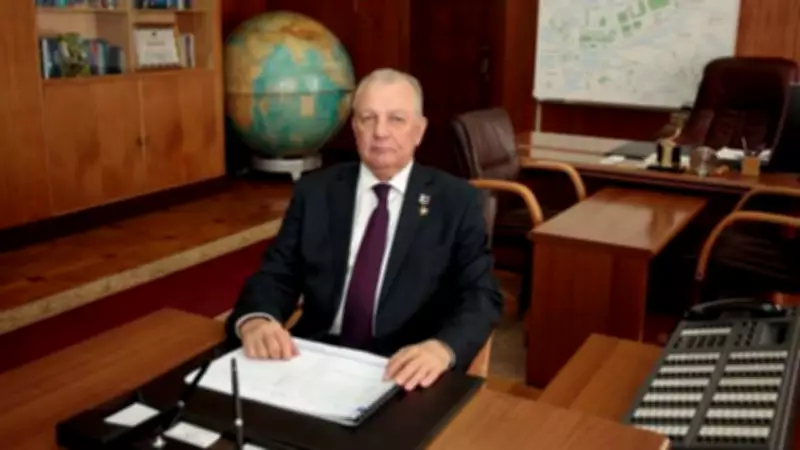
Renowned Russian Missile Scientist Alexander Leonov Passes Away at 74
Alexander Leonov, a distinguished Russian missile scientist celebrated for his instrumental role in the development of the BrahMos and Zircon missiles, has passed away at the age of 74. Leonov served as the CEO and Chief Designer at NPO Mashinostroyenia (NPO Mash), an organization responsible for some of the most technologically advanced missile systems of the current generation.
Early Career and Contributions
Born in 1952, Leonov graduated from the Moscow Institute of Aviation and began his career at NPO Mash in 1975. His expertise and leadership were crucial in the creation of several prominent missile systems, including the P-800 Onyx, which formed the basis for the BrahMos missile. The BrahMos, named after India's Brahmaputra River and Russia's Moscova River, stands as a testament to his innovative work in missile technology.
Impact of the BrahMos Missile
The BrahMos missile has become a critical weapon system for India, deployed across multiple branches of its armed forces. During Operation Sindoor, the Indian Air Force utilized the air-launched version of the BrahMos to target airfields in Pakistan with pinpoint accuracy, effectively disabling runways and enhancing strategic capabilities. The Indian Navy employs the BrahMos as its primary anti-ship weapon on frontline ships, while the army has equipped several artillery regiments with this missile. Additionally, two Su-30 MKI fighter squadrons in the Indian Air Force are configured to carry the BrahMos.

India has significantly expanded the missile's capabilities, increasing its range from an initial 290 kilometers to 800 kilometers. Ongoing efforts focus on developing an improved and lighter air-launched variant that could be integrated with aircraft such as the Tejas, Sukhoi-30MKI, MiG-29, and Tejas Mk2, further broadening its operational envelope.
Development of the Zircon Hypersonic Missile
Beyond the BrahMos, Leonov was a central figure in the development of the Zircon hypersonic cruise missile. According to the scientific periodical Popular Mechanics, the Zircon can achieve speeds of up to Mach 9, or approximately 11,000 kilometers per hour, translating to nearly 180 kilometers per minute. This ship-fired missile represents a significant advancement in hypersonic technology, underscoring Leonov's contributions to modern defense systems.
Legacy and Global Recognition
Alexander Leonov's work has left an indelible mark on the field of missile technology, with his innovations enhancing the strategic capabilities of both Russia and India. His leadership at NPO Mashinostroyenia fostered the development of pathbreaking missiles that continue to shape global defense landscapes. The passing of this top scientist marks the end of an era in advanced military research and development.






