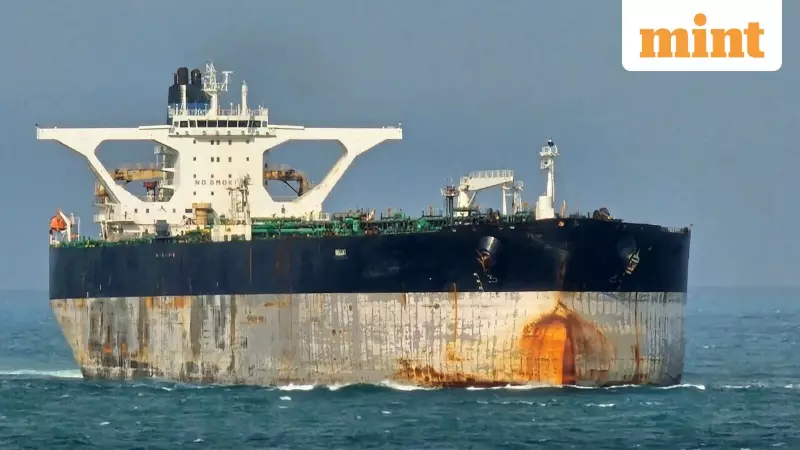
In a dramatic escalation of maritime tensions, Russia has deployed a submarine and other naval assets to escort an oil tanker that the United States has been attempting to seize off the coast of Venezuela. This high-stakes move directly challenges the Trump administration's efforts to crack down on vessels transporting illicit oil, primarily from sanctioned nations like Russia and Iran.
The Chase of the Bella 1
The focal point of this confrontation is the tanker formerly known as the Bella 1. For over two weeks, this vessel has been evading a U.S. blockade targeting sanctioned oil tankers near Venezuela. Although it failed to dock and load oil in Venezuela, the U.S. Coast Guard pursued the empty tanker deep into the Atlantic Ocean. The pursuit is part of a broader U.S. campaign against a global "dark fleet" of tankers that move black-market oil, a trade that has expanded rapidly since Russia's invasion of Ukraine.
In December, the crew of the Bella 1 successfully repelled a U.S. attempt to board the ship. As the Coast Guard continued its chase, the crew took the unusual step of sloppily painting a Russian flag on the hull, changing the vessel's name to Marinera, and switching its registration to Russia. Experts note that Russia allowed this registration without the standard inspection, a clear signal of its intent to protect the ship.

Legal and Diplomatic Stalemate
This reflagging has significantly complicated the U.S. legal position. Under international law, a vessel legitimately registered under a state's flag is entitled to that nation's protection. Retired Rear Adm. Fred Kenney, a former legal director at the International Maritime Organization, explained that the U.S. cannot retroactively apply its earlier justification for seizure once the ship is registered.
Russia has formally asked the U.S. to stop pursuing the Marinera. The Russian Foreign Ministry stated it is monitoring the situation "with concern," while the U.S. military's Southern Command declared its readiness to "stand against sanctioned vessels" in the region. The tanker, tracked via AIS positioning, was sailing about 300 miles south of Iceland toward the North Sea, reportedly bound for Murmansk, Russia.
Broader Implications for the 'Dark Fleet'
This incident is not isolated. The U.S. has already apprehended two other large crude carriers, the Skipper and the Centuries, from the same shadowy fleet. Analysts estimate this "dark fleet" now comprises over 1,000 tankers with obscure ownership, no Western insurance, and a tendency to use deceptive tactics like turning off transponders.
The Kremlin's direct military involvement raises profound questions. "Will Russia step in and protect the dark fleet on a regular basis?" asked William Baumgartner, former chief counsel for the Coast Guard. If so, it could undermine claims of legitimate ties to these vessels and signal a more aggressive Russian posture in protecting its sanctions-evading oil trade.
This maritime flare-up occurs alongside strained U.S.-Russia diplomatic talks on Ukraine, threatening to further complicate international relations. The incident underscores the growing global challenge of enforcing sanctions against a sophisticated network of illicit oil traders, with the potential for increased naval confrontations in international waters.