

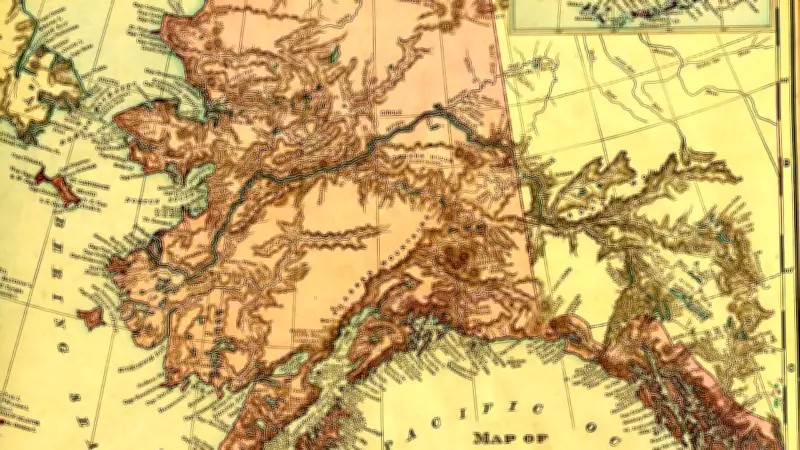
The $7.2 Million Mistake: How Russia Lost Alaska's Fortune
In the year 1867, the Russian Empire made a decision that would echo through history as one of the most shortsighted geopolitical moves ever recorded. By selling the vast territory of Alaska to the United States for a mere $7,200,000, Russia unwittingly relinquished what would become one of the world's most resource-rich and strategically vital regions. At the time, this transaction appeared logical given Russia's circumstances, but with the benefit of hindsight, it stands as a monumental blunder that cost Russia immeasurable wealth and influence.
Why Russia Agreed to the Alaska Purchase
The choice to sell Alaska was rooted in a combination of economic desperation and political pragmatism. By the mid-19th century, the Russian Empire was grappling with severe financial difficulties, largely stemming from the costly Crimean War. Managing remote, sparsely populated territories like Alaska had become an unsustainable burden for the cash-strapped empire.
According to historical sources like EBSCO, "the Russian-American Company was in decline, and the colony failed to yield any profit." The once-lucrative fur trade, which had been Alaska's primary economic driver, was in sharp decline, further diminishing the territory's perceived value to Russia.

Politically, Russia faced a looming threat from Great Britain. There was genuine fear that in the event of another conflict, Britain might seize Alaska without compensation. Selling the territory to the friendly United States appeared as a strategic move to prevent this scenario while recouping some funds. As noted by the Office of the Historian, U.S. Secretary of State William H. Seward saw the purchase as "a chance to expand its influence in North America and hinder further growth of Britain." For Russia, it was a transaction aimed at minimizing losses, but one that catastrophically undervalued Alaska's future potential.
The Hidden Wealth Russia Surrendered
What Russia failed to anticipate was the staggering natural wealth lying beneath Alaska's surface. Within decades of the purchase, the territory yielded discoveries of enormous deposits that transformed it into an economic powerhouse.
- Gold: Alaska has produced over 40 million ounces of gold, according to the U.S. Geological Survey, making it one of the world's most significant gold-producing regions.
- Oil: The discovery of the Prudhoe Bay oil field in 1968 revealed one of North America's largest oil reserves, cementing Alaska's status as an energy giant.
- Minerals: The state is home to some of the planet's most substantial undeveloped mineral deposits, offering untapped potential for future resource extraction.
In retrospect, the $7.2 million price tag—equivalent to about two cents per acre—seems almost laughable. Historian Howard I. Kushner aptly summarized the deal as having "robbed Russia of an enormously rich territory, the true value of which would only be recognised in the twentieth century."
Strategic and Geopolitical Consequences
Beyond its natural resources, Alaska's strategic importance has proven invaluable to the United States. Its location bordering the Arctic Ocean and proximity to Russia—just 90 kilometers across the Bering Strait—has made it a critical asset in defense and global politics.
During the Cold War, Alaska became a frontline region for the United States, hosting military facilities and early warning systems essential for national security. According to Colonel Michael J. Forsyth of the U.S. Army, this closeness to Russia meant that Alaska "became highly significant to the United States' defence plans."
Today, Alaska remains pivotal in U.S. policies related to the Arctic, energy security, and environmental stewardship. Its strategic position enables American influence in a region growing in geopolitical importance due to climate change and resource competition.
A Decision Driven by Short-Term Needs
Looking back, it is clear that Russia's decision was motivated by immediate pressures rather than long-term vision. Faced with economic constraints and geopolitical fears, the empire opted for a quick solution that addressed its short-term problems but forfeited a treasure trove of future benefits.

This transaction highlights a classic pitfall in statecraft: prioritizing present exigencies over future potential. While Russia alleviated some financial strain and avoided a potential British takeover, it lost a territory whose value would multiply exponentially in the coming centuries.
In conclusion, the Alaska Purchase stands as a historic lesson in the perils of undervaluing strategic assets. What seemed like a sensible deal in 1867 has, over time, revealed itself as a colossal miscalculation, depriving Russia of wealth and influence that continue to shape global dynamics today.





