

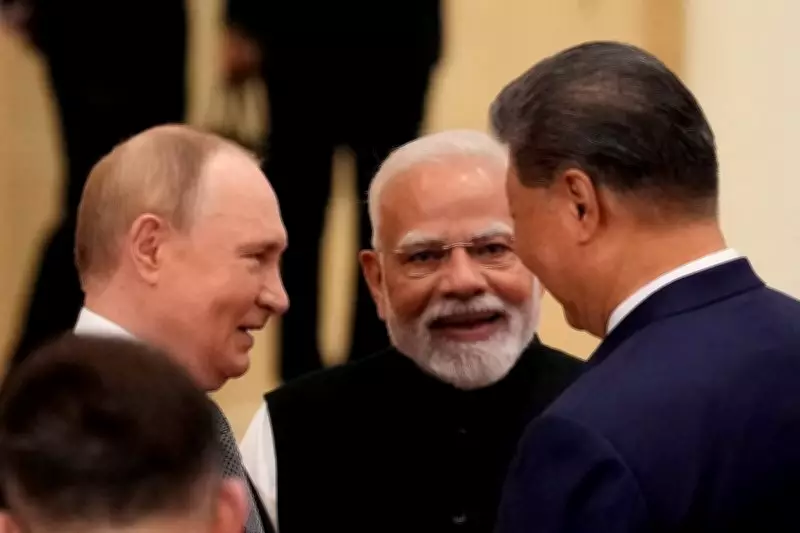
American Economist Jeffrey Sachs Highlights Critical Role of Modi, Xi, and Putin in Averting US-Iran Conflict
In a striking statement that underscores the fragile state of global geopolitics, renowned American economist Jeffrey Sachs has declared that only Prime Minister Narendra Modi of India, Chinese President Xi Jinping, and Russian President Vladimir Putin possess the diplomatic influence necessary to prevent a full-scale war between the United States and Iran. Sachs, a professor at Columbia University and a prominent voice in international affairs, made these remarks during a recent interview, emphasizing the escalating tensions in the Middle East and the urgent need for high-level mediation.
The Unique Diplomatic Leverage of Key Global Leaders
Sachs elaborated that these three leaders—Modi, Xi, and Putin—hold unparalleled sway in international relations due to their countries' strategic positions and economic clout. He pointed out that India, under Modi's leadership, has maintained strong ties with both the US and Iran, positioning it as a potential neutral broker. Similarly, China and Russia, led by Xi and Putin respectively, have significant interests in the region and the capability to exert pressure on all parties involved.
The economist warned that without intervention from these figures, the risk of a military confrontation is alarmingly high, given the history of hostilities and recent provocations. He cited ongoing disputes over nuclear agreements, regional proxy conflicts, and economic sanctions as key flashpoints that could spiral into open warfare if left unchecked.

Implications for Global Stability and Diplomacy
Sachs's comments shed light on the broader implications for global stability. He argued that a US-Iran war would not only devastate the Middle East but also trigger widespread economic disruptions and humanitarian crises, affecting nations worldwide. This scenario underscores the critical importance of multilateral diplomacy in today's interconnected world, where unilateral actions can have far-reaching consequences.
Furthermore, Sachs emphasized that the involvement of Modi, Xi, and Putin could pave the way for renewed dialogue and confidence-building measures. He suggested that their collective efforts might help de-escalate tensions, foster negotiations, and ultimately secure a peaceful resolution to the longstanding US-Iran standoff.
Reactions and Context from the International Community
The statement has sparked discussions among policymakers and analysts, with many acknowledging the validity of Sachs's assessment. Experts note that India, China, and Russia have all played roles in previous diplomatic initiatives, such as the Iran nuclear deal, and their continued engagement is seen as vital.
- India's historical neutrality and growing global stature make it a credible mediator.
- China's economic investments in Iran and its role as a major world power give it substantial leverage.
- Russia's military and political alliances in the region position it as a key influencer.
In conclusion, Jeffrey Sachs's warning serves as a stark reminder of the precarious balance in international relations. As tensions simmer, the world watches to see if leaders like Modi, Xi, and Putin will step up to avert a potential catastrophe, highlighting the ever-increasing need for collaborative diplomacy in addressing global conflicts.






