

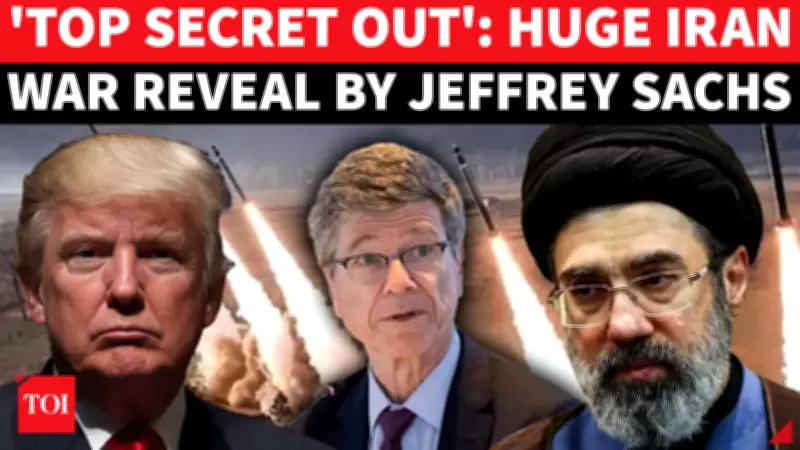
Jeffrey Sachs Issues Reality Check to Trump Administration on Iran Conflict
Prominent economist Jeffrey Sachs has delivered a scathing critique of U.S. President Donald Trump and Israel regarding the escalating tensions with Iran. In a detailed analysis, Sachs argues that Washington's current approach is fundamentally flawed and destined for failure.
Historical Context and Iranian Resistance
Sachs emphasizes that understanding Iran's deep historical and cultural heritage is crucial to comprehending its current stance. He specifically points to the 1953 CIA-backed coup that overthrew Iran's democratically elected Prime Minister Mohammad Mosaddegh as a pivotal event that continues to shape Tehran's distrust of Western powers.
The economist contends that by ignoring this historical context, the United States is repeating past mistakes. He suggests that Iran's resistance today is partly rooted in decades of foreign intervention and perceived injustice, making simplistic military or diplomatic pressure ineffective.

Warning of Global Consequences
Sachs issues a dire warning about the potential consequences of continued escalation. He argues that pushing toward military confrontation would be catastrophic for all parties involved, with no true victors emerging from such a conflict.
The global economy could face severe disruptions, Sachs cautions, pointing to potential impacts on oil markets, international trade, and financial stability. He stresses that a war would devastate regional stability and have far-reaching humanitarian costs.
Questioning International Alliances
In his critique, Sachs also raises questions about the relevance of NATO in the current geopolitical landscape and expresses concern over Europe's relative silence on the Iran issue. He suggests that traditional alliances may be ill-equipped to address complex modern conflicts.
The economist's analysis comes amid rising tensions in the Middle East, with multiple incidents reported between Iranian forces and U.S. or Israeli assets. Recent developments include:
- Reports of missile attacks targeting Israeli cities
- Incidents involving U.S. military aircraft in the region
- Allegations of Iranian cyber attacks on international infrastructure
- Growing concerns about proxy conflicts involving regional actors
Sachs concludes that a diplomatic solution grounded in historical understanding and mutual respect offers the only viable path forward. He urges policymakers to learn from past interventions rather than repeating patterns that have consistently failed to achieve lasting peace or stability in the region.






