

Saudi Crown Prince Reportedly Urged Trump to Sanction UAE Over Sudan War Support
The New York Times has reported that Saudi Crown Prince Mohammed bin Salman urged former US President Donald Trump to consider imposing sanctions tied to the United Arab Emirates government's support for an armed group fighting in Sudan's devastating civil war. This revelation has turned Gulf whispers into a full-blown public feud between the two oil-rich nations.
Conflicting Accounts of the November Conversation
According to the report, the conversation occurred in November and has sparked significant diplomatic tensions. However, accounts of what exactly was discussed vary between sources.
A Saudi official offered a different version of events, stating that Prince Mohammed asked Trump to place additional sanctions specifically on the Sudanese armed group to prevent it from receiving external support, rather than requesting direct measures against the Emirates. The Saudi leadership reportedly made this request because they believed that if the Emirati government withdrew its backing, the war in Sudan would come to an end.

A US official confirmed that Prince Mohammed never explicitly asked President Trump to impose sanctions on the Emirates, though they declined to comment further on the specifics of the call.
Fallout and Escalating Tensions
While the precise details remain in dispute, the consequences are undeniable. Soon after Trump's call, latent tensions between the Saudi and Emirati governments erupted into a public confrontation. The information relayed by Trump reportedly infuriated senior Emirati officials, who felt betrayed by Saudi Arabia, once one of their closest regional allies.
Relations deteriorated rapidly, reaching a low point in December when Saudi Arabia bombed an Emirati shipment bound for Yemen. This incident marked a significant escalation in their ongoing competition for dominance across the Middle East and Horn of Africa.
Broader Regional Implications
The discord between these two influential neighbors carries far-reaching consequences with potential to move markets and exacerbate multiple regional conflicts. Their rivalry has already reshaped the future of Yemen and threatens to worsen conflicts in the Horn of Africa, where both powers have positioned themselves on opposing sides in several countries.
The rift also presents a diplomatic challenge for the Trump administration, which hopes to maintain support from both Saudi Arabia and the Emirates for its Middle East policies concerning Gaza and Iran.
Background: Sudan's Civil War and Competing Interests
Sudan's devastating civil war, raging since 2023, has received relatively little attention from the Trump administration despite its humanitarian toll. Saudi Arabia supports the Sudanese armed forces, while the Emirates has been the principal backer of the Rapid Support Forces (RSF), a paramilitary group fighting for control of the country.
Substantial evidence suggests the Emirates has funneled money, weapons, and drones to the RSF. In recent months, the Emirates has faced growing international criticism as the RSF has been accused of committing massacres and grave human rights violations, particularly around the city of El Fasher in Darfur. United Nations-backed experts recently stated that the RSF campaign bears the "hallmarks of genocide."
The Emirati government, in a statement to The New York Times, "categorically rejects allegations" that it has provided material support to the RSF, claiming its role is limited to humanitarian aid and ceasefire efforts.
Historical Context: From Allies to Rivals
A decade ago, Sheikh Mohammed bin Zayed Al Nahyan of the UAE and Prince Mohammed were close partners with largely aligned regional priorities. They joined forces in the disastrous military intervention in Yemen against Houthi rebels and later partnered to isolate Qatar, accusing its government of supporting terrorism.

Over recent years, their paths have diverged significantly. Prince Mohammed has turned Saudi Arabia's focus inward, emphasizing the need for regional stability to successfully diversify the kingdom's economy. His ambitions to transform Saudi Arabia into a global business and tourism hub increasingly conflict with those of Dubai, the largest Emirati city and the Middle East's financial capital.
In contrast, Sheikh Mohammed has pursued a more assertive foreign policy for the Emirates, rooted partly in antagonism toward Islamism, which he views as a regional and national security threat. Some Emirati officials privately see the RSF in Sudan as an ally in this broader battle, as they fight against the Sudanese military, which they claim has dangerous Islamist tendencies.
The White House Visit and Aftermath
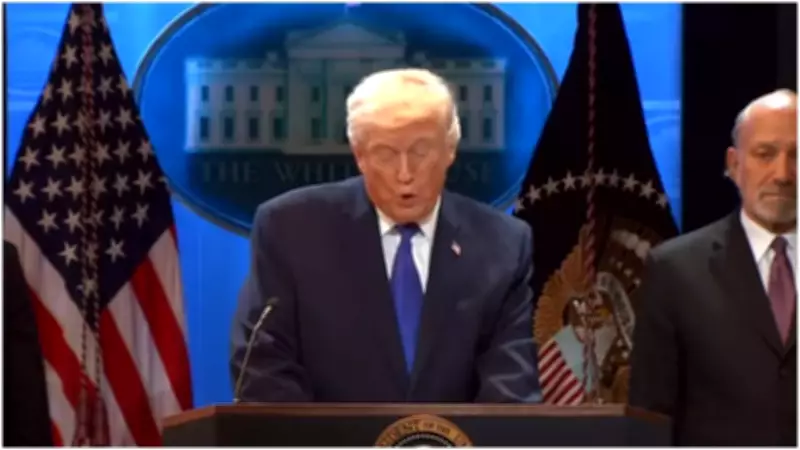
During Prince Mohammed's November visit to the White House, he reportedly asked President Trump to help forge peace in Sudan. At a Saudi-US business forum held during the visit, Trump gave a speech indicating he would look into resolving the conflict at the prince's behest.
"His Majesty would like me to do something very powerful having to do with Sudan," Trump said. "We're going to start working on it."
The potential involvement of the Trump administration threatened to compound international pressure on the Emirates over its role in the war. Since the November phone call, Emirati leadership remains convinced that the Saudi leader requested US sanctions against their country.
Escalation in Yemen and Current Status
In the weeks following the prince's Washington visit, friction between Saudi Arabia and the Emirates escalated sharply, with consequences playing out most dramatically in Yemen. In December, an armed Yemeni separatist group backed by the Emirates led an offensive into southern Yemen near the Saudi border. The Saudis viewed these moves as a national security threat and bombed an Emirati shipment to Yemen, accusing the Emirates of sending weapons to the group.
The Emirati government denied these accusations and announced it would withdraw its troops from Yemen immediately, leaving the separatist group vulnerable as Saudi-backed forces advanced and reclaimed territory.
The Saudi leadership believes the Emirati government initiated the separatist group's offensive due to their anger over the sanctions discussion, according to the Saudi official.
Diplomatic Efforts and Business Ties
The Biden administration, which has privately confronted Emirati leadership over its support for the RSF, has attempted to smooth tensions between the two Gulf nations to encourage regional cooperation. Meanwhile, the Trump administration has avoided publicly taking sides between the two countries, both of which maintain extensive business ties with the president's family.
An investment firm linked to the Emirati government quietly purchased nearly half of the Trump family's cryptocurrency company last year, while Saudi Arabia's sovereign wealth fund recently teamed up with a private equity firm run by Jared Kushner, Trump's son-in-law, for a $55 billion buyout of a video game publisher.
When asked by a journalist on February 16 if he was involved in the rift between Saudi Arabia and the Emirates, Trump responded that he was not, but added, "We can get it settled very easily. That's an easy one to settle."
All sources cited in the New York Times report spoke on condition of anonymity to discuss diplomatically sensitive conversations. The Emirati foreign ministry declined to comment on the call between Trump and Prince Mohammed.





