

Leaked Documents Expose Secret Saudi-Pakistan Defense Pact Amid Iran Conflict
Classified documents have been leaked, revealing the intricate details of a secret mutual defense agreement between Saudi Arabia and Pakistan. This disclosure exposes how Islamabad might be far more deeply entangled in the ongoing Iran conflict than previously acknowledged by officials. The revelations come at a critical time, as regional tensions escalate and diplomatic efforts falter.
Activation of the Strategic Mutual Defense Agreement
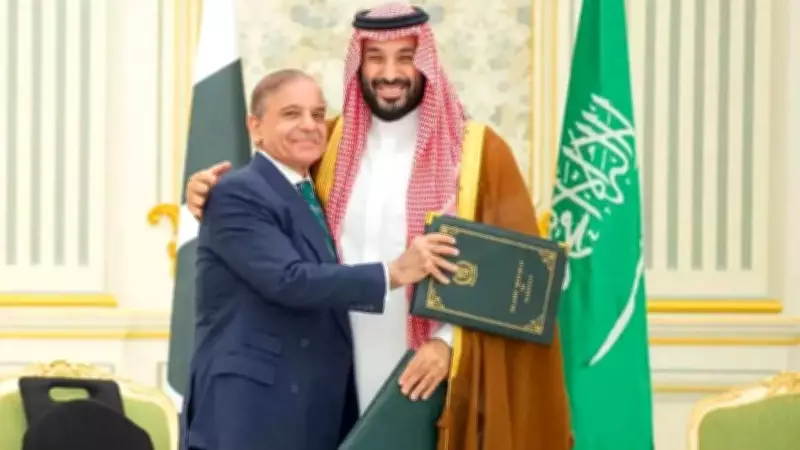
The leaked files, obtained by Drop Site News, detail the Strategic Mutual Defense Agreement, which was formally signed in 2025. This pact has already been activated in response to the escalating regional war. In a public announcement on Saturday, Saudi Arabia confirmed that Pakistani military forces, including aircraft, have arrived at King Abdulaziz Air Base in the kingdom's Eastern Sector. This deployment aims to enhance joint operational readiness between the two nations.
Pakistan's Diplomatic Balancing Act Under Strain
This military deployment is particularly significant because Pakistan has been presenting itself as a neutral mediator in ceasefire negotiations between the United States and Iran. Those talks, hosted in Islamabad, collapsed over the weekend after American officials departed without securing an agreement. The leaked documents now suggest that Pakistan's diplomatic balancing act is under severe strain. The defense pact could legally compel Pakistan to defend Saudi Arabia if requested, potentially drawing it directly into the conflict.

The agreement has never been made fully public and was not presented before Pakistan's parliament, raising serious questions about transparency and democratic oversight. According to the documents, the current pact evolved from earlier confidential military agreements dating back to 1982 and 2005. However, a crucial amendment in 2021 dramatically expanded Pakistan's obligations. For the first time, Islamabad became formally bound to send forces to Saudi Arabia if the kingdom's sovereignty, territorial integrity, or security interests came under threat.
Internal Concerns and One-Sided Nature
Internal Pakistani memos cited in the leak reveal unease within military circles over the one-sided nature of the arrangement. Officials reportedly expressed worries that the language of the pact could drag Pakistan into conflicts beyond Saudi territory, particularly those involving Iran. At the same time, the agreement offers little reciprocal military guarantee from Riyadh, creating an imbalance that heightens risks for Islamabad.
Sensitive Timing and Regional Pressures
The timing of the pact's activation is especially sensitive. Iran has launched repeated strikes on Saudi military and energy infrastructure in retaliation for attacks linked to the wider US-Israeli campaign. Saudi Arabia recently disclosed that attacks on a critical pipeline had wiped out 10 percent of its export capacity, increasing pressure on its regional allies to provide support.
Financial Dependence and Diplomatic Limitations
Pakistan's dependence on Saudi financial support adds another layer of complexity to this situation. As Islamabad struggles with economic instability, Riyadh and Qatar have recently stepped in with $5 billion in financial assistance after the UAE recalled a loan. Analysts indicate that this financial reliance may severely limit Pakistan's room to maneuver diplomatically, forcing it to align more closely with Saudi interests despite potential conflicts.
Urgency in Peace Brokering and Strategic Risks
The leak also explains Pakistan's urgency in trying to broker peace between the United States and Iran. A direct military confrontation with Iran would carry enormous domestic and strategic risks for Islamabad. Pakistan shares a sensitive border with Iran and has a large Shia population sympathetic to Tehran, making any involvement in conflict particularly dangerous.

Stark Contradiction in Pakistan's Position
What emerges from the leaked documents is a stark contradiction in Pakistan's foreign policy. While the country publicly seeks to mediate peace and present itself as a neutral party, it is privately bound by treaty to a military alliance that could force it into the very war it is trying to stop. This dual role creates significant challenges for Pakistan's diplomatic credibility and regional stability.
The exposure of this secret defense pact highlights the complex web of alliances and dependencies in the Middle East, with Pakistan caught between its financial ties to Saudi Arabia and its geographic and demographic connections to Iran. As the conflict continues to evolve, the implications of these leaked documents will likely reverberate through international diplomacy and regional security discussions.





