

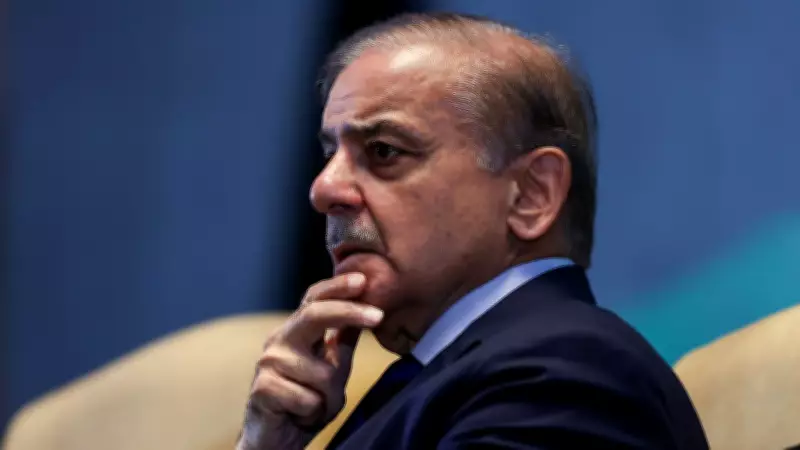
In a remarkably frank and revealing statement, Pakistan Prime Minister Shehbaz Sharif has publicly admitted the profound national humiliation and difficult compromises his country endured while securing critical foreign loans during its recent severe economic turmoil. Speaking at a ceremony honoring prominent businessmen and exporters in Islamabad, Sharif described how Pakistan was compelled to "bow its head" and sacrifice self-respect when approaching friendly nations for financial assistance.
Recalling the Brink of Bankruptcy
Prime Minister Sharif vividly recalled the precarious period when Pakistan stood on the verge of technical default, with bankruptcy looming large. He emphasized that upon assuming office, his government inherited an "extremely fragile" economic situation where ordinary citizens faced immense hardships and uncertainty. The nation's financial stability was hanging by a thread, requiring immediate and drastic intervention.
The Heavy Cost of Seeking Foreign Assistance
Sharif reflected deeply on the emotional and diplomatic toll of requesting billions in loans from international partners. "How should I tell the way we requested friendly countries for loans?" he questioned rhetorically. "The friendly countries didn't disappoint us. But the one who goes to seek a loan, his head is bowed down."

The Prime Minister elaborated that such financial arrangements inevitably create binding obligations that must be honored, sometimes at great cost to national pride and autonomy. "When you go seeking loans, you have to pay the price at the cost of your self-respect. You have to compromise," Sharif stated candidly. He added that lenders occasionally present "undue demands" that borrowing nations must implement even when justification appears lacking.
International Support and Economic Stabilization
Despite the difficult negotiations, Sharif acknowledged Pakistan received substantial support from allied nations during this critical phase. He specifically mentioned collaborating closely with Chief of Army Staff and Chief of Defence Forces Field Marshal Asim Munir to meet with leaders of multiple countries, securing vital financial lifelines.
The Prime Minister highlighted his 2023 meeting with the International Monetary Fund Managing Director in Paris as particularly significant. Following this engagement, the IMF approved an economic program that played a crucial role in stabilizing Pakistan's teetering economy and preventing complete collapse.
Ongoing Dependence on Foreign Assistance
Pakistan continues to rely heavily on financial support from key partners including China, Saudi Arabia, the United Arab Emirates, and Qatar to manage its foreign exchange reserves and service mounting debt obligations. These nations, alongside the IMF, regularly provide loans and rollovers to the cash-strapped South Asian country, maintaining a delicate economic balance.
Relief Measures for Industry and Exporters
During the same Islamabad event, Prime Minister Sharif announced several economic relief initiatives designed to stimulate industrial growth and boost exports. These measures include:
- A substantial reduction of PKR 4.04 per unit in electricity tariffs to lower production costs
- Decreasing wheeling charges to PKR 9 to enhance export competitiveness
- Cutting the export refinance scheme rate from 7.5 percent to 4.5 percent to provide immediate business relief
These strategic interventions aim to accelerate export-led economic growth while offering tangible support to Pakistan's business community during ongoing recovery efforts.
The Prime Minister's unusually candid remarks have shed stark light on the difficult realities facing nations requiring international bailouts, where financial survival often comes at the expense of diplomatic pride and policy autonomy.






