

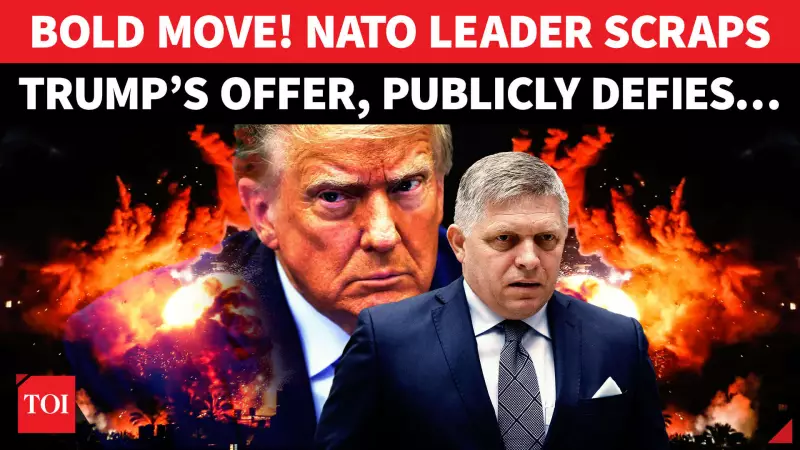
In a significant diplomatic development, Slovakia has firmly rejected an invitation from US President Donald Trump to participate in a proposed Gaza "Board of Peace." This move underscores a growing wave of European skepticism toward Trump-led diplomatic initiatives in the Middle East.
Slovak PM's Decisive Rejection
Slovak Prime Minister Robert Fico has unequivocally declined the invitation, urging his nation to "decline and move on." Fico raised pointed questions about the plan's financial implications, overall credibility, and its connections to the United Nations framework. His stance highlights a cautious approach to international peace efforts spearheaded by the Trump administration.
Concerns Over Cost and Credibility
The Slovak leader expressed deep reservations regarding the potential costs associated with joining the Gaza peace initiative. He emphasized the need for a transparent assessment of financial commitments before any participation. Furthermore, Fico questioned the credibility of the proposed board, suggesting that its effectiveness and legitimacy remain uncertain without clearer ties to established international bodies like the UN.

Growing European Skepticism
Slovakia's rejection adds to a broader trend of European nations expressing doubt about Trump's diplomatic strategies. While some countries have opted to sign on to the Gaza peace plan, others in Europe are increasingly wary. This skepticism reflects concerns over the unilateral nature of such initiatives and their alignment with multilateral diplomatic norms.
Implications for US-Europe Relations
The refusal by Slovakia, a NATO member, signals potential strains in transatlantic relations regarding Middle East policy. It underscores a divergence in approaches to conflict resolution, with European allies seeking more collaborative and UN-linked frameworks. This development could influence future diplomatic engagements between the US and its European partners.
Broader Diplomatic Context
Trump's Gaza "Board of Peace" initiative emerges amid ongoing tensions in the Middle East, including conflicts involving Iran and regional actors. The plan aims to foster stability, but as Slovakia's rejection shows, it faces hurdles in gaining widespread international support. European nations are particularly sensitive to initiatives that may bypass traditional diplomatic channels.
In summary, Slovakia's decision to reject Trump's invitation marks a notable moment in international diplomacy, reflecting broader European hesitancy toward US-led peace efforts in Gaza. As debates over cost, credibility, and UN linkages continue, the path forward for such initiatives remains uncertain.






