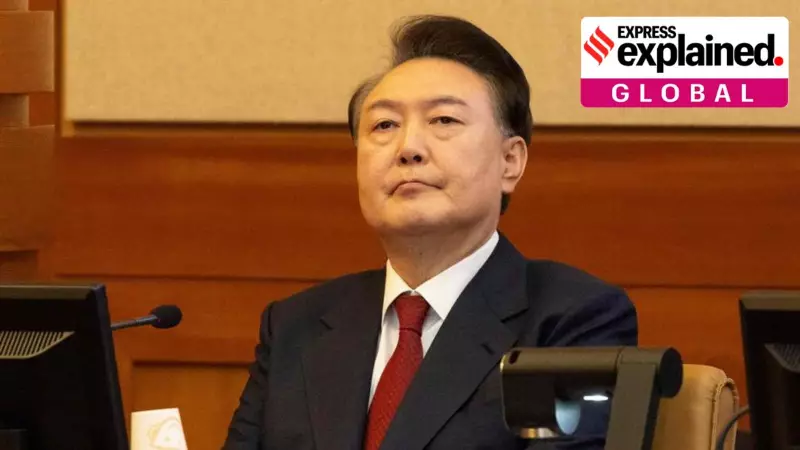
Former South Korean President Sentenced to Five Years in Prison
A Seoul court delivered a significant verdict on Friday afternoon. Former President Yoon Suk Yeol received a five-year prison sentence. This ruling marks the first criminal case connected to his controversial declaration of martial law in December 2024.
Charges and Convictions
The court found Yoon guilty on multiple serious charges. These include obstructing justice, falsifying official documents, and abuse of power. All charges relate directly to his failed attempt to impose martial law.
Prosecutors presented a strong case against the former leader. They argued his actions represented a clear overreach of presidential authority. The martial law declaration shocked the nation and exposed deep political divisions.

Yoon faces additional legal challenges. Separate cases examine corruption allegations and interference in a military investigation. The 2023 death of a soldier remains under scrutiny in these proceedings.
Public Reaction and Political Fallout
Most South Koreans express weariness with the entire situation. Analysts observe widespread public frustration with ongoing court cases and political battles.
Kim Sang-woo, a former politician now with the Kim Dae-jung Peace Foundation, shared his perspective. "Ordinary Koreans feel absolutely fed up with this whole affair," he stated. "People want to focus on pressing daily concerns like rising prices and unemployment."
Current President Lee Jae Myung and his Democratic Party maintain pressure on Yoon's political allies. The People's Party Power suffered major losses in June 2025 elections. Many attribute this defeat directly to Yoon's actions during his presidency.
Legal Proceedings and Sentencing
The five-year sentence represents a significant reduction from prosecutors' initial demands. Just days before this verdict, prosecutors sought the death penalty in a parallel case. That case focuses specifically on insurrection charges related to the martial law declaration.
Yoon displayed defiance throughout the legal process. He smiled and shook his head when prosecutors presented their death penalty request earlier in the week. The former president has shown no remorse for his actions.
Legal experts consider the death penalty request largely symbolic. Rah Jong-yil, a retired diplomat, explained the situation. "The death penalty remains in law but hasn't been used in over twenty years," he noted.
Political Implications and Future Scenarios
The conservative People's Party Power faces an uncertain future. Party leaders recently announced plans to change their name. This move attempts to distance the organization from Yoon's damaged legacy.
Kim Sang-woo described this strategy as "pathetic." He believes it signals the conservative party's weakened position. "A functioning democracy requires strong opposition," he emphasized. "The current situation creates concern about political balance."
Despite the prison sentence, many analysts predict eventual clemency for Yoon. Rah Jong-yil pointed to historical precedents. "Politics follows cycles," he observed. "When the next conservative government takes power, Yoon will likely receive a pardon."
South Korea's political landscape continues evolving. The Democratic Party currently enjoys substantial power. However, Kim Sang-woo predicts eventual change. "Every ruling party becomes complacent over time," he explained. "Mistakes will occur, and voters will eventually seek alternatives."
The nation now watches how this legal chapter concludes. Many citizens hope for renewed political stability and focus on economic challenges.