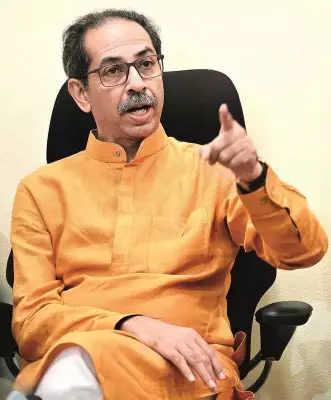
Sri Lanka's ruling political party, the Janatha Vimukthi Peramuna (JVP), has issued a strong condemnation of recent actions taken by the United States against Venezuela. The party's leader, Anura Kumara Dissanayake, articulated a firm stance on the principle of national sovereignty, arguing that powerful countries do not possess the right to violate this fundamental tenet of international relations.
A Principle for All Nations
During a press interaction, Dissanayake emphasised that the principle of sovereignty must be universally respected, regardless of a country's economic or military strength. He stated that the JVP's position is consistent and applies to all nations, including powerful global actors. The core argument presented is that no country, no matter how influential, should be permitted to interfere in the internal affairs of another sovereign state. This statement comes in direct response to the United States' decision to reimpose oil sanctions on Venezuela, a move that has drawn international scrutiny and debate.
Context of the US-Venezuela Dispute
The United States government recently decided to reinstate restrictive sanctions on Venezuela's crucial oil and gas sector. This action reversed a brief period of relief that had been granted months earlier. The US administration cited a failure by Venezuelan President Nicolas Maduro's government to uphold its electoral commitments as the primary reason for reinstating the punitive measures. The sanctions are a significant economic tool, directly targeting Venezuela's main source of foreign revenue. This development has reignited discussions on the use of unilateral sanctions and their impact on the principle of non-interference.

The JVP's criticism aligns with a broader perspective often held by several nations which advocate for a multipolar world order where international law is applied uniformly. The party's leadership used this opportunity to reiterate its long-standing foreign policy view, which champions the rights of all nations to self-determination without external pressure or coercion.
Broader Implications and Regional Stance
This pronouncement by Sri Lanka's ruling party is notable as it reflects a willingness to comment on international geopolitical matters beyond the immediate South Asian region. By taking a clear stand on the US-Venezuela issue, the JVP is signalling its foreign policy priorities, which are rooted in a strict interpretation of sovereignty and non-alignment. The statement underscores a belief that diplomatic and political solutions, rather than coercive economic measures, should be the pathway for resolving international disagreements.
Analysts observe that such positions resonate in various parts of the Global South, where there is historical sensitivity towards interventions by major powers. The JVP's firm rhetoric may also be seen as reinforcing a diplomatic posture of independence, as Sri Lanka navigates its own complex economic and foreign relations landscape. The party's clear condemnation serves to highlight the ongoing global divide on the legitimacy and application of unilateral sanctions as a foreign policy instrument.
Ultimately, the JVP's intervention in this matter places it firmly within an international discourse that questions the dominance of unilateral actions in global affairs. It reaffirms a commitment to the Charter of the United Nations, which enshrines the sovereign equality of all its member states. The party's stance, as voiced by Anura Kumara Dissanayake, is a reminder of the enduring relevance of these principles in contemporary geopolitics.