

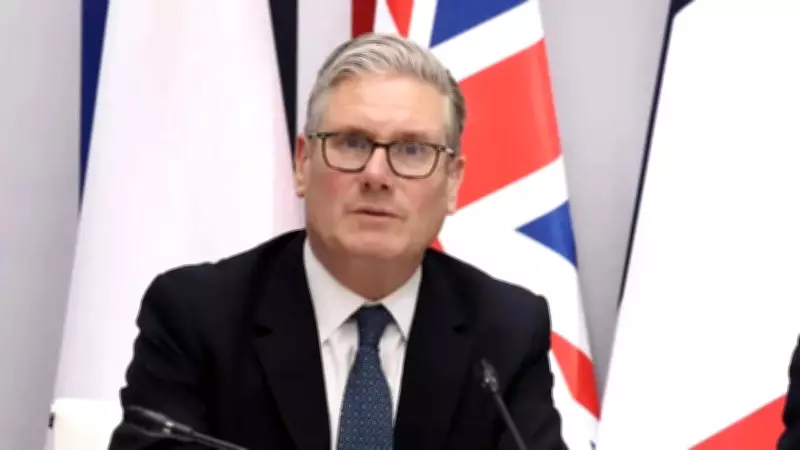
UK Prime Minister Expresses Fury Over Security Vetting Cover-Up
British Prime Minister Keir Starmer declared himself "absolutely furious" on Friday after discovering he had been kept in the dark about former Labour minister Peter Mandelson's failed security vetting before Mandelson's appointment as UK ambassador to the United States. The revelation has sparked immediate calls for Starmer's resignation from opposition leaders who accuse him of misleading Parliament.
Systematic Information Withholding Exposed
Investigations have uncovered that two of Starmer's most senior aides were aware of the vetting failure weeks before the prime minister received any notification. According to detailed reports, Cat Little, the Permanent Secretary at the Cabinet Office, received a damning security document in late March. She subsequently informed Cabinet Secretary Dame Antonia Romeo, and the two officials engaged in discussions about the potential risks associated with sharing this critical information.
Remarkably, up to a dozen officials and legal advisors reportedly knew about the security clearance failure before Starmer was finally approached on Tuesday. This systematic withholding of information from the highest levels of government has created a significant political crisis for the Labour administration.

Foreign Office Overruled Security Officials
The Guardian's Thursday report revealed that Mandelson was initially denied security clearance in early 2025 following a highly confidential background investigation. Despite this rejection, the Foreign Office took the extraordinary step of overruling the decision made by security officials, thereby clearing the path for Mandelson to assume the prestigious ambassadorial role in February of that year.
Starmer's anger specifically targets the Foreign Office's failure to inform him about their decision to override security recommendations. In response to this breach of protocol, the prime minister dismissed Sir Olly Robbins, the department's top civil servant, on Thursday.
"Unforgivable" Breach of Trust
"That I wasn't told that he had failed security vetting when I was telling parliament that due process had been followed is unforgivable," Starmer told The Guardian in a strongly worded statement. "Not only was I not told, no minister was told, and I'm absolutely furious about that."
Downing Street reinforced this position with an official statement on Thursday, clarifying: "Neither the Prime Minister, nor any Government Minister, was aware that Peter Mandelson was granted Developed Vetting against the advice of UK Security Vetting until earlier this week."
Opposition Demands Accountability and Resignation
The political fallout has been immediate and severe. Liberal Democrat MP Lisa Smart has formally reported Starmer to his ethics adviser, Sir Laurie Magnus, for a potential violation of the ministerial code. "The Prime Minister failed to tell Parliament that he knew Mandelson had been denied vetting on Wednesday, presumably crossing his fingers and hoping the truth would not come out," Smart asserted.
Senior Conservative MP Neil O'Brien added weight to the criticism, stating: "The Ministerial Code could not be clearer on this. The Prime Minister, having misled the House, is supposed to correct the record as soon as he possibly can. He was caught, he didn't admit it."
Conservative leader Kemi Badenoch escalated the pressure by suggesting Starmer should resign if he deliberately misled Parliament about Mandelson's vetting status. Badenoch wrote on social media platform X that the prime minister had "betrayed our national security" through his actions.
Liberal Democrat leader Ed Davey echoed these demands, calling on Starmer to step down if he "lied to the British people" and Parliament. "We already know he showed catastrophic political misjudgment in appointing Mandelson to be the UK's ambassador to America," Davey stated in a video message. "He was relying on the vetting process as his defense. It looks like the vetting process was ignored. This is hugely serious, and I think he will probably have to go."

Mandelson's Controversial Background and Security Concerns
The 72-year-old Mandelson was appointed ambassador to the United States in February 2025 but resigned in September following intense scrutiny of his connections to convicted sex offender Jeffrey Epstein. Security concerns extended beyond this relationship to include:
- Chinese business ties through Global Counsel, which he co-founded and whose client roster included Chinese firms Shein and TikTok
- Russian connections through his role as a non-executive director at Sistema, a shareholder in a defense company producing technology for Russia's missile early-warning system
Mandelson was dismissed as UK ambassador last September as documents released by the US Justice Department revealed he maintained a supportive relationship with Epstein even after the financier's imprisonment for sex offenses. The former diplomat has denied any wrongdoing but resigned from his parliamentary seat in early February to prevent "further embarrassment." He faced arrest later that same month on suspicion of misconduct charges.
Starmer offered a public apology to Epstein's victims in early February for appointing Mandelson and for having believed what he called Mandelson's "lies."
Political Reckoning and Next Steps
Starmer is scheduled to address Parliament on Monday to clarify his position regarding the entire controversy. Meanwhile, Sir Olly Robbins will testify before a parliamentary panel on Tuesday, providing further insight into the decision-making processes that led to this security breach.
Historically significant is the fact that no sitting Labour prime minister has ever been removed by their own MPs during the party's 125-year existence. Labour Party regulations require rebels to support a specific rival candidate rather than simply casting a vote of no confidence, creating additional procedural hurdles for any potential leadership challenge.
The coming days will determine whether Starmer can weather this storm or whether the security vetting cover-up will result in unprecedented political consequences for his administration.





