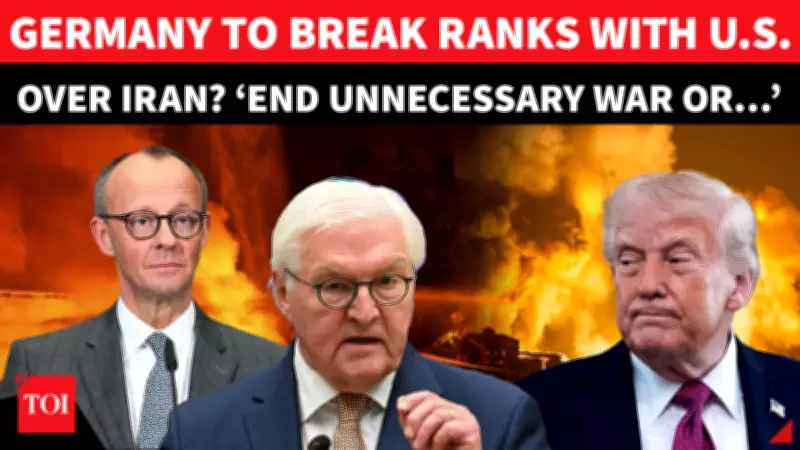
German President Frank-Walter Steinmeier launched a blistering attack on the United States and Israel over the ongoing Iran war, calling the conflict 'avoidable,' 'unnecessary,' and a 'politically disastrous mistake.' In remarks that have sent shockwaves through diplomatic circles, Steinmeier blamed Washington for dismantling the 2015 Iran nuclear deal, the Joint Comprehensive Plan of Action (JCPOA), which he argued could have prevented the current Middle East crisis.
Steinmeier's Sharp Criticism
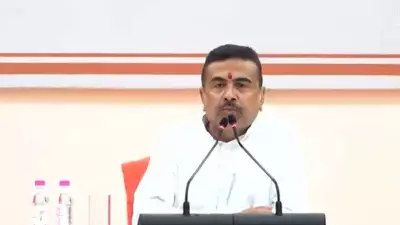
Speaking at a press conference in Berlin, Steinmeier did not mince words. He described the U.S.-led military campaign against Iran as a catastrophic error in judgment. 'This war was not inevitable,' he stated. 'It is the result of a series of political failures, chief among them the unilateral withdrawal from the JCPOA by the United States. That decision destroyed a carefully crafted diplomatic framework that was working to prevent Iran from acquiring nuclear weapons.'
The German president went further, questioning the legality of the military action. 'The justification provided by the United States does not hold water under international law,' he asserted. 'We cannot simply ignore the principles of the United Nations Charter and the rules-based international order. This sets a dangerous precedent.'

Reactions and Implications
Steinmeier's explosive remarks are being viewed as one of the sharpest criticisms yet from a major Western leader against the U.S.-Israeli campaign targeting Iran. The comments come as cracks appear inside the Western bloc, with German Chancellor Friedrich Merz also reportedly saying that the United States had been 'humiliated' by Iran's leadership. This rare public discord among NATO allies has raised questions about the unity of the alliance.
Political analysts suggest that Steinmeier's statements reflect growing frustration in Berlin over what is perceived as reckless U.S. unilateralism. 'Germany has long advocated for a diplomatic solution to the Iran issue,' said Dr. Anna Mueller, a foreign policy expert at the German Institute for International and Security Affairs. 'Steinmeier's comments are a clear signal that Germany is distancing itself from the U.S. approach.'
The timing of the criticism is particularly significant, coming just days before a crucial NATO foreign ministers' meeting. The meeting was expected to address the Iran situation, but Steinmeier's remarks have now placed the alliance's internal divisions in the spotlight. Some observers worry that this could weaken NATO's collective stance on Iran and other global security challenges.
Background: The Iran Nuclear Deal
The JCPOA, signed in 2015 between Iran and the P5+1 (the United States, United Kingdom, France, Russia, China, and Germany), was designed to limit Iran's nuclear program in exchange for sanctions relief. However, in 2018, the Trump administration unilaterally withdrew from the deal, citing insufficient restrictions on Iran's missile program and regional activities. Subsequent U.S. administrations maintained a policy of maximum pressure, leading to escalating tensions and ultimately the current military conflict.
Steinmeier's criticism echoes longstanding European frustrations with U.S. policy on Iran. European leaders had consistently urged Washington to remain in the JCPOA and pursue diplomatic channels. 'The JCPOA was a landmark achievement of multilateral diplomacy,' Steinmeier said. 'By abandoning it, the United States not only damaged transatlantic trust but also emboldened hardliners in Iran and weakened moderates who favored engagement.'
What's Next?
The fallout from Steinmeier's comments is likely to dominate discussions at the upcoming NATO foreign ministers' meeting. While the alliance has officially supported the U.S.-led campaign, individual member states have expressed varying degrees of concern. Germany's open criticism could encourage other European nations to voice their own reservations, potentially leading to a more fragmented Western position.
Meanwhile, the situation on the ground in Iran remains volatile. The U.S. military has been conducting airstrikes against Iranian targets, and Iran has threatened retaliation. The conflict has already caused significant casualties and displacement, with humanitarian organizations warning of a worsening crisis.

Steinmeier's remarks also come amid reports of internal turmoil within the Trump administration, with two high-ranking officials reportedly resigning over the Iran war. Additionally, leaked reports suggest Vice President Vance has clashed with President Trump behind closed doors over the strategy. These developments indicate that the U.S. leadership itself is grappling with the consequences of its military actions.
As the crisis unfolds, the world watches to see whether Steinmeier's blunt criticism will lead to a shift in Western policy or further deepen the rifts within the NATO alliance. For now, the German president's words have added a powerful voice to those calling for an end to the conflict and a return to diplomacy.