A significant political debate is unfolding within Japan's ruling party, centering on the hardline stance towards Taiwan championed by a powerful faction leader. This position is raising alarms about potentially escalating tensions with China and creating unease about the consistency of Japan's foreign policy.
Internal Party Rift Over Taiwan Policy
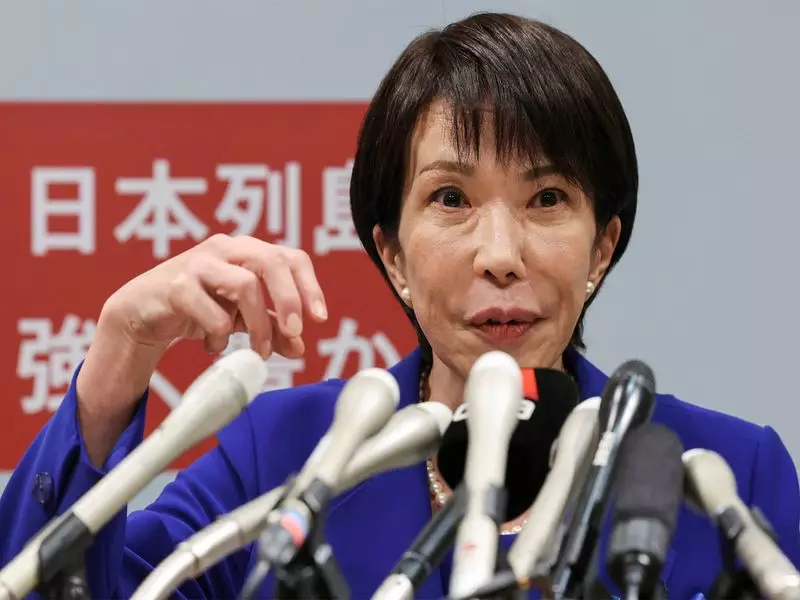
The controversy stems from comments made by Sanae Takaichi, the policy chief of Japan's Liberal Democratic Party (LDP). Takaichi, a prominent figure and former contender for prime minister, has publicly advocated for Japan to explicitly state it would defend Taiwan in the event of a crisis. This marks a stark departure from Japan's long-standing strategic ambiguity on the issue and has ignited a fierce internal debate.
Her stance directly challenges the more cautious approach traditionally favored by the Japanese government and the powerful Ministry of Foreign Affairs. Officials within the ministry and other government branches are reportedly concerned that such explicit declarations could needlessly provoke Beijing and destabilize the delicate security balance in the region.

Strategic Ambiguity vs. Clear Deterrence
Japan's official position on Taiwan has historically been one of strategic ambiguity, aligned closely with its ally, the United States. The core principle is that while Japan opposes any unilateral change to the status quo by force, it does not explicitly commit to military intervention. Takaichi's proposal seeks to replace this with a policy of clear deterrence, arguing that ambiguity only emboldens China.
This internal conflict comes at a critical juncture. Japan is in the process of significantly boosting its defense capabilities and deepening its security alliance with the US, partly in response to China's growing military assertiveness. The debate over Taiwan represents a fundamental question: how directly should Japan confront China to ensure regional stability?
Analysts point out that Takaichi's influence is substantial. As head of the LDP's Policy Research Council, she plays a key role in shaping the party's platform. Her views are seen as reflecting a growing, more hawkish sentiment within a segment of the Japanese political establishment that views China's actions around Taiwan as an immediate threat to Japanese security.
Broader Implications for Regional Security
The ramifications of this policy debate extend far beyond Japan's domestic politics. A shift to an explicitly pro-defense stance on Taiwan would represent a major escalation in the geopolitical rivalry between China and the US-led alliance network in Asia. It could force other regional players to clarify their positions and potentially trigger a more aggressive response from Beijing.
Furthermore, it raises questions about the unity of Japan's foreign policy apparatus. A public rift between the ruling party's leadership and the country's diplomatic corps could send mixed signals to both allies and adversaries, potentially undermining Japan's strategic effectiveness.
The situation underscores the complex and high-stakes calculations facing Tokyo. On one hand, there is a genuine and growing fear of Chinese coercion. On the other, there is a deep-seated concern about stumbling into a conflict. How Japan resolves this internal tension between deterrence and diplomacy will have profound consequences for the security landscape of the entire Indo-Pacific region.