In a significant diplomatic development, the Taliban-led government in Afghanistan has dispatched a senior official to take charge of its embassy in New Delhi. This move comes three months after the Indian government permitted the Taliban to send its diplomats to the mission in the Indian capital.
New Diplomat Assures Local Staff, Fate of Ghani-Era Officials Unclear
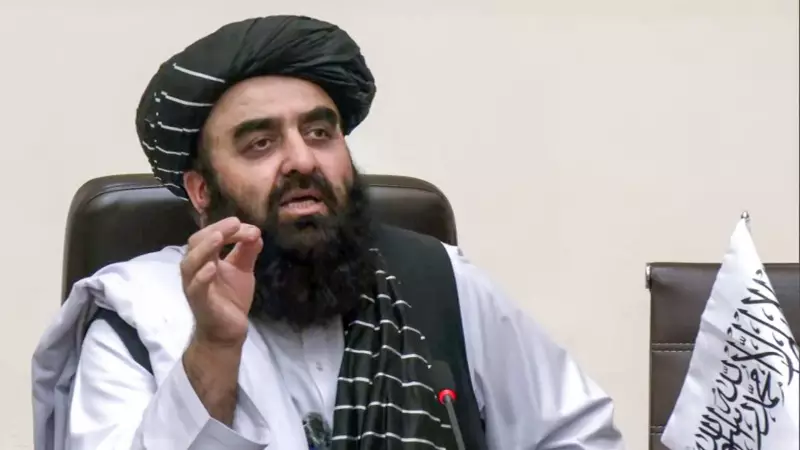
Mufti Noor Ahmad Noor, the Director General of the First Political Division at the Afghan Ministry of Foreign Affairs in Kabul, arrived in India this week. Sources confirm that he has assumed the role of Charge d'Affaires (CDA) at the Afghan embassy. In his initial meetings with the embassy personnel, Noor conveyed that the services of the Indian local staff members would be continued under his charge.
However, a cloud of uncertainty hangs over the Afghan nationals working at the embassy, particularly those diplomats and staff appointed by the previous government led by President Ashraf Ghani. Their future roles and status remain undecided and unclear at this juncture.

Pragmatic Engagement Without Formal Recognition
This appointment marks a continuation of India's pragmatic, step-by-step approach towards the Taliban, which is the de facto governing authority in Afghanistan. India has not granted official diplomatic recognition to the Taliban regime. Despite this, New Delhi has taken several notable steps to engage with Kabul.
In the past few months, India has hosted at least three senior ministers from the Afghan administration. These include Foreign Minister Mawlawi Amir Khan Muttaqi (whom Noor accompanied during his October visit last year), as well as the Trade Minister and the Health Minister. These visits signify a functional, working-level engagement focused on immediate issues and humanitarian concerns.
Parallelly, India has also moved to restore its own diplomatic presence in Afghanistan. The Ministry of External Affairs recently announced the upgrade of India's technical mission in Kabul to the full status of an embassy. This mission, led by a diplomat in the rank of Charge d'Affaires, aims to further India's development and humanitarian assistance in Afghanistan.
Symbolic Challenges and Future Steps
A visible point of contention at the embassy in Delhi remains the national flag. It is yet to be seen how long the flag of the former Islamic Republic of Afghanistan will continue to fly atop the building, and if or when it will be replaced by the white flag of the Taliban's Islamic Emirate. This symbolic issue underscores the delicate and evolving nature of the relationship.
Following his arrival, Noor visited the historic Jama Masjid in Old Delhi, marking his first known excursion outside the embassy premises. He is expected to reside at the ambassador's residence inside the embassy complex.
The Indian government's decisions reflect a calibrated strategy of dealing with ground realities in Afghanistan. The focus appears to be on protecting India's longstanding interests, ensuring the continuity of humanitarian support, and maintaining a channel of communication, all while stopping short of conferring formal legitimacy to the Taliban government. The coming months will reveal how this nuanced engagement unfolds, especially concerning the embassy's operations and the broader bilateral ties.