

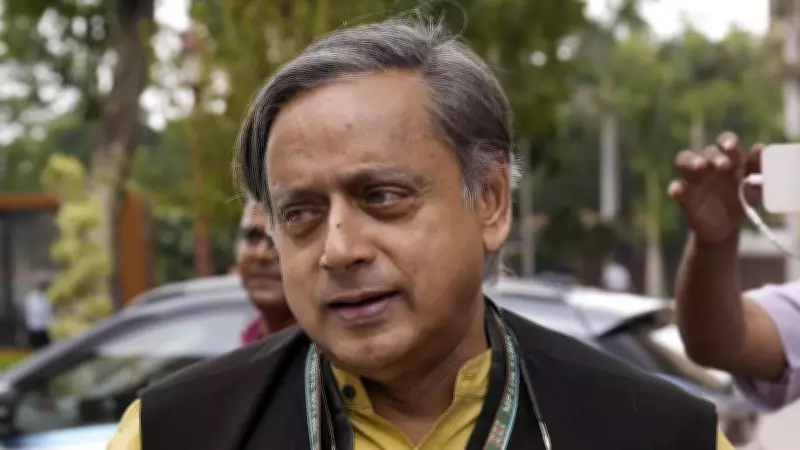
Shashi Tharoor Criticizes Pakistan's Peacemaker Narrative
Congress MP and former diplomat Shashi Tharoor has strongly argued that Pakistan's recent attempts to position itself as a peacemaker in regional and global conflicts do not erase its long history of misdeeds, particularly concerning India. In a recent statement, Tharoor emphasized that while Pakistan may engage in diplomatic efforts to mediate disputes, this should not be seen as a redemption for its past actions.
Historical Context of Pakistan's Actions
Tharoor highlighted several key issues from Pakistan's past that continue to affect bilateral relations. He pointed to Pakistan's alleged support for cross-border terrorism, which has been a persistent source of tension between the two nations. This includes incidents like the 2008 Mumbai attacks and ongoing militant activities in Jammu and Kashmir, which India has consistently blamed on Pakistan-based groups.
Additionally, Tharoor mentioned Pakistan's role in fostering instability in Afghanistan and its historical conflicts with India, including the wars of 1947, 1965, 1971, and 1999. He argued that these actions have left a deep scar on regional peace and security, which cannot be overlooked simply because of recent diplomatic overtures.

Pakistan's Current Peacemaker Efforts
In recent years, Pakistan has sought to rebrand itself as a mediator in international disputes, such as facilitating talks between the Taliban and the United States in Afghanistan, and engaging in peace initiatives in the Middle East. Tharoor acknowledged these efforts but cautioned against overstating their significance. He noted that while diplomacy is important, it does not negate the need for accountability for past misdeeds.
Tharoor stressed that true peace requires addressing root causes, including Pakistan's alleged support for non-state actors and its territorial disputes with India. He called for a more nuanced approach to evaluating Pakistan's role, one that balances current initiatives with historical context.
Implications for India-Pakistan Relations
Tharoor's comments come at a time when India-Pakistan relations remain strained, with limited dialogue and ongoing security concerns. He argued that for any meaningful improvement in ties, Pakistan must demonstrate a consistent commitment to ending support for terrorism and resolving conflicts through peaceful means. This includes adhering to international norms and engaging in sincere bilateral talks.
Moreover, Tharoor emphasized that India should not be swayed by superficial gestures of peacemaking without concrete actions on the ground. He urged policymakers to maintain a firm stance on security issues while remaining open to diplomatic engagement when it aligns with national interests.
Broader Regional and Global Perspectives
Tharoor's critique extends beyond bilateral relations to highlight broader implications for regional stability. He noted that Pakistan's past actions have contributed to volatility in South Asia, affecting not just India but also neighboring countries like Afghanistan and Bangladesh. As such, any assessment of Pakistan's peacemaker role must consider its impact on the entire region.
Globally, Tharoor pointed out that countries often use diplomatic initiatives to improve their international image, but this should not distract from underlying issues. He called for a more critical evaluation by the international community, ensuring that peacemaking efforts are genuine and not merely cosmetic.
Conclusion: A Call for Balanced Assessment
In summary, Shashi Tharoor's remarks underscore the need for a balanced view of Pakistan's diplomatic endeavors. While acknowledging recent peacemaking attempts, he insists that they cannot whitewash a history marked by conflict and alleged support for terrorism. For India and the world, this means prioritizing accountability and substantive progress over symbolic gestures in the pursuit of lasting peace and security in South Asia.






