Trump Condemns European Allies Over Iran Military Campaign
US President Donald Trump launched a sharp critique against several European nations on Tuesday, expressing particular displeasure with Spain over its refusal to permit American forces to utilize military bases on Spanish territory during the ongoing US-Israel military campaign against Iran.
Spain Draws Hard Line Against Base Usage
The criticism follows Spain's formal denial of permission for the United States to access jointly operated military installations at Rota and Morón for operations connected to strikes targeting Iran. Spanish Prime Minister Pedro Sánchez condemned what he characterized as "unilateral military action" by Washington and Israel, labeling it an "unjustified and dangerous military intervention" that threatens to foster "a more hostile and uncertain international order."
Foreign Minister José Manuel Albares reinforced this position, stating Spain would not authorize any activities extending beyond existing bilateral defense agreements or operating outside international law. "The bases are not being used – nor will they be used – for anything that is not in the agreement, nor for anything that isn't covered by the UN charter," Albares declared in a televised interview.

Trump's Blunt Assessment of Allies
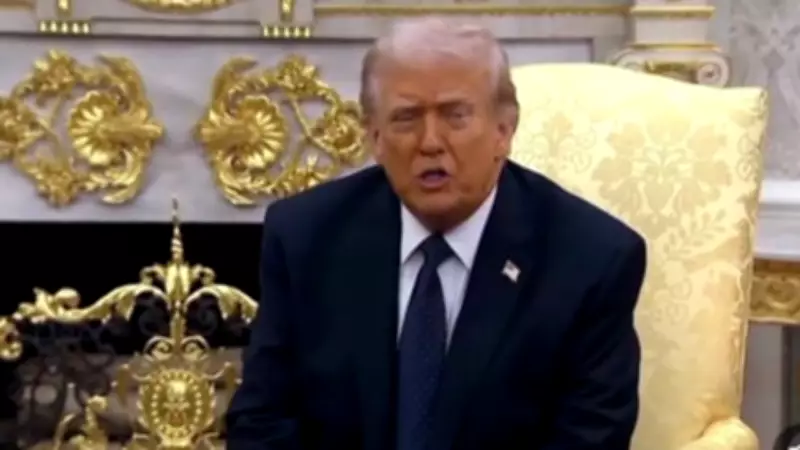
Commenting directly on the role of European partners, Trump remarked, "Some of the European nations have been helpful, and some haven't--and I'm very surprised. Germany's been great... Spain has been terrible. In fact, I told Scott to cut off all dealings with Spain." He added, "By the way, I'm not happy with the UK either."
While Spain has established a clear boundary, the United Kingdom has permitted US access to bases in the Middle East but has abstained from direct participation in the offensive. Germany, in contrast, has adopted a more supportive posture. During an Oval Office meeting with German Chancellor Friedrich Merz, Trump noted discussions would include Iran and "some very big trade deals." Merz affirmed alignment, stating, "We are on the same page in terms of getting this terrible regime in Tehran away."
Trump Defends Preemptive Strikes Against Iran
Trump vigorously defended the US decision to initiate strikes against Iran, dismissing notions that Washington was pressured by Israel to act. "No, Based on the way the negotiation was going, I think [Iran] was going to attack first, and I didn't want that to happen, so if anything, I might've forced Israel's hand," he asserted.
He maintained that intelligence evaluations indicated an imminent threat, explaining, "I thought we were going to have a situation where we were going to be attacked... A lot of those missiles that are hitting, those are stationary. Those were aimed there for a long period of time at these other countries--so I think I was right about that."
Describing Iran's leadership in severe terms, Trump added, "If we didn't do what we're doing right now, you would've had a nuclear war and they would've taken out many countries because you know what? They're sick people. They're mentally ill, sick people. They're angry. They're crazy. They're sick." He further contended, "These people are crazy, and if they had a nuclear weapon, they would've used it."
Operation Details and Regional Escalation
Referring to the military operation, Trump claimed, "The attack that we did known as Midnight Hammer, had we not done that, Iran would've had a very powerful nuclear weapon within one month." He also criticized former President Barack Obama over the 2015 nuclear accord, stating, "Barack Hussein Obama made maybe the worst deal that I've ever seen because he gave all power in the Middle East to Iran... If I didn't terminate that deal, they would be sitting with a massive nuclear weapon 3 years ago."
The diplomatic friction emerges alongside an intensifying conflict across the Middle East. On February 28, the United States and Israel executed coordinated airstrikes targeting multiple Iranian cities, striking military command centers, air-defense systems, missile sites, and critical regime infrastructure. These operations resulted in the death of Iran's Supreme Leader Ayatollah Ali Khamenei and four senior military and security officials, with significant explosions reported in Tehran and other urban centers.

In retaliation, Iran launched ballistic missiles and drones at US assets and allied nations throughout the region, including Israel, Bahrain, Kuwait, Qatar, Saudi Arabia, the United Arab Emirates, and Jordan. Oil infrastructure in Saudi Arabia and shipping lanes near the Strait of Hormuz have faced threats, elevating global energy prices and disrupting commercial travel.
Future Campaign and Transatlantic Tensions
Trump has indicated the military campaign may persist for "four to five weeks" or potentially longer, with US objectives focused on dismantling Iran's missile capabilities, crippling its naval forces, and preventing nuclear weapon acquisition. As Washington advances its strategy, public disagreements with European allies regarding the campaign's scope and legitimacy have surfaced, positioning Spain as the most vocal critic and a new flashpoint in transatlantic relations.