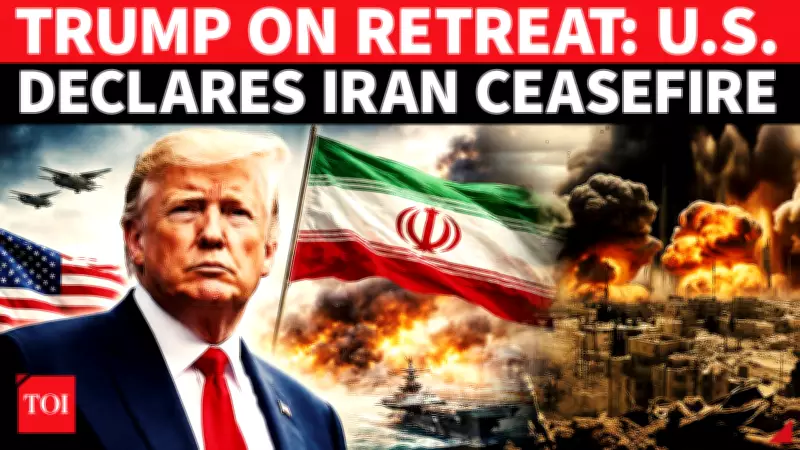
Trump Announces Ceasefire with Iran After Accepting 10-Point Demand
In a dramatic geopolitical pivot, former US President Donald Trump has delayed a major bombing campaign on Iran, declaring a fragile two-week ceasefire. This move comes after accepting Iran's 10-point demand, which includes reopening the Strait of Hormuz, a critical global oil chokepoint. The ceasefire is conditional on this reopening, with the deal brokered by Pakistan and backed by China at the last minute.
Details of the Ceasefire Agreement
The agreement involves a pause in Israeli strikes on Iranian targets and the launch of high-stakes US-Iran talks in Islamabad. Tehran has cautiously agreed to the terms, but ties progress to sanctions relief and the withdrawal of US troops from the region. Iranian officials have warned that the war is not over, indicating ongoing tensions despite the temporary truce.
Global Implications and Regional Reshaping
With global oil flows hanging in the balance due to the Strait of Hormuz's strategic importance, this brief ceasefire could reshape the future of the Middle East. The involvement of Pakistan as a mediator, supported by China, highlights shifting alliances and the complex dynamics of international diplomacy in the region.

Key Points of the Deal:
- Two-week ceasefire announced by Trump after accepting Iran's demands.
- Reopening of the Strait of Hormuz as a primary condition.
- Brokered by Pakistan with backing from China.
- Pause in Israeli strikes and initiation of US-Iran talks in Islamabad.
- Iran ties progress to sanctions relief and US troop withdrawal.
This development marks a significant moment in US-Iran relations, with potential long-term effects on global security and energy markets.