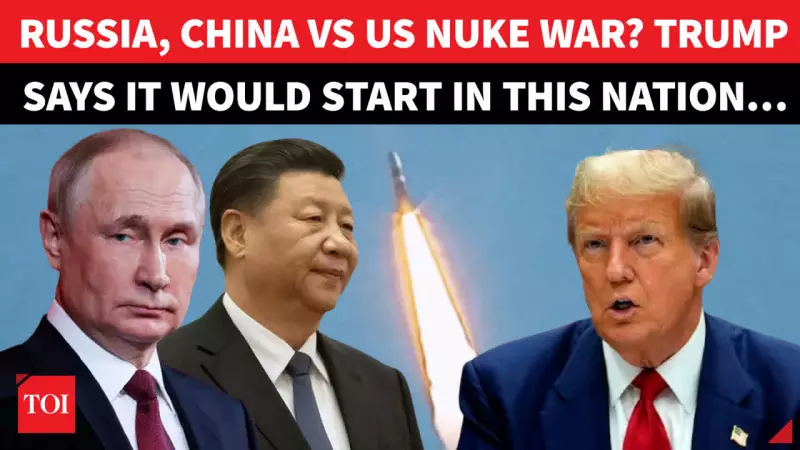
In a significant move that could reshape global strategic stability, US President Donald Trump has indicated his readiness to let the last major nuclear arms control pact with Russia expire next month. The President's comments, made in an interview, mark a potential end to an era of bilateral nuclear agreements and introduce new uncertainties regarding China's role and the status of Taiwan.
New START Treaty on the Brink of Expiry
President Trump told The New York Times that he is prepared to allow the New Strategic Arms Reduction Treaty (New START) with Russia to expire in February 2026. When questioned about the consequences of the treaty lapsing, Trump responded with a blunt, "If it expires, it expires." This pivotal agreement, which limits the number of deployed strategic nuclear warheads and launchers for both nations, has been a cornerstone of nuclear arms control since its inception.
Instead of extending the existing framework, Trump proposed pursuing a "better agreement" that could potentially include China. This comes against the backdrop of Beijing's rapidly expanding nuclear arsenal, a development that has caused concern in Washington and other global capitals. However, China has consistently resisted being drawn into trilateral arms control talks with the United States and Russia.

Taiwan Stance: A Calculated Message to Beijing
Shifting focus to the Indo-Pacific, President Trump addressed the sensitive issue of Taiwan. He stated that any action regarding the self-ruled island is ultimately "up to" Chinese President Xi Jinping. This phrasing places the onus for cross-strait stability squarely on Beijing's leadership.
Nevertheless, Trump issued a clear warning, emphasizing that he would be "very unhappy" with any change to the status quo in the Taiwan Strait. He further added that he does not expect China to take military action while he remains in office, suggesting a belief in the deterrent effect of his administration's posture.
Implications of a Bold Foreign Policy Pivot
These declarations represent a bold and consequential shift in US foreign policy at the start of 2026. Letting New START expire without a replacement could trigger a new, unconstrained nuclear arms race between the United States and Russia, with no verification mechanisms in place. The attempt to bring China into a new arms control framework, while logical from a strategic perspective, faces significant diplomatic hurdles given Beijing's longstanding opposition.
The comments on Taiwan refine the US position, blending strategic ambiguity with a direct message to President Xi. By stating action is "up to" Xi while expressing strong disapproval for altering the status quo, Trump's approach appears to be one of calibrated pressure, aiming to deter Chinese aggression without explicitly committing to a specific US response.
Analysts suggest that these moves, taken together, signal a return to a more unilateral and deal-oriented foreign policy approach, where existing treaties are viewed as outdated unless they directly serve contemporary US interests as defined by the administration. The international community will be watching closely as the February deadline for New START approaches and as China processes the latest statements on Taiwan.