Trump Imposes Tariffs on NATO Allies in Greenland Standoff
President Donald Trump has taken a dramatic step in his pursuit of Greenland. He announced a 10% tariff on goods from eight European countries that are rallying behind Denmark. This move marks a significant escalation in the ongoing diplomatic dispute.
Targeted Countries and Immediate Reactions
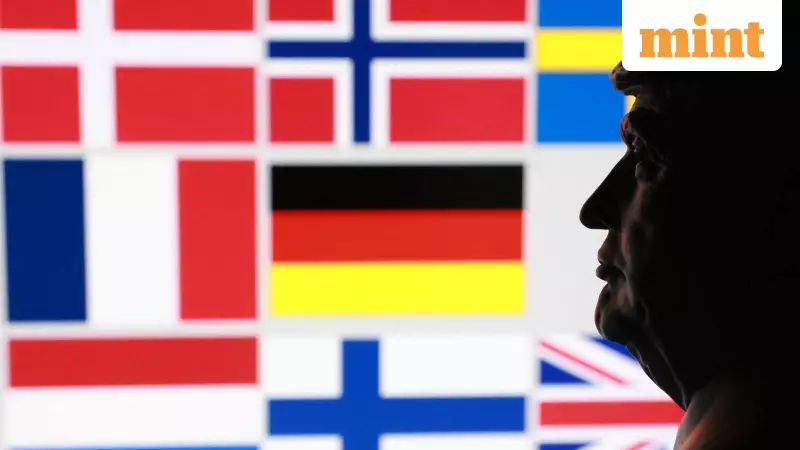
The tariffs will specifically apply to Denmark, Norway, Sweden, France, Germany, the United Kingdom, the Netherlands, and Finland. Trump stated in a social media post that these tariffs will take effect on February 1. He threatened to increase the levy to 25% in June unless a deal is reached for what he called the "Complete and Total purchase of Greenland."
The European Union responded swiftly and firmly. EU chiefs Ursula von der Leyen and Antonio Costa issued a joint statement warning that tariffs would undermine transatlantic relations and risk a dangerous downward spiral. They emphasized that Europe will remain united and committed to upholding its sovereignty.

French President Emmanuel Macron labeled Trump's threats as "unacceptable." Swedish Prime Minister Ulf Kristersson declared his country would not be blackmailed. UK Prime Minister Keir Starmer called the use of tariffs on NATO allies "completely wrong" and pledged to raise the matter with the United States.
Legal Uncertainties and Trade Implications
It remains unclear what legal authority Trump would use to impose these tariffs. The White House did not immediately provide additional information. Historically, Trump has relied on the International Emergency Economic Powers Act for similar threats. However, a pending Supreme Court ruling could challenge this approach.
Simone Tagliapietra, a senior researcher at the Bruegel think tank in Brussels, commented on the situation. "The Pandora's box of tariffs has been reopened," he said. "The stakes are higher, with an unprecedented level of brutality. Europe now has no choice but to confront this hostile act with strength."
EU lawmakers are now considering halting last year's trade deal with the US. Manfred Weber, head of the European People's Party group, stated that an agreement with the US "is not possible at this stage." If the EPP joins with left-leaning political groups, they could have enough votes to delay or block the deal entirely.
Background and Military Dimensions
This tariff announcement follows a week of meetings in Washington. Danish Foreign Minister Lars Lokke Rasmussen and Greenland's Foreign Minister Vivian Motzfeldt met with top Trump administration officials and members of Congress. Despite these discussions, Denmark and Greenland remain in a stalemate with the US over the future of the world's largest island.
Denmark had invited NATO allies to participate in training activities in Greenland. Several European nations have already dispatched personnel. Germany sent 15 soldiers for an exploration mission. France is sending 15 soldiers, Sweden is sending several officers, and Norway, Finland, the UK, and the Netherlands are also contributing personnel.
UK Prime Minister Keir Starmer highlighted the broader security concerns. "We have also made clear that Arctic security matters for the whole of NATO," he said. "Allies should all do more together to address the threat from Russia across different parts of the Arctic."
Trump's Justification and Future Negotiations
Trump defended his position vigorously. He told reporters aboard Air Force One, "We're talking about acquiring — not leasing, not having it short-term. If we don't do it, Russia or China will, and that's not going to happen while I'm president."
He acknowledged the existing US military base in Greenland but insisted on ownership. "You really need title, as they say in the real estate business," Trump stated. He also mentioned the Golden Dome project, an early-stage development that he claims requires Greenland for maximum efficiency.
The US remains open to negotiations with Denmark and the involved European countries. However, the imposition of tariffs has undoubtedly strained relationships with some of America's closest allies. The situation continues to develop, with EU national ambassadors scheduled to meet to discuss the bloc's next steps.