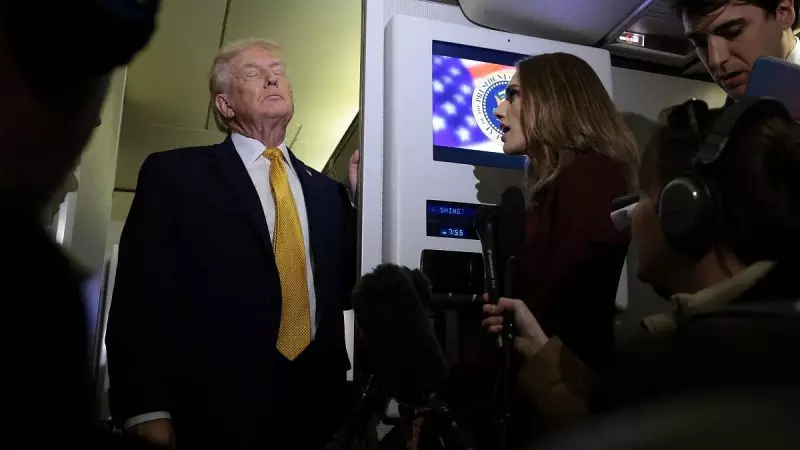
Former United States President Donald Trump has made a significant claim regarding India's foreign policy and energy imports, stating that the nation reduced its purchases of Russian oil specifically to appease him. This statement arrives against the backdrop of a potentially aggressive legislative move in the US Congress that could severely impact countries continuing to trade in Russian energy.
The Core Claim and Its Context
In a recent development, Donald Trump asserted that India took deliberate steps to slash its imports of crude oil from Russia with the intention of making him happy. This claim, reported by journalist Anirban Bhaumik and published on 05 January 2026, directly links India's strategic energy decisions to the influence of the former American leader. The timing of this statement is crucial, as it intersects with ongoing geopolitical tensions and proposed economic measures in Washington.
The context for this remark is a serious legislative proposal in the United States. A bill sponsored by Senator Lindsey Graham is currently under consideration in the US Congress. The proposed legislation seeks to grant the American President sweeping authority to impose dramatically high tariffs on countries that continue to buy oil from Russia.

The Proposed US Legislation: A 500% Tariff Threat
The bill, as detailed in the report, is designed to be a powerful economic tool against Russia and its trading partners. Its most striking provision is the empowerment it would give to the US President to levy tariffs of up to 500% on nations like India for their purchases of Russian oil. This represents an unprecedented potential escalation in economic pressure, aiming to cripple the revenue Russia earns from its energy exports following its actions in Ukraine.
If enacted, this law would place nations with significant energy needs, such as India, in a difficult position. They would be forced to choose between securing affordable energy supplies for their growing economies and facing potentially devastating trade penalties from one of the world's largest economies. India has historically relied on imports to meet a substantial portion of its oil needs, and Russian crude has offered a discounted alternative in recent years.
Implications for India-US Relations and Global Trade
Trump's claim, whether accurate or not, highlights the delicate diplomatic dance India has been performing. The nation has maintained a stance of strategic autonomy, balancing its long-standing relationship with Russia against its deepening strategic and economic partnership with the United States and other Western nations. A public statement from a figure like Trump, who is a leading contender in the upcoming US presidential election, adds a layer of complexity to this balance.
The proposed Graham bill underscores a more hawkish, unilateral approach in some quarters of US politics towards enforcing a global isolation of Russia. For India, the threat of 500% tariffs is not merely theoretical; it is a clear signal of the economic costs that could be imposed for pursuing national interest in energy security. This development forces a recalculation of risk and could accelerate India's efforts to diversify its energy sources further.
In conclusion, the intersection of Trump's political commentary and the serious legislative threat in the US Congress creates a volatile moment for international energy politics. India's reported reduction in Russian oil imports, as claimed by Trump, may be a tactical move anticipating these very pressures. The outcome of the US bill and the political winds in Washington will undoubtedly shape India's energy import strategy and its broader geopolitical alignments in the years to come.