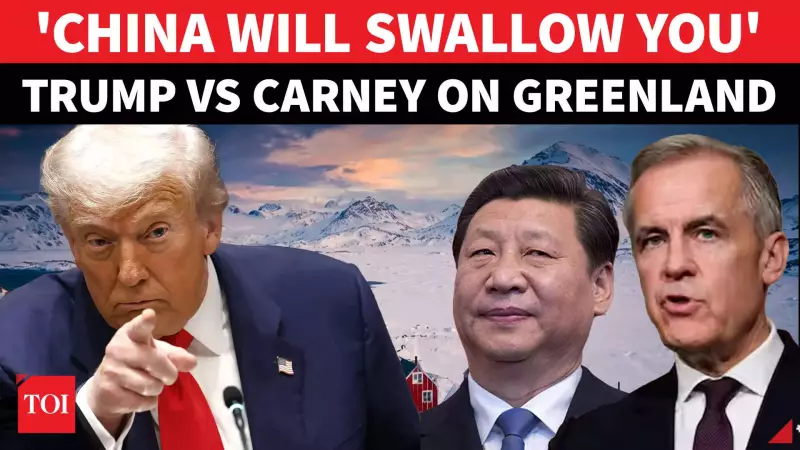
Trump Criticizes Canada's Rejection of Greenland Missile Defense Project
Former United States President Donald Trump has launched a sharp verbal attack against Canada following its decision to reject his proposed "Golden Dome" missile defense project over Greenland. In a recent post on his Truth Social platform, Trump expressed his frustration and issued a stark warning about the potential consequences of Canada's alignment with China.
Trump's Warning About Chinese Influence
Trump claimed that Canada's opposition to the Golden Dome project, which he argued would have provided protection to Canadian territory, is a misguided move. He asserted that instead of supporting this defensive initiative, Canada has chosen to "vote in favour of doing business with China." Trump went further to caution that this shift could lead to China "eating them up" within the first year, highlighting his concerns over growing Chinese influence in North American affairs.
Details of the Golden Dome Proposal
The Golden Dome project, as proposed by Trump, was envisioned as a missile defense shield to be constructed over Greenland. This strategic location was selected due to its geopolitical significance and its proximity to both the United States and Canada. Trump emphasized that the dome would have served as a protective barrier, safeguarding not only U.S. interests but also extending its defensive capabilities to cover Canadian regions.

Canada's Stance and Regional Implications
Canada's rejection of the project marks a significant point of contention in U.S.-Canada relations, which have historically been strong. This decision comes at a time when Ottawa appears to be strengthening its ties with Beijing, a move that Trump views as a threat to North American security. The situation underscores the complex dynamics of international diplomacy, where defense strategies and economic partnerships often intersect, influencing global power balances.
Broader Context of Trump's Comments
Trump's comments are part of a larger pattern of his vocal criticisms regarding foreign policy and alliances. His warning about China reflects ongoing tensions between the U.S. and China, with Trump positioning himself as a defender of American interests against perceived encroachments. This incident adds to the series of diplomatic challenges that have characterized his political career, emphasizing his focus on assertive nationalism and skepticism towards multilateral agreements.
Potential Impacts on Future Relations
The fallout from this dispute could have lasting effects on U.S.-Canada relations, potentially influencing future collaborative efforts in defense and trade. As Canada navigates its relationships with both the U.S. and China, the choices made by Ottawa will be closely watched by international observers. Trump's remarks serve as a reminder of the volatile nature of global politics, where strategic decisions can quickly escalate into public confrontations, shaping the course of international discourse.