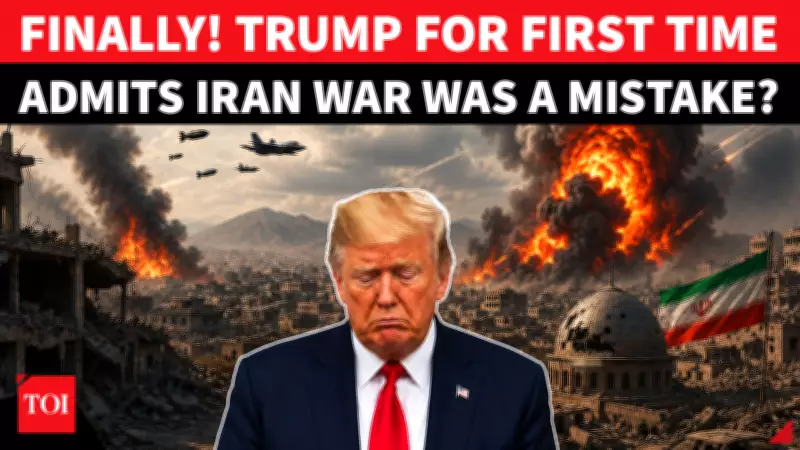
US President Donald Trump has made a striking comment on American involvement in Iran, stating that the United States 'shouldn't have been in Iran' while simultaneously defending the military actions taken against Tehran. In an interview with Fox News, Trump drew a parallel between the situation in Iran and the Iraq war, which he characterized as a costly and regrettable mistake.
Trump's Remarks on Iran and Iraq
During the interview, Trump argued that US strikes had successfully prevented Iran from acquiring a nuclear weapon. He also claimed that Washington deliberately avoided targeting large segments of Iran's military infrastructure, suggesting a measured approach to the conflict. 'We shouldn't have been there in the first place,' Trump said, echoing his long-standing criticism of foreign entanglements.
Context of Rising Tensions
Trump's comments come at a time of continued friction between the United States and Iran. The remarks have reignited debate over Washington's Middle East policy and its long-term strategy in the region. Critics and analysts are scrutinizing the effectiveness and consequences of US military involvement in Iran, with many questioning the broader implications for regional stability.

The former president's reflections also highlight a recurring theme in his political rhetoric: skepticism toward overseas military interventions. By comparing Iran to Iraq, Trump reinforces his narrative that such engagements often lead to unintended consequences and drain American resources.
Reactions and Analysis
Political observers note that Trump's statements could influence public opinion and policy discussions ahead of the next election cycle. Supporters view his candor as a validation of their concerns about foreign policy, while opponents argue that his defense of strikes contradicts his admission of a mistaken presence. The ongoing debate underscores the complexities of US-Iran relations and the challenges of formulating a coherent approach to the region.