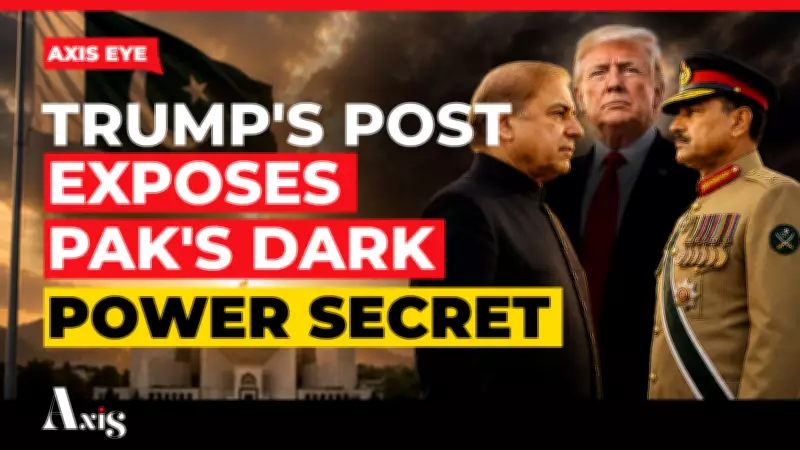
A single social media post by former U.S. President Donald Trump has triggered political embarrassment inside Pakistan. While listing world leaders he had engaged over the Abraham Accords, Trump skipped Prime Minister Shehbaz Sharif entirely and instead praised Pakistan Army Chief Asim Munir. The message was blunt: Washington increasingly sees Rawalpindi, not Islamabad, as Pakistan's real power centre.
The Post and Its Implications
Trump's post did not mention Sharif, who is the civilian head of government, but explicitly commended General Munir for his role in advancing regional peace. This omission has reignited debates about Pakistan's power structure, where the military has historically controlled foreign policy, India policy, and national security. The incident underscores how the world perceives the army chief as the de facto leader of Pakistan.
Historical Context of Military Dominance
Pakistan's military establishment has long wielded significant influence over the country's governance. From direct coups to behind-the-scenes manipulation, the army has shaped key decisions, especially on issues involving India, Afghanistan, and nuclear policy. General Munir's rise has further strengthened this perception. His meetings at the White House and public praise from Trump himself have projected him globally as Pakistan's most influential figure.

Shehbaz Sharif's Sidelining
Prime Minister Shehbaz Sharif, meanwhile, appears increasingly sidelined. His government faces mounting pressure over issues such as recognition of Israel, the Gaza conflict, and the Abraham Accords. The internal power imbalance in Pakistan is becoming impossible to hide, as the world once again asks the question India has long raised: Who truly governs Pakistan?
Global Reactions and Future Outlook
The snub has drawn sharp reactions in Pakistan's political circles. Opposition leaders have criticized the military's overreach, while government officials have tried to downplay the incident. However, the message from Washington is clear: the U.S. prefers dealing with the military leadership, viewing it as more stable and decisive. As the Abraham Accords expand, Pakistan's civilian government may find itself further marginalized, raising concerns about the country's democratic trajectory.