Trump Reasserts Greenland Ambition, Points to NATO Chief's Stance
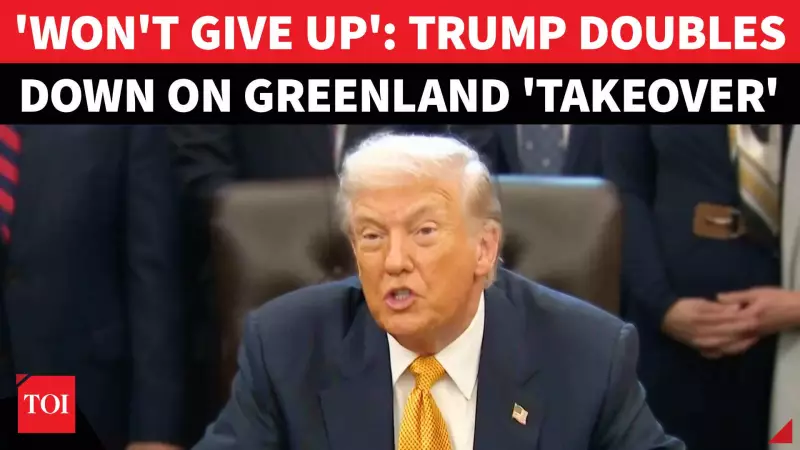
President Donald Trump has once again brought his controversial Greenland takeover plan into the spotlight. He made strong statements during a recent press briefing in the Oval Office. Trump emphasized the urgent need for the United States to secure Greenland. He framed this move as a critical national security measure.
National Security Concerns Drive Trump's Push
Trump told reporters that immediate action is necessary. He warned that if the United States does not step in, other global powers will seize the opportunity. "Russia's gonna go in and China's gonna go in," Trump declared. He expressed doubt about Denmark's ability to handle the situation. "It's not a thing that Denmark can do about it, but we can do everything about it," he added firmly.
This renewed push comes at a time when Danish officials are actively engaging with US leadership. High-level talks have been taking place between Denmark and key American figures. Vice President JD Vance and Secretary of State Marco Rubio are involved in these discussions. The dialogue aims to address the escalating tensions over Greenland's future.

NATO Chief's Alleged Support Adds a Twist
In a surprising claim, Trump stated that NATO Chief Mark Rutte wants action on the Greenland issue. This assertion has sent shockwaves through European diplomatic circles. It suggests a potential shift in NATO's stance or internal dynamics. The mention of Rutte's position adds a new layer to the geopolitical puzzle.
European leaders are closely monitoring these developments. Trump's statements and the alleged NATO involvement have created a sense of urgency. The situation highlights the growing strategic importance of the Arctic region. Greenland's location makes it a valuable asset in global power plays.
The United States maintains that its interest in Greenland is purely defensive. Officials argue that controlling the territory would prevent hostile takeovers. They point to increasing activities by Russia and China in the Arctic as justification. However, Denmark continues to assert its sovereignty over Greenland. The island remains an autonomous territory within the Kingdom of Denmark.
This ongoing dispute underscores the complex interplay of national interests. It also reflects the broader tensions in international relations. As talks continue, the world watches to see how this bold declaration will unfold. The outcome could have significant implications for Arctic governance and global security alliances.