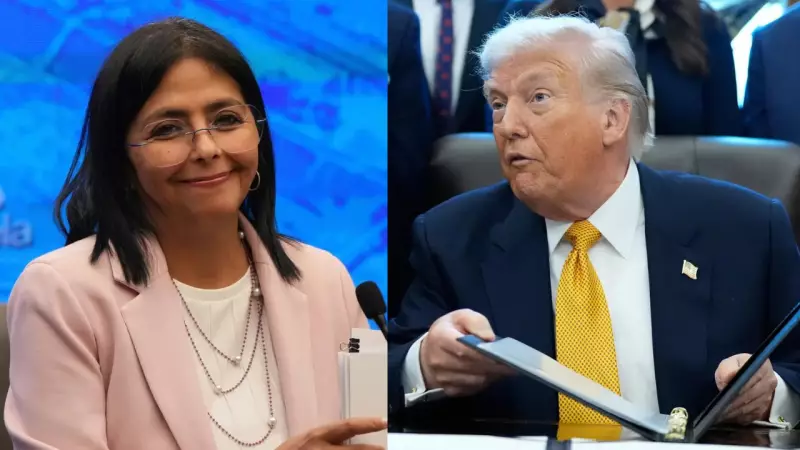
Trump Holds First Call with Venezuela's Interim President After Maduro Capture
US President Donald Trump made a significant announcement on Wednesday. He confirmed having a "long call" with Venezuela's interim president, Delcy Rodríguez. This conversation marks the first known direct contact between the two leaders since the dramatic capture of former Venezuelan leader Nicolás Maduro by US forces.
Positive Conversation in the Oval Office
Speaking to reporters gathered in the Oval Office, President Trump described the discussion in glowing terms. He called it a "great" conversation and praised Rodríguez personally.
"We just had a great conversation today, and she's a terrific person," Trump stated clearly. "We had a call — a long call. We discussed a lot of things, and I think we're getting along very well with Venezuela."

These remarks were reported by the international news agency AFP. Later, Rodríguez herself confirmed the exchange had taken place. Through a post on the Telegram messaging platform, she characterized the call as both "productive and courteous." AFP cited this post in its reporting.
Trump Announces Arrest of Operation Leaker
While discussing Venezuela, President Trump also revealed another development. He announced that an individual has been arrested for leaking details about the military operation that led to Maduro's capture.
"The leaker on President Trump's Venezuela operations has been PUT IN JAIL, and more leakers are being hunted down," Trump declared emphatically.
He provided further details, stating, "The leaker was found, and is in jail RIGHT NOW. The leaker on Venezuela. A very bad leaker." The President added a stark prediction about the leaker's fate: "Will probably be in jail for a long time."
Background of the US Military Operation
The context for these developments is a major US military action. On January 3, US forces launched a rapid overnight operation against Venezuela. The mission successfully captured Nicolás Maduro and his wife.
This strike followed months of US allegations. American officials had accused Maduro's government of having ties to narco-terrorism. The operation formed part of a larger US campaign. This campaign involved air attacks and incursions against targets linked to international drug trafficking networks.
The culmination was Maduro's removal from power and his transfer into US custody. This action built upon earlier US moves against alleged Caribbean drug operations. Reports indicated strikes on vessels and targeted sites occurred just this week.
Maduro's Longstanding Denials and the Geopolitical Stakes
For years, Nicolás Maduro consistently denied leading any drug cartel. He accused the United States of using the global "war on drugs" as a mere pretext. Maduro argued the real US goal was to oust him from power and gain influence over Venezuela's vast oil reserves.
Despite facing numerous challenges—including coup attempts, mass protests, army revolts, and harsh economic sanctions—Maduro had managed to remain in power. That changed only with the direct US military intervention earlier this month.
The call between Trump and Rodríguez now opens a new chapter in US-Venezuela relations following this decisive event.