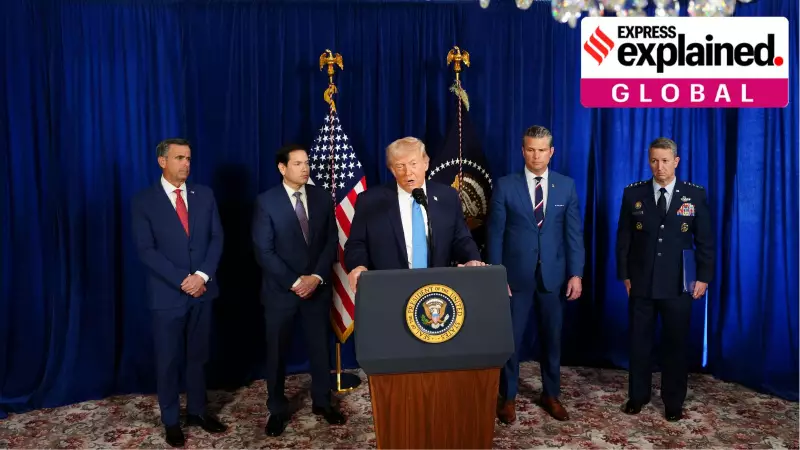
In a significant escalation of pressure on Latin America, former and now-returned US President Donald Trump has issued direct warnings to Colombia and Mexico, demanding they curb the flow of illicit narcotics into the United States. This comes swiftly on the heels of the military capture of Venezuelan President Nicolas Maduro. Trump also singled out Cuba, Venezuela's key ally, suggesting the island nation is on the brink of collapse without any need for American intervention.
The Trio in Trump's Spotlight: Colombia, Mexico, and Cuba
The threats, articulated by Trump from his Mar-a-Lago estate on January 3, 2026, are not merely a revival of the 19th-century Monroe Doctrine, which positions the Western Hemisphere as a US zone of influence. Analysts point to a potent cocktail of ideological differences, the relentless drug crisis, immigration concerns, and shifting strategic alliances fuelling Washington's latest ire. A coalition of nations including Spain, Brazil, Chile, Colombia, Mexico, and Uruguay has already condemned the US actions, calling them an "extremely dangerous precedent for peace and regional security."
Colombia: From Key Ally to a Target
For over 25 years, Colombia has been Washington's foremost security partner in South America. The US-Colombia Free Trade Agreement (2012) cemented economic ties, making the US Colombia's largest trading partner, accounting for 34% of its total trade. Colombia is also a major source of US crude oil imports, contributing $5.4 billion of the $16 billion total in 2023, alongside exports of coffee and roses.

However, the nation's global notoriety stems from its dominance in cocaine production, responsible for over two-thirds of the world's supply. While past US financial aid for anti-drug efforts reduced political violence, coca cultivation has surged since 2013. Relations have deteriorated sharply since the election of Colombia's first leftist president, Gustavo Petro. Petro has distanced the country from US-backed drug policies, expressed interest in joining the BRICS+ bloc, severed ties with Israel, and condemned the US operation in Venezuela as an "assault on sovereignty." Trump's response has included threats of repercussions, cuts in foreign aid, tariffs, and a military build-up in the Caribbean.
Mexico: The Fraught Neighbour and Trade Giant
Despite a $798.9 billion total goods trade relationship in 2023, making Mexico the US's top trading partner, the 3,145-km shared border remains a flashpoint. The primary issues are undocumented immigration and drug trafficking, with Mexico being the global leader in the production and trafficking of the deadly synthetic opioid fentanyl. Trump's political rise was built partly on promises of a border wall, and since his return to office, he has announced punitive tariffs, designated Latin American cartels as Foreign Terrorist Organisations, and even threatened drone strikes on Mexican territory. A proposal to deploy American troops within Mexico was firmly rejected by President Claudia Sheinbaum in April 2025.
Cuba: A Cold War Foe Facing Renewed Pressure
The US-Cuba relationship has been hostile for decades, marked by the failed Bay of Pigs invasion, a comprehensive economic embargo, and Cuba's designation as a state sponsor of terrorism under President Reagan in 1982. A brief thaw under President Barack Obama, which saw restored diplomatic ties in 2014, was completely reversed during Trump's first term. Now, in his second term, Trump has again rolled back Biden-era normalization measures.
Cuba's economy, already in a recession with a 1.1% GDP contraction and 24% inflation in 2024, is heavily dependent on Venezuela for subsidised oil. With Maduro's fate uncertain, Cuba may lean further on Russia and China. Trump, capitalising on this vulnerability, stated that Cuba's economy is "in tatters" and predicted its imminent downfall following the loss of its Venezuelan patron, claiming, "It's going down for the count."

Broader Implications for Regional Stability
The simultaneous targeting of these three nations signals a hardline, unilateral approach to regional policy. The threats move beyond rhetoric to tangible actions like tariff announcements, military posturing, and the severing of diplomatic progress. For Colombia and Mexico, the core demand is a drastic reduction in drug flows—a complex, deeply entrenched problem tied to economics and crime. For Cuba, the strategy appears to be one of maximum economic pressure to precipitate political change. The unified condemnation from several regional governments highlights the risk of significant destabilization, turning Latin America into a renewed arena for great power friction and internal crisis.