Trump Hardens Stance, Declares Iran Talks 'Too Late' After Devastating Strikes
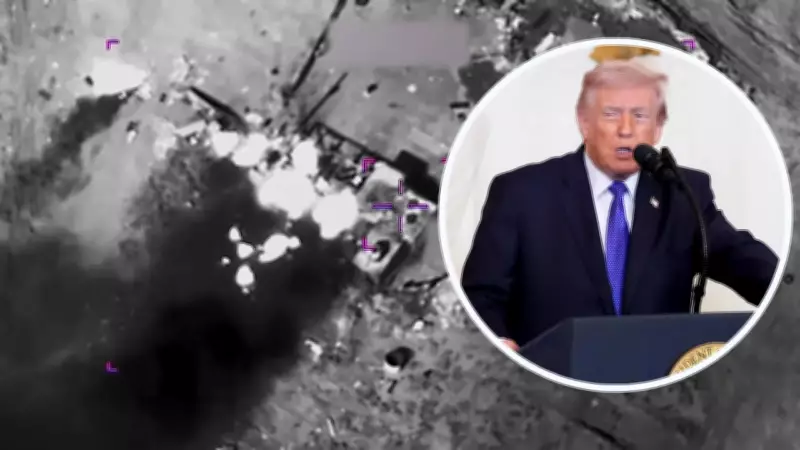
In a dramatic escalation of rhetoric, former US President Donald Trump declared on Tuesday that it is now "too late" for Iran to seek diplomatic negotiations. This statement follows extensive US-Israeli military strikes that he claims have effectively destroyed key components of Iran's defense infrastructure.
'Their Military Leadership Is Gone'
"Their air defense, Air Force, Navy, and Leadership is gone. They want to talk. I said 'Too Late!'" Trump wrote in a social media post on platform X. He characterized the joint assault as having decisively crippled Iran's military command structure, leaving the nation vulnerable and seeking dialogue under duress.
In a separate post reacting to media coverage, Trump further emphasized American military superiority, stating the United States possesses "unlimited mid to upper tier Weaponry – Brutal 'stuff'." He specifically dismissed a Wall Street Journal article about the administration's military posture as "wrong, and a disgrace," reinforcing his narrative of overwhelming US capability.

Shift from Earlier Diplomatic Signals
This new hardline position marks a significant shift from Trump's earlier campaign comments. Previously, he suggested the US had "the capability to go far longer" than the projected four-to-five-week timeframe for military operations against Iran, while leaving open the possibility of diplomacy alongside sustained pressure.
Those remarks now contrast sharply with his current stance. Just days earlier, in a Sunday interview from his Mar-a-Lago estate in Florida, Trump indicated Iran's new leadership had reached out and he had agreed in principle to dialogue, even as attacks continued.
"They want to talk, and I have agreed to talk, so I will be talking to them," Trump said during that interview. "They should have done it sooner. They should have given what was very practical and easy to do sooner. They waited too long."
Confusion Amid Leadership Vacuum and Ongoing Strikes
Trump did not clarify whom he expected to engage in those talks, particularly after Iran's Supreme Leader, Ayatollah Ali Khamenei, was killed in joint US-Israeli attacks on Saturday. This event has left Iran in considerable political flux, complicating any potential diplomatic channels.
A senior White House official, speaking anonymously to discuss sensitive planning, confirmed Trump's willingness to talk but stressed that military operations would not pause. The official stated Iran had indicated preparedness to open a communication channel to the president but declined to detail the nature or level of this outreach.
The official added a crucial caveat: "the military assault against Iran would continue unabated," highlighting the simultaneous pursuit of conflict and potential diplomacy.
Broader Context of Regional Escalation
The developments occur against a backdrop of heightened regional violence. Recent reports indicate Iran launched a "massive missile" strike at a US airbase in Bahrain, while Israel conducted bombings in Beirut. Satellite imagery has revealed the aftermath at Iranian sites, including Khamenei's compound and nuclear facilities, following the US-Israel strikes.
Furthermore, the financial cost of the conflict is becoming apparent, with the US reportedly spending $700 million in just 24 hours under "Operation Epic Fury." The final war cost remains uncertain, adding economic dimensions to the strategic and humanitarian concerns.
Trump's evolving statements reflect the complex, volatile nature of US-Iran relations, where military action and diplomatic overtures are increasingly intertwined amidst devastating strikes and leadership changes.