Trump Prioritizes Military Action Over Gas Price Concerns in Iran Conflict
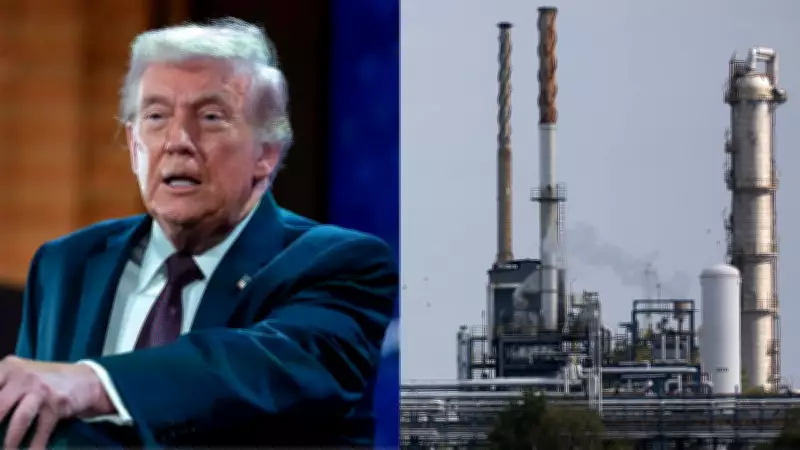
US President Donald Trump declared on Thursday that he harbors no apprehension regarding escalating gasoline prices connected to the intensifying conflict with Iran. He emphasized that the ongoing military campaign takes precedence over economic considerations at the pump.
"No Concern" About Fuel Costs
In an exclusive interview with Reuters, Trump was directly questioned about the recent spike in fuel prices across the United States. He responded unequivocally, stating, "I don't have any concern about it." The President elaborated that prices would likely plummet rapidly once the conflict concludes. He added, "If they rise, they rise, but this is far more important than having gasoline prices go up a little bit."
Sharp Market Reactions and Price Surges
The oil markets have exhibited pronounced volatility in response to the military hostilities. Since the war commenced on Saturday, global crude prices have skyrocketed by a significant 16%. This surge is primarily attributed to disruptions in Middle Eastern supply chains due to the fighting.

According to data from AAA, a prominent US travel organization that monitors fuel prices, the national average price for gasoline has increased by 27 cents over the past week, reaching $3.25 per gallon. This current average also stands 15 cents higher than the price recorded one year ago.
A Shift in Presidential Messaging
Trump's latest remarks mark a notable departure from his recent communications on energy costs. Just last month, during his State of the Union address and at an energy-focused rally in Texas, the President celebrated declining gasoline prices. The Texas event occurred mere hours before the US initiated air strikes on Saturday.
Despite the documented increases, Trump downplayed the severity, asserting that prices "haven't risen very much."
White House Scrambles Behind the Scenes
While publicly dismissing concerns, the White House is actively exploring measures to mitigate rising fuel costs. White House press secretary Karoline Leavitt confirmed that Chief of Staff Susie Wiles and Energy Secretary Chris Wright have engaged in discussions with oil company executives to identify potential solutions.
A senior White House official, speaking anonymously to Reuters, revealed that energy and national security policy teams are urgently working to devise strategies to lower prices. The official disclosed that Wiles has internally warned that failing to address higher fuel costs could prove "catastrophic" for Republican prospects in the upcoming elections.
Conflict Timeline and Policy Measures
President Trump has projected that the military campaign against Iran could span four to five weeks. However, political and military analysts have expressed skepticism regarding this timeline, noting the absence of a clearly defined ultimate objective as the conflict expands regionally.
Secretary of State Marco Rubio indicated earlier this week that the administration is preparing a comprehensive package to combat rising energy costs. To date, announced measures include:
- US-backed risk insurance for oil tankers.
- The potential for naval escorts through the critical Strait of Hormuz.
Officials are also evaluating additional options, as per sources familiar with internal discussions. These considerations encompass:
- A federal gasoline tax holiday.
- Easing environmental regulations on summer gasoline to permit higher ethanol blends.
- A potential release from the Strategic Petroleum Reserve (SPR).
Strategic Petroleum Reserve Ruled Out
During the Reuters interview, President Trump explicitly ruled out tapping the Strategic Petroleum Reserve for the time being. The SPR is the world's largest emergency crude stockpile. He expressed confidence that the Strait of Hormuz, a vital global oil shipping route near Iran, would remain open, citing that Iran's navy is now at the "bottom of the sea."

Temporary Impact Expected
Despite the recent price hikes, the White House maintains that the impact on fuel markets will be transient. Administration officials anticipate that pressure on gasoline prices will subside once the conflict reaches a more stable phase.
The situation underscores the complex interplay between geopolitical military actions and global economic stability, with the US administration attempting to balance strategic objectives against domestic economic pressures.