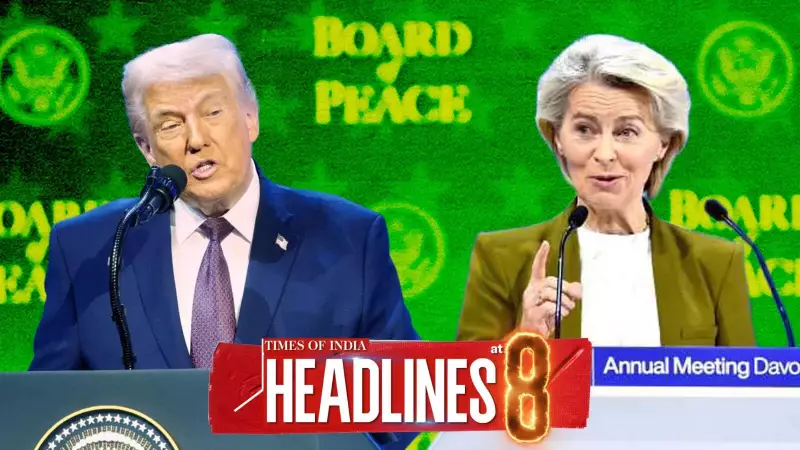
From Tariff Threats to Diplomatic Outreach: Trump's Davos Gambit
The annual World Economic Forum in Davos witnessed a significant diplomatic pivot as former US President Donald Trump adopted a conciliatory tone regarding Greenland, moving away from previous tariff threats and ruling out the use of force. This shift came alongside the unveiling of a somewhat ambiguous NATO framework proposal, signaling a potential recalibration of transatlantic relations.
A New 'Board of Peace' Emerges with Mixed Global Reception
Central to Trump's diplomatic presentation was the launch of an ambitious new initiative dubbed the 'Board of Peace'. The body, aimed at fostering international dialogue, received a varied response from the global community. Eight Islamic nations promptly signed on to the framework, indicating initial support from a segment of the Muslim world.
However, China maintained a posture of cautious observation, reiterating its commitment to a United Nations-centric global order and effectively doubling down on existing multilateral structures. This divergence highlights the persistent geopolitical fault lines that continue to shape international cooperation.

European Caution and the Stalling of Trade Talks
Despite Trump's overtures, European leaders exhibited pronounced wariness, choosing to maintain a guarded stance. This skepticism manifested in the freezing of key bilateral trade negotiations between the US and the European Union. The decision underscores a deeper erosion of trust and the complex challenges in rebuilding transatlantic economic partnerships.
India and the EU Forge Ahead with a Historic 'Mother of All Deals'
As these dynamics unfolded, another major geopolitical development was taking shape. India and the European Union are poised to announce a monumental Free Trade Agreement (FTA), which insiders are already branding as the 'mother of all deals'. This agreement represents a historic reset in India-EU relations and is expected to be formally sealed during an upcoming high-stakes visit by European leadership to New Delhi.
The prospective deal signifies a strategic alignment between two major economic blocs, potentially creating one of the world's largest free trade areas and counterbalancing other global trade realignments.
Analyzing the Global Chessboard: Shifting Alliances and Economic Realignments
The events at Davos collectively point to a period of significant global realignment:
- US Diplomacy: Trump's softened stance on Greenland and the 'Board of Peace' initiative suggest a tactical shift from confrontation to dialogue, albeit one met with international skepticism.
- European Response: The EU's decision to pause trade talks reflects deep-seated concerns over reliability and strategic direction.
- Asian Dynamics: China's cautious response reinforces its alternative vision for global governance, while India's proactive engagement with the EU marks a pivotal east-west economic partnership.
This confluence of diplomacy, trade, and strategy at Davos sets the stage for a reshaped international order, where old alliances are tested and new economic partnerships, like the impending India-EU FTA, emerge as defining features of the global landscape.