

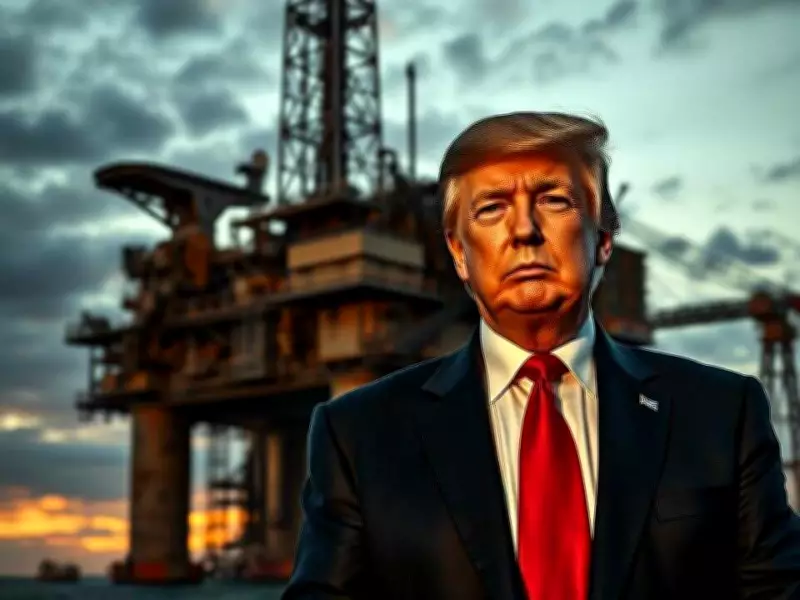
Trump Issues Stark Warning to Iran Over Strait of Hormuz Oil Flow
US President Donald Trump, on Tuesday, delivered a forceful warning to Iran, cautioning of severe consequences if it attempts to disrupt oil shipments through the strategically vital Strait of Hormuz. In a strongly worded statement, Trump declared that any move by Tehran to block the flow of crude through this key global shipping route would trigger a much stronger response from Washington.
Escalating Tensions and Threats
"If Iran does anything that stops the flow of Oil within the Strait of Hormuz, they will be hit by the United States of America TWENTY TIMES HARDER than they have been hit thus far," Trump wrote on his social media platform, Truth Social. This warning came as tensions escalated further after Iran’s Revolutionary Guards signaled a tough response to continued US-Israeli attacks.
Iran’s Islamic Revolutionary Guard Corps stated that Tehran would not allow "one litre of oil" to be exported from the region if the strikes persisted. In a statement carried by state media, the IRGC also asserted it would "determine the end of the war", following Trump's earlier comment that the conflict would conclude "soon".

Trump's Press Conference Remarks
Speaking at a press conference in Florida, Trump indicated that the war with Iran might not last long, though he did not specify a timeline. "It's going to be ended soon, and if it starts up again they'll be hit even harder," he told reporters. The US president further warned Tehran against making provocative moves, stating that Washington would respond decisively if Iran tried "anything cute".
Additionally, Trump announced that the United States would temporarily remove certain oil-related sanctions in a bid to ease rising crude prices triggered by the conflict. "We're also waiving certain oil-related sanctions to reduce prices," he said. "We're going to take those sanctions off till this straightens out."
Impact on Global Oil Markets
Amid the ongoing Middle East crisis, oil prices are undergoing continuous swings, adding pressure on the US administration to address rising fuel costs. The increase has been largely linked to disruptions in shipping through the Strait of Hormuz, a key route for global energy supplies. Nearly a fifth of the world’s crude oil passes through this waterway, and maritime traffic there has slowed sharply since the war began on February 28.
However, oil prices relaxed as fears of long-lasting supply disruptions eased slightly, with signs that the Middle East conflict could see some diplomatic movement. As of 0018 GMT, Brent crude futures were down $6.51, or 6.6%, to $92.45 a barrel, while US West Texas Intermediate crude dropped $6.12, or 6.5%, to $88.65. Global benchmark Brent crude briefly crossed the $100-per-barrel mark for the first time in about four years before easing slightly.
Political and Economic Implications
Trump has maintained that the rise in oil prices will likely be temporary and could ease once the conflict with Iran comes to an end. Nevertheless, the surge in fuel costs begins to weigh on voters ahead of the upcoming US midterm elections, where economic conditions are expected to play a significant role. The administration's actions, including sanction waivers, aim to mitigate these effects while addressing geopolitical tensions.
In summary, the situation remains volatile, with Trump's warnings underscoring the high stakes involved in maintaining oil flow through the Strait of Hormuz, a critical artery for global energy security.






