White House Faces Critical Decision on Iran as Trump Considers Military Action
The White House finds itself at a crucial crossroads regarding Iran. President Donald Trump currently favors authorizing fresh military strikes against the Islamic Republic. This comes even as Tehran has sent a message expressing willingness to engage in diplomacy over its nuclear program. U.S. officials confirm the administration is weighing this last-ditch offer carefully.
Diplomatic Push Versus Military Momentum
Some senior administration aides, led by Vice President JD Vance, are actively urging President Trump to pursue diplomacy first. They want him to try negotiations before retaliating against Iran for killing protesters during a major uprising. This unrest began in late December and escalated significantly after January 8th, with demonstrations spreading to key Iranian cities.
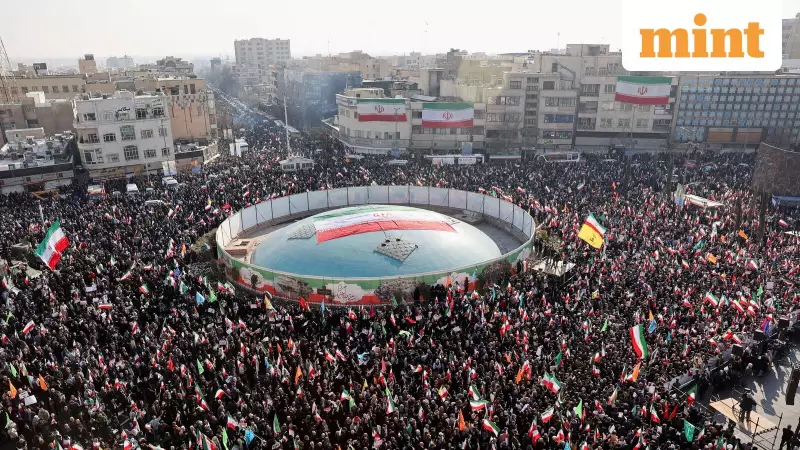
Human-rights groups report a grim toll. They say hundreds of people have been killed in the regime's crackdown on demonstrators. Iranian state television released footage on Sunday showing mass casualties inside and outside a morgue near Tehran. The protests represent a potentially existential challenge to the regime that came to power during Iran's 1979 revolution.

Trump's Public and Private Positions
Speaking to reporters aboard Air Force One on Sunday, President Trump revealed that Tehran messaged Washington a day earlier. The message indicated Iran's willingness to enter negotiations over its yearslong nuclear program. The United States has long sought to limit this program.
"A meeting is being set up," Trump stated, though he immediately added that the U.S. was still examining "very strong options" he could authorize before any discussions begin. The president has not made a final decision on his course of action. He plans to meet with senior aides on Tuesday to determine his approach.
White House Press Secretary Karoline Leavitt emphasized the uncertainty. "The truth is, with respect to Iran, nobody knows what President Trump is going to do except for President Trump. The world can keep waiting and guessing," she said in a statement. She later noted that bellicose Iranian public messages often differ from Tehran's private communications.
Range of Options Under Consideration
The options before President Trump include several possibilities. He could order military strikes on regime sites or launch sophisticated cyberattacks. Alternatively, he might approve new sanctions and boost antiregime accounts online. Some officials have voiced concerns that U.S. military strikes could backfire. They fear such action might fuel the regime's propaganda claiming the U.S. and Israel are secretly orchestrating the protests.
Officials note the U.S. currently lacks an aircraft carrier in the Middle East. However, President Trump could still deploy bombers, Air Force jet fighters, or other naval assets to strike Iran if he chooses. Top Iranian officials have threatened to attack American troops in response to any U.S. assault. Officials describe this threat as rhetoric for now but acknowledge it carries some weight.
Vance's Evolving Stance and Regional Dynamics
Vice President JD Vance, while generally resistant to engaging in conflicts, remains open to striking Iran. A person familiar with his thinking says he believes the country poses a genuine threat to the United States. Vance was initially skeptical of bombing Iran during discussions last June. That was before Trump ordered attacks on the Iranian nuclear sites of Fordow, Natanz, and Isfahan.
"The Iranian regime has a lot of problems," Vance told reporters last Thursday. "The smartest thing for them to have done, it was true two months ago, it is true today, is for them to actually have a real negotiation with the United States about what we need to see when it comes to their nuclear program."
Trump appears to have clear leverage over the regime, according to some officials. Tehran faces one of the greatest popular uprisings in years. Meanwhile, its regional proxies like Hamas and Hezbollah have been weakened after conflicts with Israel following the October 7, 2023 attacks.

Iran's Official Statements and Nuclear Stance
On Monday, Iranian Foreign Minister Abbas Araghchi stated his country was "ready for negotiations but these negotiations should be fair, with equal rights and based on mutual respect." He added a stark warning: if such talks prove impossible, Iran is "fully prepared for war." Araghchi confirmed he contacted U.S. special envoy Steve Witkoff over the weekend seeking meetings with the administration.
Some in the U.S. doubt Iran's sincerity about ending its nuclear program. They warn Trump that Tehran may simply be buying time to avoid American airstrikes and maintain its legitimacy despite widespread unrest. Tehran has insisted for two decades that it will continue enriching uranium, a critical step for producing a nuclear weapon. Officials have been repeating this position in recent weeks.
Strategic Dilemmas and Potential Paths Forward
Officials say President Trump must follow through on his repeated threats to attack Iran for harming protesters. Otherwise, he risks significant reputational damage. Yet even military action carries substantial risks, including potential Iranian attacks on U.S. forces in the region.
It remains unclear whether aerial strikes would immediately stop Tehran from quashing the protests. This puts Trump in a difficult bind. He must choose between ordering more attacks or ending operations without cowing the regime.
Some aides and analysts suggest a third, less risky option. The president could avoid hard military strikes and hold off talks as long as protests continue. He could then use the regime's weakness and urgent need to improve economic conditions to drive for a favorable deal.
Five previous rounds of talks last spring ended abruptly. They concluded after the U.S. joined Israel in bombing three of Iran's main nuclear sites. The Trump administration sought last spring to get Tehran to agree to give up its enrichment program in exchange for some sanctions relief.
Expert Analysis and Regime Stability
Despite popular and U.S. pressure, few signs indicate Iran's rulers are on the verge of losing power. Suzanne Maloney, an Iran expert and director of the foreign policy program at the Brookings Institution, offered her assessment.
"The regime will hunker down, weaker and more isolated internationally but also more risk-tolerant in dealing with the U.S. and more menacing at home," Maloney said. "Even if there is some post-crackdown splintering, the nucleus of the regime now has even more incentive to stick together."
So far, no senior government or military figures have defected or spoken out against the leadership. This is true even as the crackdown on demonstrators has intensified. Reliable information is hard to obtain from Iran during a nationwide internet shutdown. However, activists report that hospitals are filling up with thousands of injured people.
Top officials, including Vice President Vance and Secretary of State Marco Rubio, met on Friday to prepare options for the president. A person familiar with the meetings confirmed this preparation. Aides have briefed Trump on both the benefits and pitfalls of renewed nuclear negotiations with Iran.
President Trump set a precedent last summer. After deciding to attack Iran's nuclear sites, he established a two-week deadline for negotiations with Tehran over its program. He then struck just hours later. The world now watches to see which path he will choose this time.