Trump's 'Board of Peace' Initiative: A Potential Bypass of UN Security Council
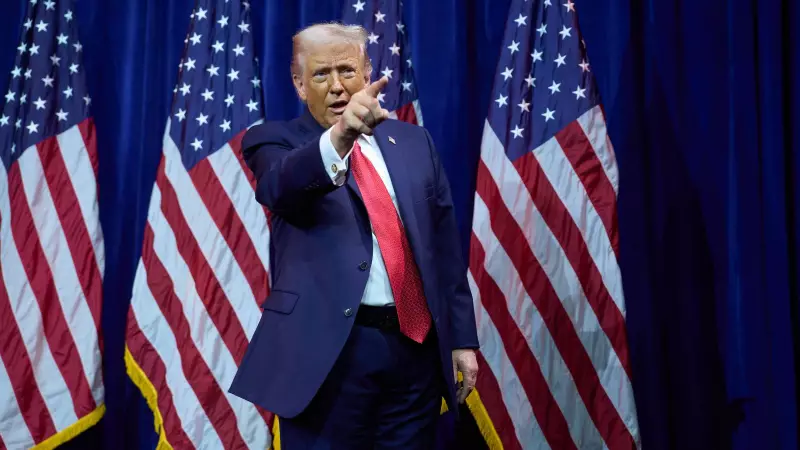
US President Donald Trump has invited world leaders to establish a new global body called the "Board of Peace." This move aims to manage international conflicts and has sparked intense debate about the future of the post-World War II international system. Announced against the backdrop of the Gaza situation, the initiative raises a critical question: Is Washington attempting to sideline the United Nations Security Council as the primary forum for war and peace issues?
A Direct Challenge to UN Principles
Critics view the Board of Peace as a direct attack on fundamental UN Charter principles. These principles include sovereign equality, universal membership, and collective decision-making. While the UN operates on the idea that all nations, regardless of size, participate equally in open discussions, Trump's proposal suggests a different approach. It points toward an exclusive, invitation-only group operating under American leadership and discretion.
This development comes as Trump has already disrupted global institutions. He wrecked the World Trade Organization and now risks the future of NATO, the longstanding Western military alliance. His claims to Greenland threaten relations with the European Union. Given this pattern, Delhi must take Trump's plans for a new peace and security mechanism seriously.

India's Diplomatic Reassessment
For India, which has consistently advocated for "reformed multilateralism," Trump's move forces a thorough reassessment. Delhi must reconsider long-held assumptions about the UN's form, function, centrality, and credibility. India's traditional faith in gradual UN system reform may not withstand an American push to redesign global governance from outside existing structures.
The Board of Peace aligns with a broader conservative American project to downgrade the UN and create US-led alternatives. This follows Washington's recent decision to exit over 60 international organizations, including several UN bodies. The US cites inefficiency, excessive ideology, and threats to American sovereignty as reasons for these withdrawals.
The Gaza Context and Expanded Mandate
The immediate context for the Board of Peace is Gaza. In November 2025, the UN Security Council adopted Resolution 2803. This resolution authorized creating a Board to supervise a transitional administration for stabilizing and reconstructing Gaza until the end of 2027. Russia and China abstained, but no Global South countries opposed it.
Prior to this UNSC resolution, a group of Islamic countries backed Trump's peace plan for Gaza. Trump now seeks to expand that mandate, transforming a Gaza-specific mechanism into a template for addressing wider global challenges. The reported charter of the Board of Peace aims to "embark on a bold new approach to resolving global conflict."
Structural Departure from Multilateral Norms
The Board's structure, approved by the UNSC for Gaza peace, marks a sharp departure from postwar multilateral norms. Trump would chair it, ensuring White House control over agenda-setting and decision-making. An executive committee, reportedly staffed by trusted loyalists, would handle security, deradicalization, and reconstruction. At the operational level, a Palestinian technocratic body would manage essential services like water, power, and education.
Trump's Board of Peace now appears to look beyond Gaza. Supporters present it as a dynamic crisis-management club that can overcome current paralysis in the UNSC. Republicans have criticized the UN's bureaucracy, inefficiencies, and perceived drift into a global "woke swamp" for decades. Trump's record reflects this skepticism. In his first term, he withdrew the US from UNESCO and the World Health Organization.
India's Strategic Imperative
For India, this moment demands a fresh appraisal of its multilateral strategy. As the global institutional order enters a period of extraordinary flux, Delhi must think beyond inherited orthodoxies and rework its diplomatic calculations. The Board's legitimacy currently rests on its UN Security Council mandate. In theory, denial or non-renewal of that mandate at the end of 2027 could halt the experiment.

In practice, however, success in Gaza could attract defectors, diverting funds, influence, and political attention away from New York. Trump clearly bets less on UN approval and more on America's unrivalled power and leverage over allies and adversaries. India faces the task of navigating these shifting sands while protecting its national interests and global standing.