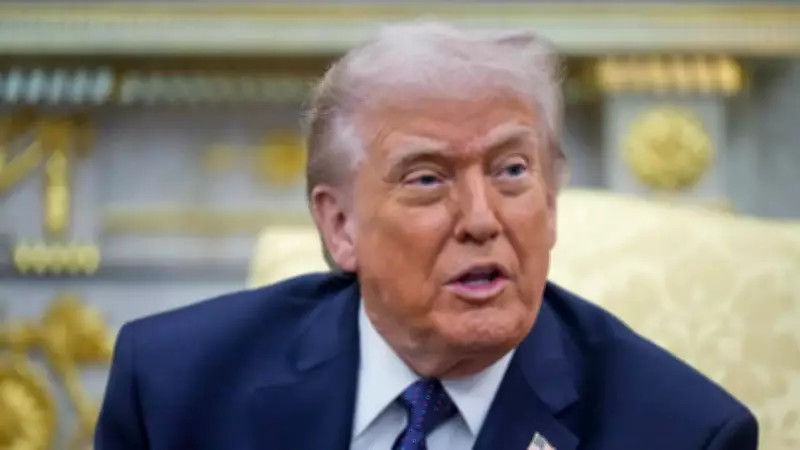
The Trump administration's foreign policy is increasingly resembling improvisational theater, marked by dramatic shifts and unpredictability that leave allies and adversaries struggling to discern a coherent strategy. One day, President Donald Trump declares prolonged negotiations with Iran as "boring." The next, he predicts a breakthrough agreement "within a week." On another occasion, he hints that military action remains on the table. Amidst this, an explosive report by Axios reveals that Trump unleashed a profanity-laced tirade at Israeli Prime Minister Benjamin Netanyahu, warning him he was "f****** crazy" for expanding the war in Lebanon and claiming, "You'd be in prison if it weren't for me. I'm saving your ass. Everybody hates you now. Everybody hates Israel because of this."
Growing Confusion and Contradictions
The latest confusion erupted after Trump publicly asserted he had personally persuaded both Hezbollah and Israel to stop firing at each other, stating, "I spoke with Hezbollah, and I said no shooting, and I talked to Bibi, and said, no shooting, and they both stopped shooting each other." Yet within hours, Netanyahu publicly contradicted Trump, declaring, "If Hezbollah does not cease attacking our cities and citizens, Israel will attack terror targets in Beirut," and affirming that Israeli military operations in southern Lebanon would continue as planned.
These contradictory messages highlight a growing problem for the White House: America's closest ally, which many pundits believe pushed the US into a war against Iran, appears unwilling to tailor its military actions to Trump's diplomatic timetable. The reported Trump-Netanyahu spat has generated significant buzz in Washington, where presidents have routinely vented privately about Israeli leaders while maintaining unwavering public support. Former President Joe Biden reportedly referred to Netanyahu as an "a******" in private and angrily ended calls with him during the Gaza conflict, yet US military and diplomatic backing continued uninterrupted.

Trump's Fragile Iran Strategy
What makes the current episode different is that Trump's frustration appears directly linked to his increasingly fragile effort to secure some form of truce with Iran, even at the risk of making concessions he did not foresee and which Israel opposes. According to Iran experts, Tehran is pursuing a familiar strategy: offering a limited interim understanding that relieves economic pressure while avoiding major concessions on its nuclear program, much to Israel's chagrin. For Iran, time appears to be an ally; for Trump, it is becoming a trap, despite his claim that he is in no hurry to make a deal.
Having joined Israel's military campaign against Iran earlier this year while simultaneously insisting he prefers a negotiated settlement, Trump now faces contradictory pressures. Any concessions risk inviting accusations that he has secured a weaker agreement than former President Obama. Yet failure to reach a deal raises the prospect of deeper military involvement in a conflict he promised would be short and decisive.
Criticism Mounts
Critics argue the administration entered the confrontation without a viable endgame. Senator Chris Murphy bluntly summarized the criticism on Monday, stating that the administration had "no plan to end the war" and that the assumption by Trump and Israeli hardliners that limited strikes would collapse the Iranian regime had not materialized, leaving Washington "fumbling."
Increasingly, that perception is spreading beyond Washington. At an emergency meeting of the UN Security Council on Monday, Washington found itself unusually isolated. France, Britain, Russia, China, and numerous non-permanent members called for de-escalation and criticized Israeli military operations in Lebanon. France's ambassador warned Israel was committing "a major strategic mistake," while Britain's representative described Israel's actions as "reckless and disproportionate." The US focused on blaming Iran and Hezbollah.

Global Perception Eroding
For decades, Washington has portrayed itself as the indispensable stabilizing power in the international system. But increasingly, analysts like Ian Bremmer and Jeffrey Sachs warn that image is eroding rapidly, with growing concerns about America being viewed as a disruptive force rather than a stabilizing one. Even countries traditionally friendly toward both nations, such as India, are feeling uncomfortable.
New Delhi has painstakingly built strategic partnerships with both Washington and Israel over the past two decades. Yet the prolonged conflict has pushed up energy costs, disrupted trade routes, and increased economic uncertainty, leading policymakers to privately wonder why they are paying an economic price for a war whose strategic objectives remain elusive, and whether the US possesses a coherent strategy for ending the crisis.