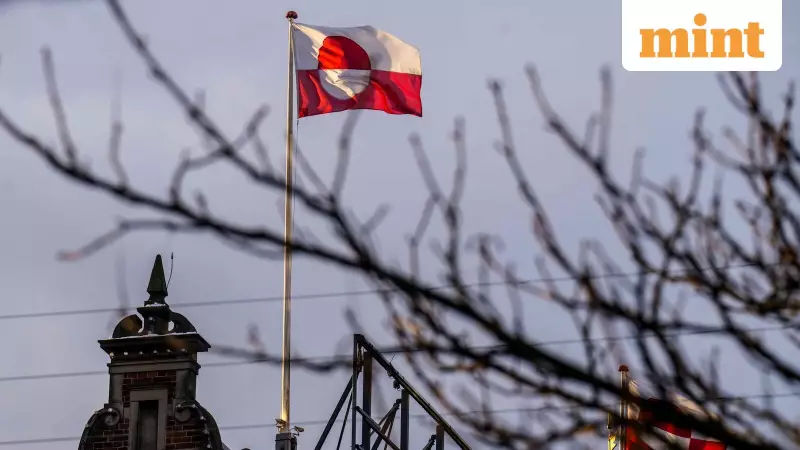
In a move that has sent shockwaves through diplomatic circles, former US President Donald Trump has reignited his controversial ambition to bring Greenland under American control, declaring that Washington is "going to do something on Greenland, whether they like it or not." This stark assertion has triggered a firm and unified rejection from the Arctic island's political leadership and raised alarm among European allies, potentially straining the NATO military alliance.
Greenland's Defiant Stand: 'We Want to Be Greenlanders'
The leaders of all five parties in Greenland's parliament issued a powerful joint statement, unequivocally rejecting any notion of being sold or annexed. "We don't want to be Americans, we don't want to be Danish, we want to be Greenlanders," they declared, as reported by AFP. Emphasising their right to self-determination, they added, "No other country can meddle in this. We must decide our country's future ourselves – without pressure to make a hasty decision, without procrastination, and without interference from other countries." This clear message underscores the island's long-standing pursuit of greater autonomy and eventual full independence from Denmark.
Trump's Security Rationale and European Alarm
President Trump has framed his interest in the vast, resource-rich island as a critical national security imperative. He argues that controlling Greenland is essential to counter the growing military activities of Russia and China in the Arctic region. "We're not going to have Russia or China occupy Greenland. That's what they're going to do if we don't. So we're going to be doing something with Greenland, either the nice way or the more difficult way," Trump stated on Friday. It is important to note that while both nations have increased their Arctic presence, neither has publicly claimed sovereignty over Greenland.

The White House's comments, which notably did not rule out military action, have left European capitals scrambling to formulate a coordinated response. Denmark, which handles Greenland's foreign and defence policy, has expressed profound shock. Danish Prime Minister Mette Frederiksen issued a severe warning, stating that a US invasion of Greenland would end "everything" – a clear reference to the transatlantic NATO defence pact and the post-World War II security architecture.
What's at Stake: A Potential NATO Crisis
The ramifications of aggressive US action are profound. An invasion or forced acquisition would pit Washington against fellow NATO member Denmark, directly challenging the alliance's foundational principle of mutual defence. While the head of NATO's forces in Europe, US General Alexus Grynkewich, downplayed immediate crisis talks, the underlying threat to alliance cohesion is significant. This episode is a replay of 2019, when Trump's offer to purchase Greenland was firmly and publicly rebuffed by Denmark, calling the idea "absurd."
The immediate diplomatic fallout will be closely watched as US Secretary of State Marco Rubio is scheduled to meet next week with Denmark's foreign minister and representatives from Greenland. The world now watches to see if this geopolitical standoff will be resolved through dialogue or if it will escalate into a more serious confrontation that could redefine Arctic politics and Atlantic alliances.