Former American military and diplomatic leaders are pushing back against President Donald Trump's recent statements about Greenland. Trump has argued that the United States must own the large Arctic island to properly defend it. This position directly contradicts decades of established US foreign policy.
A Different View From Experts
"We don't need 'ownership' in order to conduct all the operations we would like to do," said retired Navy Admiral James Stavridis. He previously served as the supreme allied commander of NATO. His view is shared by many former officials who see Trump's comments as undermining America's global defense posture.
Trump made his case clearly last Friday. "When we own it, we defend it. You don't defend leases the same way. You have to own it," the President stated. He added a warning, saying, "And we'll have to defend Greenland. If we don't do it, China or Russia will."

The Reality of US Overseas Bases
Military experts point out that the US already maintains the world's most powerful network of overseas military installations. Crucially, America does not own the land for almost all of these bases. Instead, host countries provide the territory under detailed bilateral agreements.
According to a 2024 Congressional Research Service report, the Defense Department manages or uses more than 128 foreign bases in at least 51 countries. Independent analyses suggest the total number could be much higher. Including smaller facilities, the US may have over 750 installations in 80 countries and territories.
These arrangements have been the backbone of US defense strategy for generations. Many bases date back to World War II and the Cold War era. The system allows the US to project power globally without claiming sovereignty over foreign soil.
How the Base System Works
Host nations generally permit the US to build and operate military facilities on their land. The terms are spelled out in formal diplomatic documents. In return, these allies often contribute financially to the operating costs. The biggest US overseas installations are in Japan, Germany, and South Korea.
The Pentagon reports that more than 53,000 active-duty troops are stationed across Japan. Over 36,000 are based in Germany. These forces represent a significant portion of America's military presence abroad. Of the 1.3 million active-duty US military personnel, almost 13% serve overseas.
The Greenland Situation
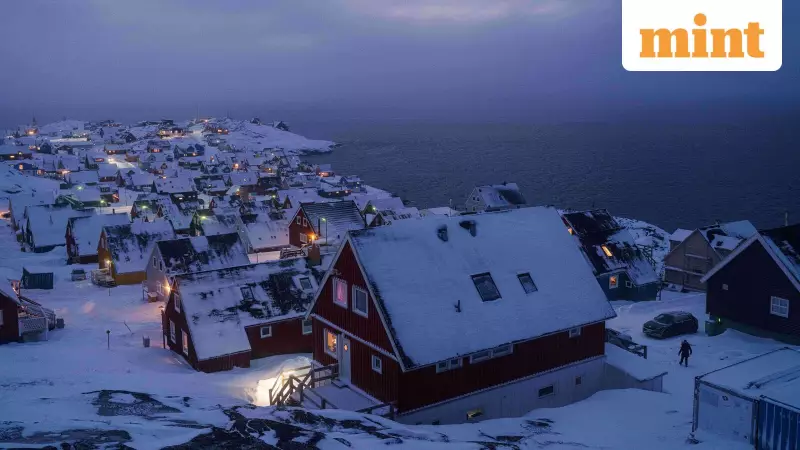
Greenland is a semiautonomous territory of Denmark. It is larger than Alaska and sits in a strategically vital location. The island provides a crucial gateway to the Arctic Ocean. It also lies under potential flight paths for intercontinental ballistic missiles from Russia or China.
The US has long viewed Greenland as important for national security. During the Cold War, America operated 17 bases on the territory. Today, only one base remains active. It is a Space Force facility focused on tracking missile threats.
Danish leaders have firmly stated that Greenland is not for sale. They emphasize that any decisions about the island's future must involve its 57,000 residents. However, Denmark has expressed openness to discussing an expanded US military presence under existing agreements.
Criticism From Security Experts
Richard Fontaine offered a sharp critique of Trump's logic. Fontaine served as a foreign-policy adviser to the late Republican Senator John McCain. He now leads the Center for a New American Security in Washington.
Fontaine called Trump's argument a "No One Washes a Rental Car theory of international relations." He explained that this mindset suggests a country only defends or cares about its own territory. "That makes sense for private property but not for nations," Fontaine stated.
He highlighted that the US is committed to defending many allies without owning their land. The entire purpose of alliances is mutual defense of each other's territory, Fontaine noted.
A Threat to Alliances?
Former US Ambassador to NATO Ivo Daalder expressed grave concerns. He said Trump's desire to take Greenland "poses a grave threat" to the 32-country alliance. "Merely suggesting that the U.S. can only be secure if it owns Greenland raises fundamental questions about its willingness to defend countries that it doesn't own," Daalder warned.

Daalder was among 14 former diplomats and national-security officials who published a letter last Friday. The group, which included members from both political parties, praised Denmark as a staunch ally. They criticized Trump's posture on Greenland.
The letter stated clearly, "Far from strengthening U.S. security, musing about taking Greenland only weakens Alliance solidarity, undermines American credibility as a trusted ally, and diminishes deterrence."
Political Reactions and Strategy Shifts
Even politicians from Trump's own Republican party have criticized the idea. Senator Thom Tillis of North Carolina spoke about it on the Senate floor last Wednesday. He called the assertion that America needs to own Greenland "absurd."
Tillis leads the bipartisan Senate NATO Observer Group and generally supports Trump. He praised Denmark's contributions to the US-led war in Afghanistan. "This nonsense on what's going on with Greenland is a distraction," Tillis said, defending the President while criticizing the idea itself.
The debate reflects a broader shift in American foreign policy thinking. A new national-security strategy document released last month outlines this change. Its fifth paragraph states that after the Cold War, "American foreign policy elites convinced themselves that permanent American domination of the entire world was in the best interests of our country."
The document adds, "Yet the affairs of other countries are our concern only if their activities directly threaten our interests." This is being seen as a playbook for future US action.
The Administration's Stance
White House officials have defended the President's perspective. Deputy chief of staff Stephen Miller appeared on CNN last week. He argued that the US "is the power of NATO." Miller stated that for America to secure the Arctic and defend NATO interests, "obviously Greenland should be part of the United States."
Meanwhile, current military cooperation in the Arctic continues to expand. US Air Force General Alexus Grynkewich, NATO's supreme commander, spoke in Sweden on Sunday. He said allies are increasing joint Arctic activities. "Military cooperation in this region has never been stronger," Grynkewich reported. He declined to comment on the political rhetoric surrounding Greenland.
The discussion about Greenland ownership highlights a fundamental tension. It pits a traditional, alliance-based defense model against a more transactional view of international relations. As the Arctic grows in strategic importance, this debate is likely to continue.