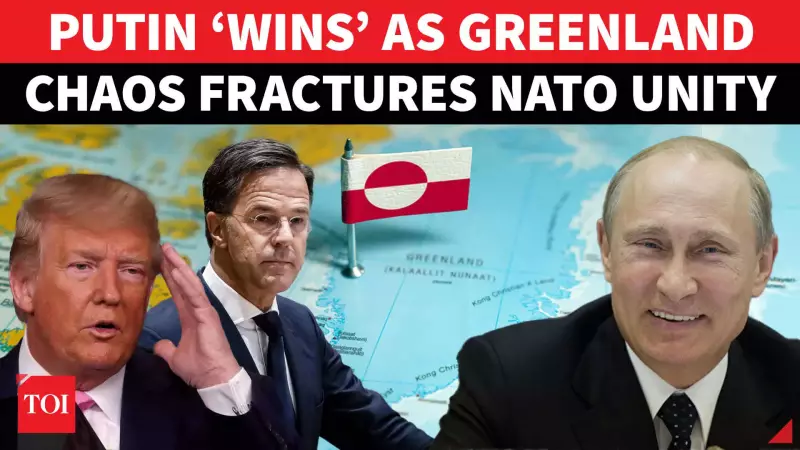
Trump's Greenland Ambition Exposes Deep Rifts Within NATO Alliance
US President Donald Trump's controversial effort to assert control over Greenland has sent shockwaves through international diplomatic circles. This bold move has not only alarmed European nations but has also laid bare significant fractures within the NATO alliance. As Denmark firmly rejects mounting pressure from Washington, the situation escalates with NATO members deploying additional forces to the increasingly tense Arctic region.
Kremlin Seizes Opportunity Amid Western Disarray
Moscow is closely monitoring these developments, with Kremlin officials describing the unfolding crisis as extraordinary. Russian authorities have issued stern warnings about potential consequences, positioning themselves to capitalize on the discord among Western allies. Analysts observe that Russia stands to gain a substantial strategic advantage in the Arctic without deploying a single soldier or firing any shots.
Arctic Security Becomes Global Flashpoint
The Greenland dispute has rapidly elevated Arctic security to the top of the global agenda. With NATO unity showing visible strain, critics argue that the alliance's internal divisions are inadvertently strengthening Vladimir Putin's hand in the region. The strategic implications extend far beyond Greenland, affecting broader geopolitical balances and military posturing in the High North.

European capitals express growing concern as Trump's approach challenges established diplomatic norms. The US president's tactics have created an unprecedented situation where traditional allies find themselves at odds over Arctic sovereignty and security arrangements. This crisis demonstrates how unilateral actions can destabilize long-standing alliances and reshape international power dynamics.
Military analysts note that Russia's Arctic capabilities have expanded significantly in recent years, with Moscow investing heavily in northern infrastructure and defense systems. The current NATO disarray provides Moscow with an unexpected opportunity to advance its regional interests while Western attention remains divided. The situation continues to evolve as diplomatic channels remain active but strained.
Observers warn that the Greenland controversy could have lasting implications for transatlantic relations and global security architecture. As temperatures rise in the Arctic both literally and figuratively, the world watches how this diplomatic confrontation will reshape international alliances and power structures in one of the planet's most strategically important regions.