

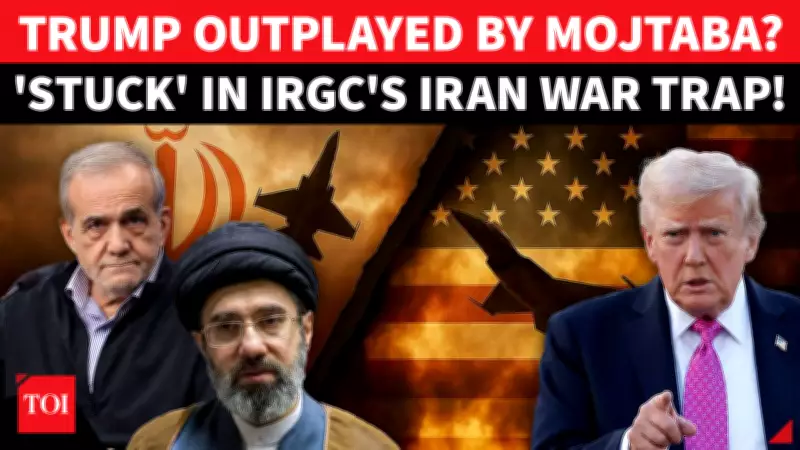
The Strategic Quagmire: America's Iran Dilemma Deepens
Wars often begin with decisive action but frequently conclude in complex stalemates. The ongoing confrontation between the United States and Iran exemplifies this principle, having transformed from a straightforward military engagement into a multifaceted strategic deadlock. Despite possessing overwhelming military superiority, American forces find themselves constrained by geopolitical realities and escalating costs.
Three Paths to Nowhere: Trump's Limited Options
Analysis reveals that President Trump faces three primary options, each presenting significant drawbacks. First, further military escalation risks triggering broader regional conflict with unpredictable global consequences. Second, diplomatic de-escalation carries substantial political costs that could undermine American credibility. Third, maintaining the current status quo allows Iran to continue expanding its asymmetric warfare capabilities while economic pressures mount.
Iran's Asymmetric Strategy: Raising the Cost of Conflict
Iran has strategically avoided conventional military confrontation in favor of asymmetric tactics designed to increase the price of every American action. Tehran has successfully expanded the battlefield beyond traditional geographical boundaries into global economic systems. Key Iranian strategies include:

- Disrupting critical shipping lanes in the Persian Gulf
- Tightening control over the strategically vital Strait of Hormuz
- Targeting global energy markets through supply manipulation
- Employing proxy forces to maintain plausible deniability
The Economic Battlefield: Where Real Power Resides
The conflict has fundamentally shifted from purely military engagement to economic warfare. Iran's ability to influence global oil prices and disrupt shipping routes has created leverage that conventional military power cannot easily counter. This economic dimension has introduced new decisive factors into the conflict:
- Energy Security: Control over the Strait of Hormuz affects approximately 20% of global oil trade
- Market Stability: Iranian actions can trigger volatility in international energy markets
- Political Capital: Both nations must balance domestic political considerations with international credibility
- Temporal Pressure: Time itself has become a strategic resource favoring Iran's endurance strategy
Global Consequences and Regional Implications
The US-Iran standoff has evolved into a conflict with truly global implications. What began as a regional confrontation now influences international energy security, global trade routes, and diplomatic alliances worldwide. The strategic deadlock demonstrates how modern conflicts increasingly transcend traditional battlefields, incorporating economic, political, and informational dimensions that complicate resolution efforts.
As both nations navigate this complex landscape, the fundamental challenge remains: how to achieve strategic objectives without triggering catastrophic escalation or suffering unacceptable political humiliation. The current impasse suggests that neither military might nor diplomatic overtures alone can provide satisfactory solutions, requiring innovative approaches to conflict resolution in an interconnected world.






