Trump's Iran Strategy: Precision Over Bombing, But Risks Loom Large
What will the United States do if it decides to act against Iran? The Trump administration faces a critical choice. Unlike the airstrikes in June 2025 that hit Iranian nuclear facilities, a new military operation would likely avoid large-scale bombing campaigns. This shift in approach comes as a response to Iran's violent crackdown on unarmed protesters.
Why Precision Strikes Are the Preferred Option
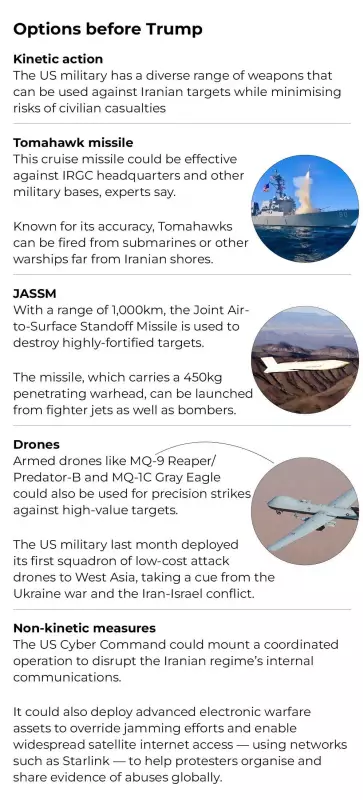
Military analysts point to several reasons for this change. First, large-scale bombing could cause significant collateral damage. Second, it might escalate tensions rapidly in an already volatile region. Instead, the focus would be on precision strikes. These targeted attacks aim to minimize unintended harm while achieving specific objectives.
However, this strategy is not without its challenges. Identifying the right targets becomes a complex task. Many potential sites are embedded within civilian areas. This situation requires careful planning and intelligence gathering. The US military would need to ensure accuracy to avoid harming innocent people.

The Tactical Hurdles and Risks Involved
Analysts emphasize that such an operation demands a fundamentally different set of tactics. Traditional bombing runs give way to more surgical methods. Drones, cyber capabilities, and special forces might play key roles. Yet, the risks remain high. Mistakes in target identification could lead to diplomatic fallout and public outrage.
Moreover, Iran's defensive measures add another layer of difficulty. The country has developed sophisticated air defense systems and asymmetric warfare tactics. Any US operation must account for these defenses. The potential for miscalculation or escalation is a constant concern for policymakers.
In summary, while precision strikes offer a more controlled approach, they come with their own set of dangers. The Trump administration must weigh these factors carefully before authorizing any military action against Iran.