

Trump's Profane Threat to Iran Ignites Fears of War Crimes Under International Law
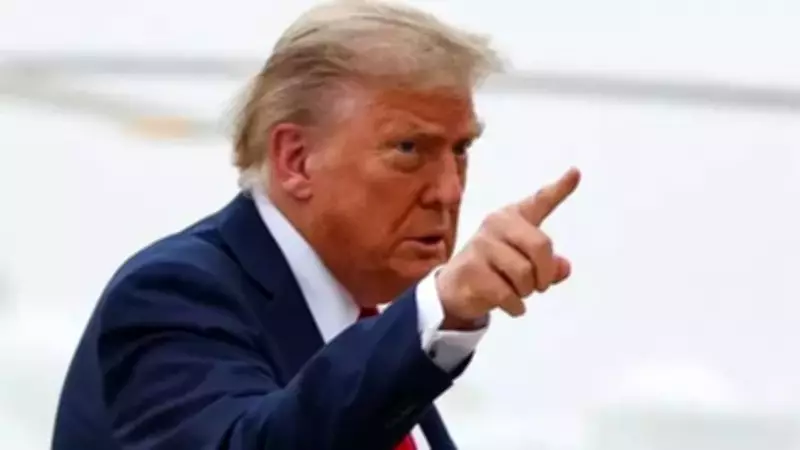
Former US President Donald Trump issued a shocking and profanity-laced threat against Iran via social media on Sunday, demanding the country open the Strait of Hormuz or face severe consequences. In a post on Truth Social, Trump declared, "Tuesday will be Power Plant Day, and Bridge Day, all wrapped up in one in Iran. There will be nothing like it!!! Open the F******' Strait, you crazy b*******, or you'll be living in Hell - JUST WATCH! Praise be to Allah." This aggressive rhetoric has sparked widespread alarm among international law experts and human rights organizations, who fear it may endorse serious violations, including potential war crimes.
Experts Warn of Illegal Targeting of Civilian Infrastructure
Erika Guevara Rosas, Amnesty International’s senior director of research, advocacy, policy, and campaigns, emphasized that intentionally attacking civilian infrastructure like power plants is generally prohibited under international law. She explained to the Guardian, "Intentionally attacking civilian infrastructure such as power plants is generally prohibited. Even in the limited cases that they qualify as military targets, a party still cannot attack power plants if this may cause disproportionate harm to civilians." This principle was recently reinforced in 2024 when the International Criminal Court issued arrest warrants for Russia’s former defence minister Sergei Shoigu and general Valery Gerasimov, accused of directing attacks on Ukraine’s power infrastructure that harmed civilians excessively.
Sarah Yager, Washington director of Human Rights Watch, highlighted the devastating impact such actions would have on Iran's population. She stated that crippling Iran’s power plants would be "devastating to the Iranian people," cutting electricity to hospitals, water supplies, and other vital civilian services. Yager added, "The US military has protocols to constrain such harm, but when the president speaks this way, it risks signaling that those constraints are optional, making this moment especially dangerous."

Legal Analysis Questions Lawfulness of Trump's Statements
International law permits attacks on energy plants or other civilian targets only if they primarily support military activity. However, Tom Dannenbaum, a professor at Stanford Law School, argued that Trump’s statements suggest otherwise. He explained, "The reference to the 'stone age' indicates objects would be targeted simply because they support modern society in Iran, which has nothing to do with military contribution—the necessary condition for lawful targeting in war." This raises red flags about potential breaches of international humanitarian law.
Furthermore, more than 100 US experts in international law from prestigious universities, including Harvard, Yale, Stanford, and the University of California, expressed serious concerns on Thursday. They noted that the conduct of US forces and statements by senior US officials "raise serious concerns about violations of international human rights law and international humanitarian law, including potential war crimes." In a letter published on the policy journal Just Security website, they flagged Trump’s previous comment that the US may conduct strikes on Iran "just for fun," as well as Defence Secretary Pete Hegseth’s remark that the US did not fight with "stupid rules of engagement."
Historical Context and Legal Principles Under Scrutiny
The experts also highlighted specific incidents, such as an attack on a school in Tehran on the first day of the war that killed over 160 children and teachers, underscoring the grave risks to civilians. Determining what qualifies as a civilian object and applying proportionality when striking objects that serve military purposes are among the most complex issues in international humanitarian law.

Under Article 52 of the First Additional Protocol to the Geneva Conventions of 1977, "civilian objects," including infrastructure, are defined by their non-military nature, meaning they must not be targeted if their destruction offers no clear military advantage. Central to this is the principle of distinction between civilians and combatants. Rule 10 of customary international humanitarian law, applicable in both international and internal armed conflicts, states: "Civilian objects are protected against attack, unless and for such time as they are military objectives."
This principle imposes obligations on all parties: attackers must avoid targeting civilian objects, and defending parties must avoid placing military assets among civilians. The Rome Statute of the International Criminal Court explicitly criminalizes intentionally directing attacks against civilian objects that are not military targets. Even when a civilian object is deemed a military target, international law requires balancing potential harm to the civilian population.
Since World War II, these protections have become increasingly precise, but the US and its allies have previously carried out controversial attacks on civilian infrastructure, such as during the 1991 Gulf War in Iraq and against Serbian power plants. Trump's latest threats have reignited debates over adherence to these legal standards, with many fearing a dangerous precedent that could undermine global humanitarian norms.





