Trump's Board of Peace Sparks Global Concerns Over UN Rivalry
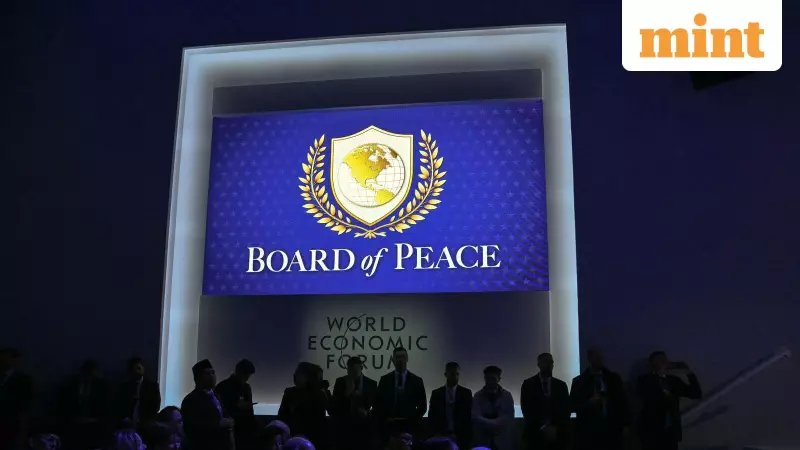
In a bold move that could redefine international diplomacy, US President Donald Trump has launched the Board of Peace, an organization he envisions as a successor to the United Nations. Originally conceived to oversee the reconstruction of postwar Gaza, the board's charter reveals a far more expansive mandate, raising alarms among major world powers about its potential to destabilize the existing global order.
Major Powers Express Reluctance and Skepticism
Despite Trump's enthusiastic promotion of the board as a group of "accomplished leaders" with him as permanent chairman, key nations have shown significant hesitation. Russia and China have not accepted invitations, while longstanding US allies like the United Kingdom and France have expressed reluctance. British Foreign Secretary Yvette Cooper highlighted concerns over the potential involvement of Russian President Vladimir Putin, stating the board raises "much broader issues" beyond Gaza peace efforts.
Analysts note that for China, Russia, France, and Britain, wariness stems from fears of coming under Trump's direct control—a contrast to their protected status as permanent UN Security Council members with veto power. Many smaller nations, who view the UN as their primary platform for influence, share similar doubts about the new organization.

Charter Reveals Ambitious Global Agenda
The board's charter, drafted by the White House, outlines goals to "promote stability, restore dependable and lawful governance, and secure enduring peace in areas affected or threatened by conflict." Notably, nothing confines its operations to Gaza. Countries seeking permanent seats must commit to a $1 billion payment to fund activities, underscoring the board's significant financial requirements.
This development represents part of Trump's broader second-term push to replace the post-World War II international architecture with a system directly under his control. "It's going to get a lot of work done that the United Nations should have done," Trump asserted in Davos, defending controversial inclusions like Putin by emphasizing their ability to "get things done."
Geopolitical Calculations and Diplomatic Maneuvering
The board's formation comes amid other unilateral actions by the Trump administration, including military intervention in Venezuela and disputes over Greenland. For most governments, joining involves a strategic calculation: whether benefits outweigh risks. European nations are largely absent except Hungary and a few others, with Ukrainian President Volodymyr Zelensky expressing reservations about participating alongside Putin.
Professor Nicholas Westcott of the University of London described the board as a "global Mar-a-Lago," where countries seek "crumbs from the great man's table." European governments face a particular dilemma: if Trump uses the forum to negotiate Ukraine peace without their presence, it could enable a "carve up" between Trump and Putin.
Structural Challenges and Long-Term Viability
Experts question the board's sustainability beyond Trump's presidency. With minimal staff, limited international legal authority except in Gaza, and lacking the UN's legitimacy, analysts like former State Department official Aaron David Miller argue it has "no mandate, no practical way of functioning and no governing principles that might attract heavyweights."
While past US presidents have criticized the UN and taken unilateral actions, Trump's sidelining of the institution America helped establish represents an unprecedented shift. Despite the UN Security Council's November endorsement of Trump's Gaza ceasefire plan—with Russia and China abstaining—UN officials grow increasingly alarmed as expansion plans take shape.
As global powers weigh their participation, Trump's Board of Peace stands at a crossroads: will it become a transformative force in international relations or remain a symbolic club subject to presidential whims? The coming months will reveal whether this ambitious initiative can overcome skepticism and establish itself as a credible alternative to decades-old diplomatic frameworks.