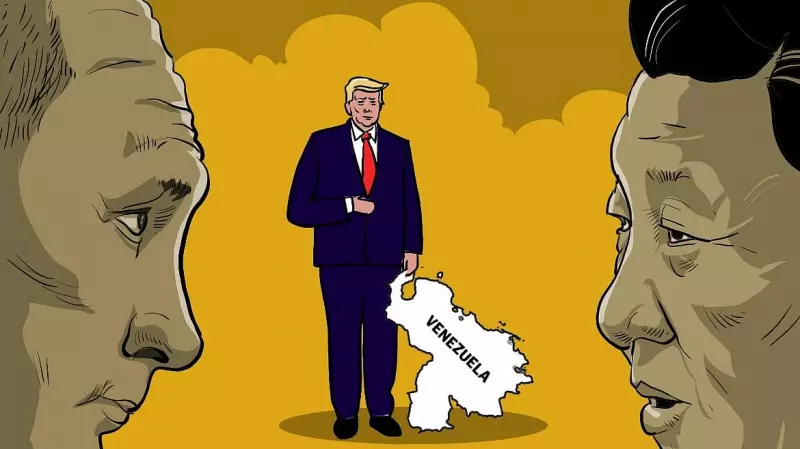
The recent and forceful intervention by former US President Donald Trump into Venezuela's affairs has sent shockwaves through the international community, introducing a significant layer of unpredictability into global geopolitics. This bold move, characterized by a stark, power-centric approach, has left both allies and rival nations hastily reassessing their positions in the face of a superpower willing to employ force to achieve its objectives.
A New Era of Transactional Foreign Policy
The stunning assault initiated under Trump's direction marks a pivotal shift. It signals the adoption of a foreign policy doctrine where traditional alliances and diplomatic norms are secondary to immediate, transactional gains. The principle of "might makes right" appears to be the new guiding force, upending decades of established international conduct. This development was reported by the International New York Times on January 06, 2026, at 20:35 IST, highlighting the immediacy of the global reaction.
Global Scramble and Power Vacuum
As the United States pivots to this uncompromising stance, the world is scrambling to adapt. The primary concern among geopolitical observers is that this focus and potential overextension in Latin America could create strategic openings elsewhere. Specifically, nations like Russia and China may find themselves emboldened to advance their own interests in regions where American attention is now divided.

The calculus is straightforward: with Washington's political and military capital being directed towards Venezuela, its ability to counterbalance Russian maneuvers in Eastern Europe or Chinese assertiveness in the Indo-Pacific could be diminished. This scenario presents a direct challenge to the existing world order and could accelerate a transition towards a more multipolar, and potentially more volatile, global system.
Implications for the Future World Order
The long-term consequences of this policy shift are profound. The uncertainty it breeds affects global markets, security alliances, and diplomatic engagements. Key implications include:
- Erosion of Norms: The disregard for established international protocols sets a dangerous precedent for conflict resolution.
- Opportunistic Expansion: Adversarial powers may perceive a window of opportunity to solidify their influence in strategic regions.
- Alliance Strain: Traditional US allies may question the reliability and predictability of American foreign policy, leading to potential realignments.
In conclusion, Trump's foray into Venezuela is more than a regional intervention; it is a catalyst for global realignment. The move underscores a turn towards raw power politics, a shift that risks empowering other major powers while destabilizing the frameworks that have managed international relations for generations. The events of January 2026 may well be remembered as the moment the world entered a new and more uncertain chapter.