Trump's Venezuela Oil Ambition Faces Historical Warnings
Donald Trump wants to unlock Venezuela's vast oil reserves, the largest in the world. He promises to "run" the country to achieve this goal. However, American oil companies are not rushing in. They remember past U.S. exploits in Latin America. History shows these ventures often ended badly.
Corporate Caution in Caracas
Exxon Mobil CEO Darren Woods expressed deep skepticism. "We've had our assets seized there twice," he said after a January meeting with oil executives. "Re-entering a third time would require significant changes." Exxon sued Venezuela for $12 billion but recovered only a fraction. Chevron remains the sole major U.S. oil firm active there now.
Global leaders already sound alarms. The U.S. seizure of Venezuelan President Nicolás Maduro earlier this month drew widespread criticism. Trump's threats toward Cuba and Colombia add to regional tensions. U.S. corporations prefer a cautious approach despite presidential calls for investment.

Two Centuries of Mixed Results
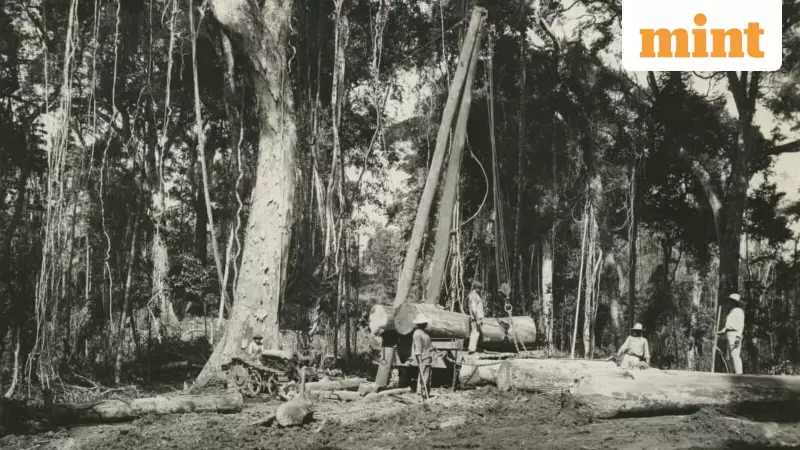
Latin America's natural resources long attracted U.S. interests. From Alexander Hamilton to modern oil giants, Americans sought sugar, bananas, rubber, and oil. Results varied wildly over two centuries.
Difficult topography presented challenges. Local resistance to "gunboat" diplomacy created obstacles. Corrupt political regimes complicated foreign operations. Some companies made fortunes. Others retreated hastily with heavy losses.
Early Dreams and Failed Invasions
Founding Father Alexander Hamilton envisioned U.S. control of Latin American resources. He proposed backing revolutionary Francisco de Miranda with American troops and a British fleet in 1798. Hamilton wrote confidently about commanding such an invasion.
The invasion never happened. Miranda died in a Spanish prison. His dream of a united Latin American republic died with him. Hamilton's belief in excluding European influence became the Monroe Doctrine in 1823.
Banana Republics and Sugar Plots
After independence from Spain, the region splintered into dozens of states. Many fell under caudillos—strongmen controlling land resources. American writer O. Henry coined the term "banana republic" while hiding in Honduras.
In 1854, Southern expansionists coveted Cuba's sugar plantations. Three American diplomats, including future President James Buchanan, hatched the Ostend Manifesto. They demanded Spain sell Cuba for $120 million or face war.
Public revelation killed the plot. Horace Greeley's New-York Tribune denounced it as the "Manifesto of the Brigands." America soon slid toward civil war instead.
Roosevelt's Canal and Corporate Coups
Theodore Roosevelt pursued Panama Canal construction aggressively. He approved a 1903 coup against Colombia and sent gunboats to secure the isthmus. The New York Evening Post called it "a vulgar and mercenary venture." The canal opened in 1914.
American fruit mogul Samuel Zemurray took matters into his own hands. Unhappy with Honduran tax policies, he sent the decommissioned USS Hornet carrying ex-president Manuel Bonilla and mercenaries. After two years of war, Bonilla regained power and Zemurray got his tax break.
Ford's Amazon Failure
Henry Ford sought rubber independence for his automotive empire. In 1927, he built Fordlandia—a company town in Brazil's Amazon forest. The Connecticut-sized plantation aimed to secure rubber for Ford Motor's total in-house production.
Fordlandia failed spectacularly. Smallpox and yellow fever ravaged workers. Rubber-destroying fungi infected crops. Labor unrest required military intervention. Little rubber was ever produced.
Ford sold the failed venture back to Brazil in 1945 for $250,000—a massive loss after investing $15 million. The Springfield Daily Republican called it "a virtual gift."
Venezuela's Oil History Repeats
Ford's cars created booming oil demand. U.S. producers looked abroad. After a 1922 oil gusher discovery near Lake Maracaibo, companies flocked to Venezuela. Standard Oil of New Jersey—Exxon's predecessor—joined 25 others in Caracas.
Dictator General Juan Vicente Gómez demanded hefty kickbacks for drilling rights. Production soared from 1.4 million barrels in 1921 to 137 million by 1929. Venezuelan crude powered Allies during World War II.

The boom ended in 1976. Venezuela nationalized its oil industry. President Carlos Andrés Pérez announced to cheering crowds: "Today we are fixing the destiny of the nation." State-owned PdVSA confiscated foreign assets—the first time Exxon lost its Venezuelan holdings.
Exxon returned during Venezuela's 1990s "oil opening" policy. Hugo Chávez ousted them again in 2007. Now Nicolás Maduro's government presents new challenges. Trump wants to fix PdVSA, but Exxon remembers the old proverb: Fool me once, shame on you. Fool me twice, shame on me.
Imperial Ventures Rarely Pay
History clearly shows imperialist ventures in Latin America don't guarantee profits. The region's complex politics, geography, and nationalism create persistent challenges. U.S. companies now weigh Trump's promises against two centuries of mixed results.
As American oil majors consider returning to Venezuela, they study past exploits carefully. The lessons suggest caution. What worked temporarily for some failed spectacularly for others. Modern corporations prefer stability over revolutionary promises.