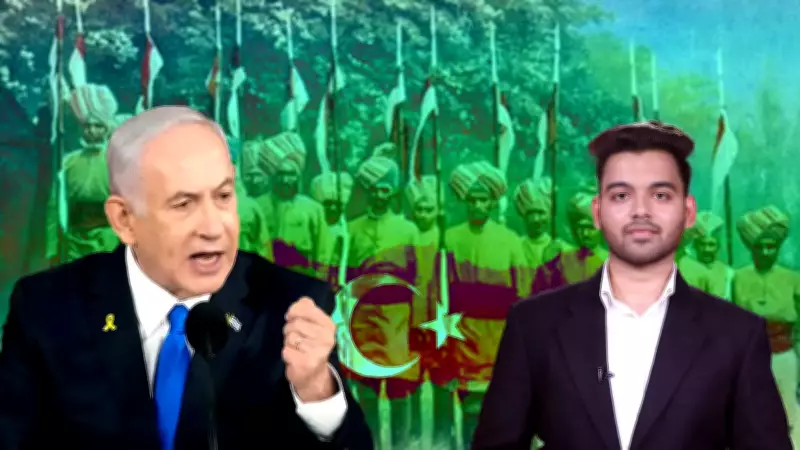
Turkish Outrage Erupts Over Netanyahu's Historical Reference to Indian Soldiers
Israeli Prime Minister Benjamin Netanyahu's recent praise of Indian soldiers who fought in the 1918 Battle of Haifa during World War I has sparked significant outrage and criticism across Turkey. The statement, which described the role of Indian cavalry in defeating Ottoman forces as heroic, has drawn strong reactions from Turkish media outlets and social media platforms, illustrating the enduring sensitivity of historical narratives in contemporary international relations.
Historical Context and Modern Implications
The Battle of Haifa, fought in September 1918, was a pivotal engagement where the 15th Imperial Service Cavalry Brigade, comprising Indian soldiers from princely states like Jodhpur and Mysore, played a crucial role in capturing the city from the Ottoman Empire. Netanyahu's reference to this event, while intended to highlight bravery and strengthen ties with India, has been perceived in Turkey as a provocative glorification of actions against the Ottoman forces, which are viewed as ancestors of modern Turkey.
This incident underscores how historical references can carry profound modern political implications, especially amid growing strategic cooperation between Israel and India. As regional alliances shift, century-old wartime history continues to shape diplomatic narratives and geopolitical tensions, with Turkey's reaction reflecting broader concerns about historical interpretations and national pride.

Reactions and Diplomatic Ramifications
Turkish media has widely condemned Netanyahu's remarks, with commentators and officials expressing dismay over what they see as an insensitive portrayal of Ottoman history. Social media platforms in Turkey have been flooded with posts criticizing the Israeli leader, highlighting how such statements can inflame public sentiment and complicate bilateral relations.
The episode demonstrates the delicate balance required in diplomatic communications, where historical events are often leveraged to build alliances but can inadvertently spark controversies. With Israel and India deepening their cooperation in areas like defense, technology, and trade, this controversy serves as a reminder of the potential pitfalls in referencing shared or contested histories.
Key Points of Contention:- Netanyahu's description of Indian soldiers as heroic in defeating Ottoman forces.
- Turkish perception of the remarks as disrespectful to Ottoman heritage.
- The role of media and social platforms in amplifying the criticism.
- Implications for Israel-Turkey relations amid broader geopolitical shifts.
Broader Geopolitical Significance
This controversy occurs against a backdrop of evolving regional dynamics, where alliances are being reassessed and historical narratives are increasingly politicized. The strong Turkish response highlights how nations remain vigilant about how their past is portrayed on the global stage, particularly in contexts involving former adversaries.
As Israel and India continue to strengthen their partnership, such incidents may test the resilience of their diplomatic ties, while also influencing Turkey's stance in regional affairs. The ongoing dialogue around this issue is likely to prompt discussions on historical sensitivity and the importance of nuanced communication in international diplomacy.