

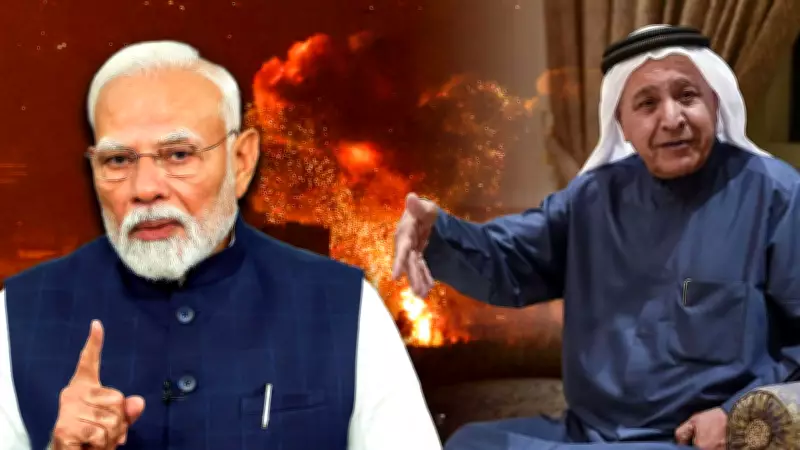
UAE Ambassador Highlights PM Modi's Potential Role in Resolving Iran-Israel Conflict
In a significant diplomatic statement, UAE Ambassador to India Hussain Hassan Mirza has asserted that a single phone call from Prime Minister Narendra Modi to the leaders of Israel and Iran could potentially bring an end to the ongoing conflict between the two nations. The ambassador emphasized India's unique position and credibility as a mediator in this volatile situation.
UAE's Neutral Stance and Strategic Position
Ambassador Mirza clarified that the United Arab Emirates has no intention of being drawn into the Iran-Israel war and will firmly prevent its territory from being used by either side for military purposes. He highlighted Abu Dhabi's delicate geopolitical position as both a neighbor to Iran and a partner to Israel under the Abraham Accords, which normalized relations between several Arab states and Israel.
The UAE sees itself as a potential facilitator for negotiations, leveraging its relationships with both parties to encourage dialogue. Mirza stressed that the UAE's priority is maintaining regional stability and preventing further escalation of hostilities that could threaten the entire Middle East.

Praise for PM Modi's Diplomatic Credibility
The ambassador specifically praised Prime Minister Narendra Modi's standing with both Israel and Iran, noting that his intervention could be decisive in achieving a peaceful resolution. "PM Modi has established strong relationships with leaders across the political spectrum in the region," Mirza stated, suggesting that this unique diplomatic capital could be instrumental in bridging differences.
He elaborated that India's historical non-aligned stance, combined with its growing economic and strategic importance, gives New Delhi a credibility that few other nations possess in this conflict. The ambassador's comments reflect growing international recognition of India's diplomatic capabilities on the global stage.
Condemnation of Hostilities and Call for Dialogue
Mirza strongly condemned any hostilities occurring on UAE soil, emphasizing the urgent need for immediate dialogue to prevent further violence and regional destabilization. He warned that continued conflict could have devastating consequences for the entire Middle East and beyond.
The ambassador's statement comes amid heightened tensions in the region, with multiple international actors seeking to prevent a full-scale war. His remarks underscore the complex diplomatic landscape where traditional alliances are being tested and new mediators like India are gaining prominence.
Regional Implications and Future Prospects
The UAE's position reflects several important regional dynamics:
- The Abraham Accords have created new diplomatic channels between Arab states and Israel
- Traditional regional rivalries are being reconsidered in light of new security threats
- Non-traditional mediators like India are increasingly seen as valuable in resolving conflicts
- The economic consequences of continued conflict are driving diplomatic efforts
As the situation continues to evolve, the international community will be watching closely to see if Prime Minister Modi chooses to exercise the diplomatic influence that the UAE ambassador has highlighted. The potential for Indian mediation represents a significant development in how global conflicts might be addressed in the future, with emerging powers playing increasingly important roles in international diplomacy.






