Indian-Born UK Official Faces Social Media Storm Over Chagos Islands Deal
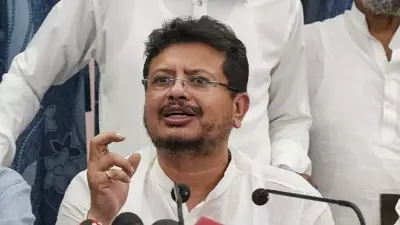
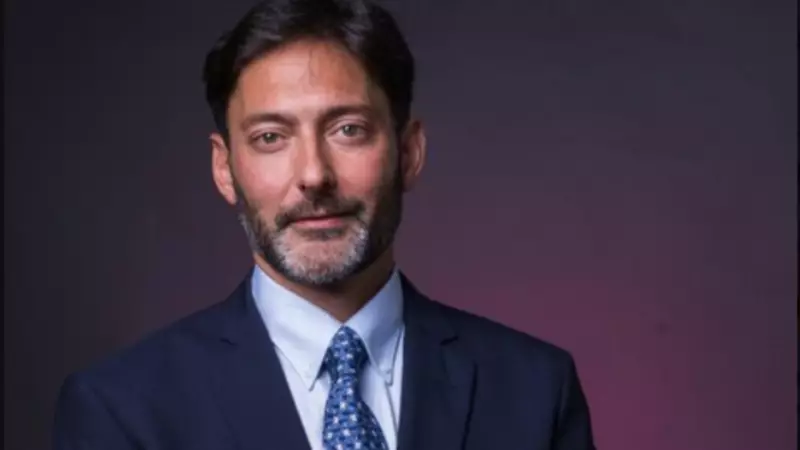
An Indian-born British civil servant has become the unexpected target of intense criticism on social media platforms following revelations about his central role in negotiating the controversial Chagos Archipelago sovereignty agreement. Dr. Francis Vijay Narasimhan Rangarajan, who was born in Delhi and educated at Cambridge University, finds himself at the center of a political firestorm that has ignited passionate debate across British political circles.
Background and Career Trajectory
Dr. Rangarajan's educational background includes a master's degree in mathematics and a PhD in astrophysics from the prestigious Cambridge University. His career trajectory took a significant turn when he joined the British civil service, where he eventually rose to become a director-general at the Foreign, Commonwealth & Development Office (FCDO). Since March 2024, he has served as the chief executive of the Electoral Commission, a position that places him at the helm of Britain's electoral oversight body.
The Controversial Chagos Agreement
The source of the controversy stems from the Chagos deal, which was formally agreed upon in May 2025. This agreement involves the transfer of sovereignty over the Chagos Archipelago from Britain to Mauritius, followed by a financial arrangement where Britain would pay Mauritius millions of pounds annually to lease back the strategically important Diego Garcia military base. This base serves as a crucial facility for both United States and United Kingdom military forces.

The deal has faced substantial opposition from multiple quarters, including the Conservative Party, Reform UK, and a significant portion of the British public who view the arrangement with skepticism and concern.
Social Media Eruption and Political Reactions
On Sunday night, Rangarajan's name began trending alongside "Chagos Deal" on the social media platform X, formerly known as Twitter, as details of his involvement became more widely known. The revelation that an Indian-born official negotiated the transfer of British territory to Mauritius, a country with a majority Indian population, sparked particularly heated reactions.
Journalist and former Tory MEP Daniel Hannan commented on the situation, stating: "Every former minister I have spoken to blames the Chagos fiasco on Vijay Rangarajan, the relevant FCDO official. But, in Britain, civil servants are never blamed for anything and, indeed, he is now running the Electoral Commission, which makes MPs reluctant to criticise him."
Former Tory MP Douglas Carswell added his voice to the criticism, writing: "Vijay Rangarajan should be summoned to the bar of the House to explain his asinine deal."
British political commentator Nick Dixon raised questions about the arrangement, asking: "So we let an Indian give away our territory to a majority Indian country? Did we lose a war or something?"
Wider Political Implications and International Perspectives
The controversy has extended beyond social media into formal political channels. Although the treaty was signed in May 2025, the bill has not yet been ratified by the UK Parliament. The Conservative Party recently tabled a motion in the House of Lords requiring the government to confirm that the Chagos deal does not breach the existing 1966 UK-US treaty governing the use of Diego Garcia. Interestingly, this bill was subsequently removed from Monday's order paper, adding another layer of complexity to the situation.
Internationally, the deal has received support from India, with Prime Minister Narendra Modi describing it last September as "a historic milestone for Mauritius's sovereignty." However, former US President Donald Trump offered a contrasting perspective, characterizing the arrangement as "an act of great stupidity."
According to reports from the UK Times, political sources have suggested that the Chagos negotiating team, led by Rangarajan, may have "overstepped its brief and offered Mauritius too much," with one source describing officials as "freewheeling" in their approach to the negotiations.

As of the time of reporting, the Foreign, Commonwealth & Development Office had not responded to requests for comment regarding the social media controversy and the specific criticisms directed at Dr. Rangarajan. The situation continues to develop as political figures, commentators, and the public engage in vigorous debate about the implications of the Chagos agreement and the role of civil servants in shaping international territorial arrangements.