

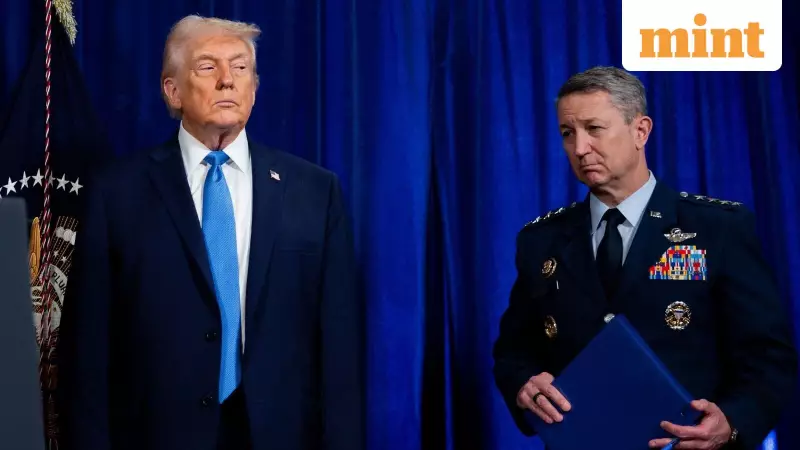
In an unprecedented move that has sent shockwaves across the globe, United States military forces have captured a sitting foreign head of state on his own soil. The operation, confirmed by US President Donald Trump on Saturday, led to the arrest of Venezuelan President Nicolás Maduro and his wife, Cilia Flores. They now face terrorism and narcotics charges in a New York court.
A Military Strike Without Congressional Nod
This bold action, described by Trump as a “large-scale strike” inside Venezuela, was executed without prior authorisation from the US Congress. This bypassing of legislative approval has ignited intense debate among legal experts, lawmakers, and foreign governments. The core question is whether this action aligns with the US Constitution and established international legal norms.
Under the US system, Congress holds the sole power to declare war, while the President acts as commander-in-chief. Historically, presidents have stretched this authority, but the Venezuelan operation is seen as exceptional. Notably, just in November, senior Trump administration officials, including White House chief of staff Susie Wiles, stated that military action on Venezuelan land would constitute war and require congressional approval. Private briefings to Congress echoed this, stating no clear legal basis existed for such land-based strikes.

Despite these internal assessments, US forces proceeded, striking inside Venezuelan territory and forcibly removing its president without notifying Congress.
Shifting Legal Justifications and Global Backlash
In the absence of an official legal memo, administration figures have provided overlapping and sometimes conflicting reasons for the operation. Republican Senator Mike Lee cited Secretary of State Marco Rubio, who argued the action was needed to protect personnel executing an arrest warrant against Maduro. Vice President JD Vance defended it on social media, stating Maduro's US indictments for narcoterrorism meant he couldn't evade justice by living in a Caracas palace.
However, legal scholars point out that using overt military force for law enforcement abroad marks a sharp break from tradition, which relies on extradition or diplomacy. President Trump's own remarks further complicated the narrative. He spoke of rebuilding Venezuela's oil infrastructure, running the country, and reclaiming assets, leading critics to argue this was an act of regime change, not a limited police action.
International Law and the Sovereignty Question
Under international law, this operation is viewed by many as a blatant violation of Venezuela's sovereignty and the UN Charter's prohibition on the use of force. The principle of sovereign immunity typically protects sitting heads of state from foreign arrest. China has already condemned it as a “blatant use of force,” with other nations expected to challenge it in global forums.
The closest precedent is not Iraq but the 1989 US intervention in Panama to capture leader Manuel Noriega, who was also indicted on drug charges. That action relied on a controversial legal opinion by William P. Barr, asserting inherent presidential authority to apprehend foreigners abroad—a theory never fully tested in court and widely contested.
High Stakes: Oil, Instability, and Presidential Power
The stakes are monumental. Venezuela sits on the world's largest proven crude oil reserves—roughly 303 billion barrels, or 20% of the global total. Maduro's removal risks triggering internal chaos, external intervention, and could turn Venezuela into a flashpoint for US competition with China and Russia.
Ultimately, this operation represents a defining test of US presidential authority. By ordering a military capture of a foreign president without congressional consent and under shifting legal grounds, President Trump has pushed the limits of Article II powers to an unprecedented degree, setting a controversial new precedent for American overseas action.






